An astrological talisman is an object made or consecrated at an hour chosen by the sky, so that a planet acts in the best possible condition; what the tradition offers with it is a well-chosen beginning, with no guarantee of result. We can investigate this object as history, as symbol and as practice, and that is what we do here.
The word talisman came into English through the Arabic tilsam, which comes from the Greek telesma, something like consecration, the rite that completes a thing. Already in late Antiquity the idea circulated that an image made under certain conditions comes to carry a virtue, and the Hermetic texts even speak of statues animated by rites. What astrology added was the hour: besides the material and the figure, the virtue came to depend also on the sky at the moment the object is made.
It was in the Arab world that this practice gained a method. In the ninth century, in Baghdad, Thabit ibn Qurra wrote about astrological images, and between the tenth and eleventh centuries the great manual of the genre was compiled in Arabic, the Picatrix (Ghayat al-hakim, something like “The Aim of the Sage”), translated at the court of Alfonso X of Castile in the thirteenth century. The manual describes, planet by planet, which figure is engraved, in what material, at what hour and with what formula.
Christian Europe received this with suspicion, and the discussion is part of the talisman's history. The Speculum astronomiae, attributed to Albertus Magnus, separates the images that depend only on the natural virtue of the stars, which he tolerates, from those that call for invoking spirits, which he condemns. Thomas Aquinas was harsher: he argued that an engraved figure produces no effect by itself and that, if something happens, the cause would be an invoked intelligence, and for that reason he rejected it. This border between what is attributed to the sky and what is attributed to invoked beings returned in every century that followed.
In the Renaissance, Marsilio Ficino took the subject up again as a physician and philosopher. In the third book of De vita (1489), he deals with how to draw the influence of the sky toward health and spirits, with images, stones, scents, music and well-chosen hours, and recommends caution with Saturn and Mars and a preference for the Sun, Jupiter and Venus. Cornelius Agrippa, in Occult Philosophy, published in full in 1533, organised the correspondences into lists that witchcraft and modern esotericism still copy.
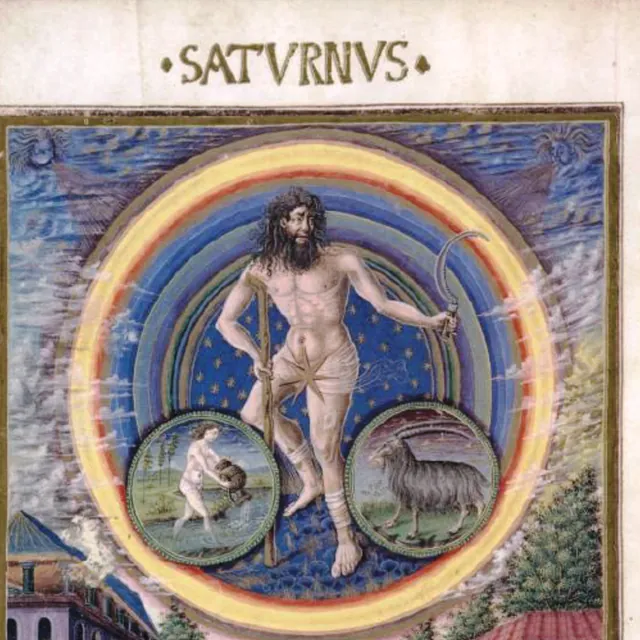
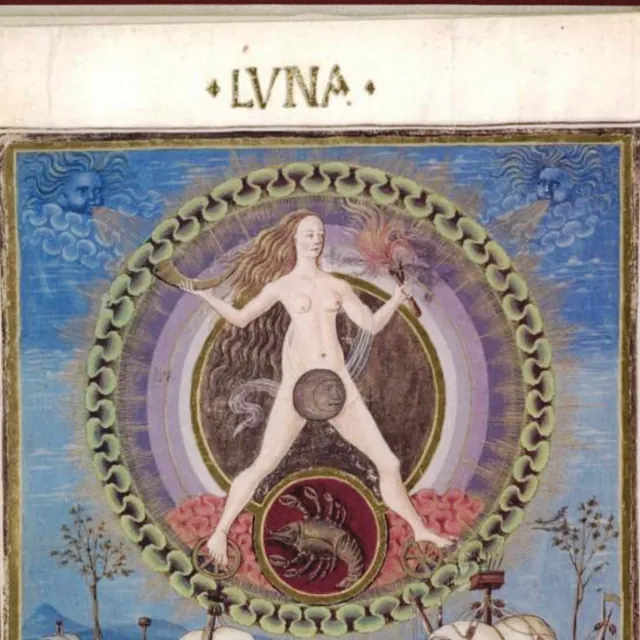
In practice, the traditional talisman has five parts. The first is the planet, chosen by the subject: the Sun for vitality and recognition, the Moon for home and sleep, Mercury for study and writing, Venus for bonds and pleasure, Mars for courage and effort, Jupiter for teaching, faith and abundance, Saturn for discipline and limits. The second is the metal that the tradition links to each planet: gold, silver, mercury or an alloy, copper, iron, tin and lead, in the order in which we have just named the seven. The third is the image, engraved or drawn, that represents what is wanted. The fourth is the planetary day and hour. The fifth, which decides how useful all this is, is the condition of the planet at that moment.
A hypothetical example shows how the pieces fit together. Someone starts a course and wants a reminder of method: the planet is Mercury, the day is Wednesday, the image can be an open book or a quill, the traditional metal would be mercury itself, and the hour, one on a Wednesday when Mercury is in Gemini or Virgo, moving direct and far from the Sun's rays. The hard part is the last one, because Mercury meets these conditions in about 11% of hours, according to the measurement in Astrological magic. The rest is craftsmanship.
That condition is the part that the text Astrological magic measures with a calendar in hand: planet in its own sign or exalted, moving direct, outside the Sun's rays and near an angle of the chart. There you will find the count of how many hours a year each planet meets this, and the uncomfortable news that Saturn meets none between 2026 and 2036. This text takes care of the rest: where the object comes from, what it means and what it does not say.
Why an object? We can think of the talisman as a way of giving body and date to an intention. An intention on its own is vague and fades; the object stays in the drawer, in the pocket or around the neck, and the date of its making keeps the reason it was made. Depth psychology reads this gesture as the work of a symbol, something that concentrates attention on one point and gives it back when we look at it. Seen this way, the talisman acts on whoever makes and carries it, and it is in that direction that astrology can speak of it honestly.
What human question lives here? Perhaps the one about where our attention usually is. Simone Weil wrote in Gravity and Grace: “Absolutely unmixed attention is prayer.” If we read the talisman as an instrument of attention, the chosen hour, the material and the gesture of making it teach us to look slowly at what we begin. And the tension appears on its own: if the object concentrates attention, what acts, it or we? And, if we are the ones acting, do we need it?
The limits deserve the same clarity. No study shows that an object consecrated at a certain hour changes health, money or love, and the tradition itself debated whether the effect came from the sky, from the material or from the conviction of whoever used it. A talisman does not replace medical treatment, legal advice or a difficult conversation that needs to happen. And, as a matter of ethics, any object designed to act on another person without their consent is left out: what is asked of the sky here concerns your own beginning, without touching anyone's destiny.
A safety note that the old manuals did not give: two of the traditional metals are toxic. Liquid mercury and lead are harmful to health, and engraving or filing lead releases dust that should not be breathed or touched by children or by anyone who is pregnant. Today the sensible practice is to swap the metal for a symbolic substitute, a piece of another alloy, a stone or a piece of paper, and keep the planet, the hour and the image, which are what astrology actually chooses.
Anyone who wants to experiment with good sense can start from the question, before the object: what do I need to begin, and which planet of my chart asks for attention? A difficult Mercury asks for study and method, a wounded Venus asks for care with bonds, a heavy Saturn asks for structure. The talisman, if it comes, comes afterwards, as a reminder of the commitment, and the hour is chosen by the four conditions, with date, time and city. If the window is far away, waiting is part of the work, and it is worth asking what can be started now, with the hour that exists.
Spirituality and magic · R$ 147,00
Your spiritual gifts, your intuition and the spiritual path that matches your chart.
If you would like to see what your chart says about your relationship with the practice, the reading Spirituality and magic looks at your intuition, your gifts and the practices that tend to suit you. If your question is when, the text Choosing the date by astrology explains how choosing a date works, and the Solar return: forecasts for your year shows the sky of your year, a good place to decide when to begin what matters.
The question that remains is: what do you want to begin with your whole attention, and what reminder, if any, would help you come back to it?
Some questions that tend to come up about the astrological talisman:
What is an astrological talisman? It is an object made or consecrated at an hour chosen by the sky, so that a planet is in the best possible condition at that moment. The tradition links each planet to a metal, an image and a day of the week, and the choice of the hour comes from astrology.
What is the difference between a talisman and an amulet? In the tradition the two terms blend, and modern usage separates them: the talisman is usually made to attract or favour something, and the amulet to protect and ward off. Astrology enters both by choosing the planet and the hour.
Does a talisman work? No study shows an effect on health, money or love. What the tradition and psychology describe is an effect on attention: the object reminds its maker of the commitment. For that reason it does not replace medical or legal care, or a conversation that needs to happen.
Do I need to know astrology to make one? You do not need to master the subject. Two pieces of data are needed: the planet's condition at the chosen hour and, for the angular part, the city. The text on astrological magic explains the four conditions, and a calculation made for your place does the rest.
Can I make a talisman for someone else? As a gift, yes, with the consent of the person receiving it and without trying to change their will. An object made to act on someone who does not know is outside what the serious tradition defends and what this blog recommends.
In short, the astrological talisman is an object consecrated at an hour chosen by the sky, with planet, metal, image and day linked to one another, and its history runs from the Greek telesma and the Picatrix to Ficino and Agrippa. What it offers is a well-chosen beginning and a material reminder of the commitment, with no guarantee of result and no power over another person.
Keywords astrological talisman, Picatrix, Ficino, planets and metals, choosing a date, planetary hour
If what you want is to have this read in your own chart, with the intuition, the gifts and the practices that tend to suit you, that is what you get from the reading Spirituality and magic. See the reading