You read the description of your own chart and it gets half of it right. The other half is wrong with the same conviction. It says your Saturn in house 10 will hold your career back, and your career does move slowly, that is true, but it moves steadily, and has done for fifteen years. It says your Mars makes you impulsive, and you are the person who counts to ten before answering any email.
What these descriptions usually miss is a question the Greek-speaking astrologers of Egypt asked before any other: were you born by day or by night? For them, the answer changed the behaviour of half the planets. The same Saturn, in the same place, weighed one way for someone born at three in the afternoon and another way for someone born at three in the morning.
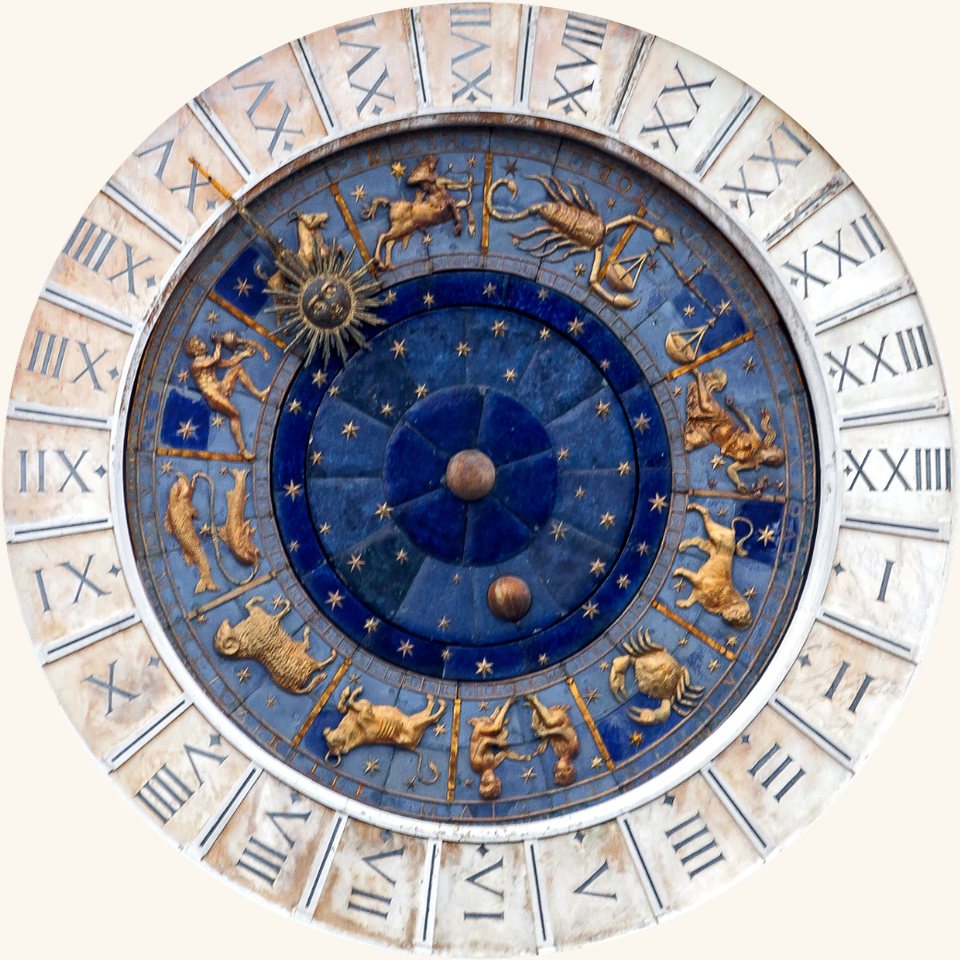
This is the way in to Hellenistic astrology, the school that gave Western astrology almost all the vocabulary it still uses today: signs, houses, aspects, rulers. And it reads the chart with a different question in mind. The modern reading wants to know what you are like. The Hellenistic reading wants to know who is in charge of each area of your life, and whether that ruler is in a position to deliver what it promises.
In the second century, an astrologer called Vettius Valens, born in Antioch, collected birth charts. Charts of clients, of acquaintances, of people whose lives he was able to follow closely. Next to each one, he noted down what had happened afterwards: journeys, inheritances, positions, losses, marriages.
The Anthology what survives of it brings together more than a hundred of these cases, almost always without the person's name. It is one of the most valuable books in the history of astrology for exactly that reason. It shows the technique being checked against the lives of real people, with the astrologer going back to the case to see whether what he had read in the sky actually showed up in the biography.
Valens had company in his time. Before him, Dorotheus of Sidon wrote a didactic poem on astrology that has reached us mainly through an Arabic translation. In the same period as Valens, in Alexandria, Ptolemy was writing the Tetrabiblos, the treatise that tried to give astrology the shape of a natural science. In the fourth century, Paul of Alexandria organised the lots that are still calculated today.
The very word horoscope comes from that world. Hōroskopos, the one who watches the hour, was the Greek name for the Ascendant: the degree rising on the horizon at the moment of birth, from which everything else was counted.
Sect is the first division in the Hellenistic chart. If the Sun was above the horizon when you were born, your chart is diurnal; if it was below, it is nocturnal. It sounds like a matter of the clock, and it is the technique that changes the reading the most.
Tradition split the planets into two teams. By day are the Sun, Jupiter and Saturn. By night, the Moon, Venus and Mars. Mercury switches sides depending on whether it rises before or after the Sun. Each team has a benefic and a malefic, and the malefic that belongs to your sect tends to act with more measure. The one outside it acts with more harshness.
Picture two women with Saturn in the same sign and the same house. The one born by day tends to describe that Saturn as structure: the delay that eventually took shape, the demanding boss she is grateful for years later. The one born by night is more likely to tell it as a weight, and her Mars, being of her sect, tends to show up as the force that gets things done rather than the one that fights.
Sect explains why two people with the same planet in the same place tell such different stories about it. And because it depends on the birth time, the birth certificate carries a weight most people don't expect.
In Hellenistic astrology, each sign has an owner, and each owner is one of the seven planets visible to the naked eye. Aries and Scorpio belong to Mars, Taurus and Libra to Venus, Capricorn and Aquarius to Saturn, and so on. Uranus, Neptune and Pluto, discovered many centuries later, fall outside this arrangement.
This changes the kind of question you ask. If your house 10, the one of work and reputation, falls in Libra, the one who answers for your career is Venus. So the reading goes after Venus: what sign it's in, what house, whether it has dignity there or is in a sign where it lacks resources, who sees it and who gets in its way.
The ruler of house 10 sitting in house 11 is the example the manuals like to give, and it describes a common scene well: the person who never got a job from an advert and got every single one through a friend's recommendation. Her career depends on allies, groups and sponsors, because the planet that rules it lives in their house.
And condition matters as much as position. A ruler with resources delivers what the house promises; a weakened ruler delivers it with more effort, more delay or more outside help. Tradition called this condition, and it is the word that comes up most in a Hellenistic reading.
The Hellenistic astrologers divided the sky as simply as possible: the whole sign in which the Ascendant fell was house 1, the next sign house 2, and so on up to 12. Anyone used to the modern chart sometimes gets a shock seeing a planet change house in this counting, and the difference between house systems explains why.
One of the old images for the Ascendant was the ship's helm. It represents you, your body, the direction of your life. The planet that rules its sign, the chart ruler, is the one steering that ship, and its condition weighs on everything that follows.
There is a Hellenistic idea that tends to surprise people. Four houses, 2, 6, 8 and 12, form no aspect at all with the sign of the Ascendant. The Greeks said these houses do not seeit, and so they considered them harder: what happens there happens outside the field of view of the one who rules your life. The money that slips away, the work that wears you down, what belongs to others, what runs on the quiet.
Many people recognise the experience without ever having had a name for it: the area where things get sorted out without you taking part, for better or worse, and where you always find out last.
The lots are points calculated from three positions in the chart. The two main ones form a pair, and that pair may be the most useful Hellenistic idea for life today.
The Part of Fortune speaks of what comes to you: the body, the circumstances, the possessions, the events you didn't choose. The Part of Spirit speaks of what you try to do: the action, the intention, the direction you give to things. Both are born from the distance between the Sun and the Moon, measured in opposite directions, and the formula reverses for those born at night.
The interesting part is putting the two face to face. There are charts where Fortune and Spirit fall in signs that don't see each other, and the lives of these people tend to take this shape: the opportunities show up in one place and the drive to act lives in another. The architect who gets invitation after invitation to teach and only wants to design. The teacher who makes a living from the subject he never chose.
In a modern reading, a Fortune in house 10 tends to be read on its own, as a point of luck in the career. In the Hellenistic reading it gets a pair, a ruler and a condition, and starts to tell a story.
Hellenistic astrology had techniques for time, and the simplest of them is the profection. With every birthday, the Ascendant moves forward one sign. In your first year of life, house 1 is active; when you turn one, house 2; at twelve, it returns to house 1; and so on for the whole of life.
The planet that rules the sign of the year becomes the Lord of the Year, the planet that has the say for those twelve months. It's a calculation you can do in your head, and whoever does it is usually in for a surprise. At 30, for instance, you live through a house 7 year, and many people look back and recognise there the year of the marriage, the partnership or the separation. The profections have their own page, with the list of ages.
Valens also taught a longer technique, zodiacal releasing, which divides life into chapters of years starting from Fortune and Spirit. It points to the periods of greater exposure and the periods of withdrawal, with peaks and turning points. The profection says where to look this year; the releasing says which chapter of life this year falls in.
Your chart has ten points and twelve houses, and the sun sign is one tenth of that. Date, time and place of birth are what separate a table from a chart.
Generate my chart for freeThe ancient texts were categorical. Valens wrote like someone who believed in a fate hard to turn aside, and the manuals spoke of violent death, imprisonment and ruin with a calm that is startling today. House 8 was the house of death; house 12, of enemies; house 6, of illness.
None of that goes into a serious reading today as a forecast. The Hellenistic chart does not diagnose, does not announce death or accident, does not set the date of an event and does not promise wealth or poverty. It says what condition the planet ruling each matter is in, and that describes resources and difficulties. Sentencing, none.
It also does not point to a single profession. The Midheaven and the planets of action describe fields of activity, and within a field there is room for dozens of paths. In relationships, the reading uses the same significators for anyone, without the old rules that separated men and women.
And it leaves out on purpose what belongs to other schools: Uranus, Neptune and Pluto as rulers, karma, past lives, psychological reading as a foundation. Here the question is more concrete. Lastly, everything depends on the birth time: without it there is no Ascendant, and without an Ascendant there is no house at all, nor a reliable sect.
With your chart open, you can start thinking like an astrologer from Alexandria in ten minutes.
- Where is your Sun? In houses 7 through 12, which sit above the horizon, the chart is diurnal; in houses 1 through 6, nocturnal. Re-read what you know about your Saturn and your Mars knowing which of the two belongs to your sect.
- What sign is your Ascendant in, and which planet rules it? Look for that planet in the chart. The house it sits in usually tells you where your life pulls towards.
- How many years did you turn on your last birthday? Divide by twelve, take the remainder and add one. The number you get is the house of your year, and its sign tells you who your Lord of the Year is.
If the three answers tell a coherent story about the moment you're living through, you have just done what Valens did with his clients' charts: checked the sky against the life.
And the questions that come up most on this subject, with the short answer:
What is Hellenistic astrology? It is the astrology that took shape in Greek-speaking Egypt around the first century BC and was practised for several centuries across the Mediterranean. From it come the signs, the houses, the aspects and the rulers that Western astrology still uses today, with names like Dorotheus of Sidon, Ptolemy and Vettius Valens.
How do I know if my chart is diurnal or nocturnal? Look at where the Sun is. If it is in houses 7 through 12, above the horizon, the chart is diurnal; in houses 1 through 6, below it, it is nocturnal. For this you need the birth time, and near sunrise or sunset it is worth checking carefully.
What is sect in the birth chart? It is the division of the planets into the day team (Sun, Jupiter and Saturn) and the night team (Moon, Venus and Mars). The planet from your sect tends to act with more measure, and the one outside it with more harshness, which changes the reading of Saturn and Mars especially.
What is the difference between the Part of Fortune and the Part of Spirit? Fortune speaks of what comes to you: body, circumstances, possessions and events. Spirit speaks of what you try to do: action, intention and direction. A Hellenistic reading compares the two, their rulers and whether they see each other in the chart.
What is the difference between Hellenistic astrology and modern astrology? Modern astrology asks mainly what you are like. Hellenistic astrology asks who rules each area of your life and what condition that planet is in, it uses whole-sign houses, only the seven visible planets and time techniques like the annual profection.
In short:
Keywords sect, Vettius Valens, whole sign, Part of Fortune, profection
If what you want is this read in your chart — your sect, the planet steering your path and its condition, Fortune and Spirit face to face, and the Lord of your year —, that is what the Hellenistic chart delivers. See the reading