An amulet is an object carried for protection, and astrology can help us understand what you feel you need protection from and at what moment a symbol gains more meaning, without promising that the object works as a shield. The conversation becomes more useful when we separate three layers: the history of the object, what the chart can say about the feeling of vulnerability, and what real care is.
The word comes from the Latin amuletum, which Pliny the Elder was already using in the first century for objects carried against illness and the evil eye. The idea is much older than the word and appears in almost every culture: the scarab of Egypt, the bulla that Roman boys wore around the neck, the blue eye that in the Mediterranean is hung against envy, the hand called hamsa, the Brazilian figa. Each symbol has its own origin, language and meaning, and it is worth knowing them before using them, so as not to borrow what one does not understand.
Amulet and talisman blend in the tradition, and modern usage separates them like this: the amulet protects and wards off, the talisman attracts and favours. Astrology enters both in the same way, choosing the planet and the hour, and for that reason this text is a neighbour of Astrological talisman, where you will find the history of the metals, of the images and of the Picatrix.
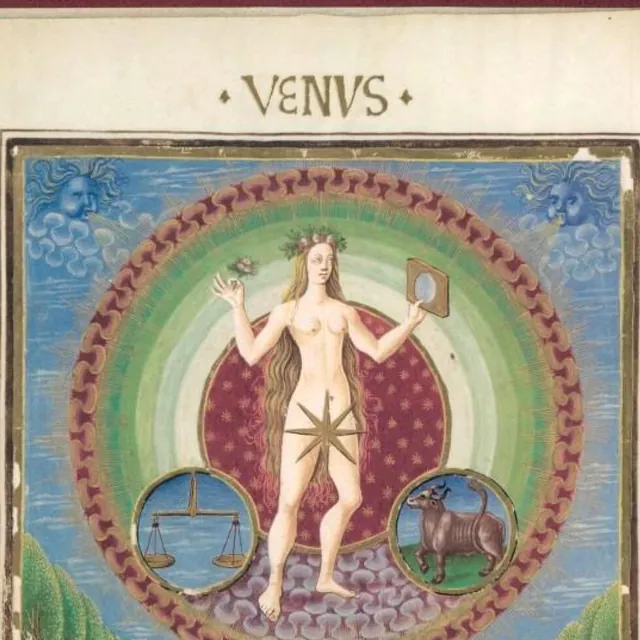
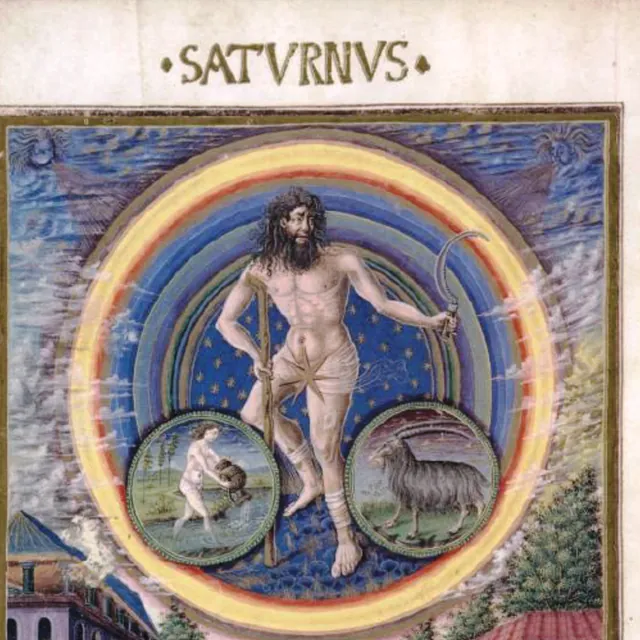
When choosing the planet for a protection, the tradition that comes from Ficino preferred the Sun, Jupiter and Venus, as benefic, and looked with caution at Saturn and Mars, linked to losses and conflicts. We can read this as symbolic common sense: whoever seeks protection seeks vitality, order and affection, and avoids the hour of the planet that speaks of rupture. The condition of the planet at that moment, the part that is calculated, is in Astrological magic.
In the chart itself, the feeling of vulnerability has known addresses. House 12 holds what is not seen and not controlled, house 8 speaks of losses and intimacy, house 6, of the body and routine, and house 4, of home and family. Saturn in tense aspect with the Moon can be read as a tendency to armour oneself, and Mars in an angular house asks us to choose our battles. None of these positions says that something bad will happen; they point to where the question of care tends to live.
The evil eye deserves a word apart, because most of the world's amulets are against it. The belief is that the envious gaze does harm, and astrology reads envy as part of relationships: house 7 speaks of others who oppose us, house 11, of groups and rivalries, house 12, of what happens unseen, and Mars and Saturn in contact with these places colour suspicion. What the chart shows is where you tend to perceive threat, without saying whether anyone actually casts a look; for that, it is worth talking to the person or keeping away from them.
Psychology has something to say about the effect of the object, and it is modest. In experiments such as that of Damisch and colleagues, in 2010, people who carried a lucky charm did better on tasks of dexterity and memory, and the most likely explanation is confidence: whoever feels safer performs better. Other studies show that short rituals lessen anxiety before an exam or a presentation. These results speak of the person who carries the object, and say nothing about a field of protection around it.
What human question lives here? Perhaps the one about what we do with fear. Spinoza wrote in the Ethics: “Fear cannot exist without hope, nor hope without fear.” An amulet sits exactly in that meeting: whoever carries it hopes for protection because they fear some loss, and astrology can help name which one. We can ask, carefully, whether the object calms the fear or feeds it, whether it reminds us that we are taking care of ourselves or makes us feel that, without it, we would be exposed.
To choose a symbol with good sense, it helps to start from three questions. What, exactly, do I feel needs protection: health, home, work, a relationship? Which symbol makes sense for me, in my history and my culture, besides being beautiful? And what concrete action goes with the object, because the amulet works best as a reminder of real care, such as sleeping, asking for help, saying no or checking an account?
The limits. An amulet does not replace health care, real safety or therapy. If the feeling of threat is constant, or if there is fear of a real person or place, the first step is to talk to a professional or to someone you trust. And it is worth distrusting anyone who sells protection at a price that grows with your fear: no chart reading justifies that.
Two practical observations. When the object becomes an obligation, and the person feels unwell leaving home without it, it is worth talking to a psychologist, because the ritual is already weighing more than protecting. And with babies and small children it is better to avoid necklaces, bead bracelets and small pieces: the risk of choking and strangulation is real, and the tradition of tying an amulet to the crib or to the baby's wrist has to give way to that care.
Spirituality and magic · R$ 147,00
Your spiritual gifts, your intuition and the spiritual path that matches your chart.
If you would like to see what your chart says about your relationship with the practice and with protection, the reading Spirituality and magic looks at your intuition, your gifts and the practices that tend to suit you. And if what weighs on you is fear, the Shadow Chart investigates the parts of yourself that you hide or avoid, and how they can become strength.
The question that remains is: what are you afraid of losing, and what is already within your reach to do to take care of it?
Some questions that tend to come up about amulets and astrology:
What is the difference between an amulet and a talisman? Modern usage separates the two: the amulet protects and wards off, and the talisman attracts and favours. In the ancient tradition the terms blend, and astrology enters both by choosing the planet and the hour.
Is there an amulet for each sign? Lists of amulets by sign are, in large part, a modern invention. The ancient tradition links planets to metals, stones and images, and each sign has a ruling planet that can serve as a starting point. None of these links has been shown to protect.
Does an amulet work? There are psychology studies in which a lucky object raised confidence and improved performance on certain tasks. That speaks of the person who carries the object. There is no proof that an amulet protects against illness, accidents or someone's ill will.
Can I use a Greek eye, a hamsa or a figa? You can, and it is worth knowing the origin of each symbol and using it with respect for the culture it came from. What is not worth doing is handing over to it a care that only you, a professional or a trusted person can give.
Which house of the chart speaks of protection? No house speaks of protection on its own. Houses 12, 8, 6 and 4 usually concentrate the questions of vulnerability, and the planet that rules them shows where care can come from. It is a symbolic reading, which describes where the question lives.
In short, the amulet is a protective object with a long history and symbols from many cultures, and astrology helps us see what you feel you need protection from, through houses 12, 8, 6 and 4, Saturn, Mars and the Moon. The effect that psychology measures is on the confidence of whoever carries it, and real care remains in attitudes, in health and in people.
Keywords amulet, protection, evil eye, house 12, Saturn, Ficino, psychology of the lucky charm
If what you want is to have this read in your own chart, with the intuition, the gifts and the practices that tend to suit you, that is what you get from the reading Spirituality and magic. See the reading