It starts around seven. The weekend isn't even over yet, and something in your stomach already knows tomorrow is Monday. You wash the dishes more slowly, open your phone for no reason, think about the pile of emails with a dread that's already there ahead of time. By ten, the dread has a name, a surname and the time of the first meeting.
Almost everyone knows this feeling at some point in life. What few people stop to look at is where it comes from. Sometimes it's overload: too much work for too few people. And very often it comes from somewhere else, from a job that asks of you, every single day, exactly what you have least of.
These are two different kinds of tiredness. One comes from having worked hard; the other comes from having worked against yourself, and the second one resists holidays. You come back rested and within two weeks you're washing the dishes slowly on a Sunday again.
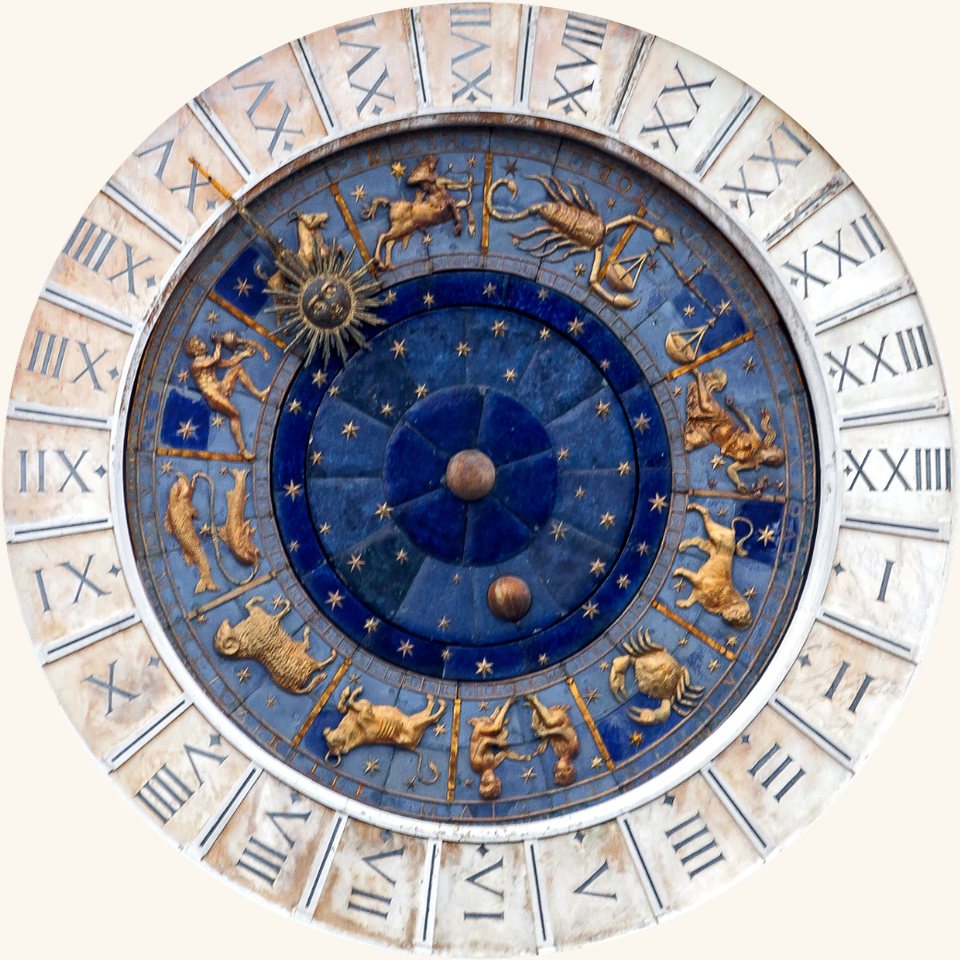
It's this second kind of tiredness that the chart has the most to say about. It describes the kind of task that gives you energy, the kind that drains you, and the shape of work where your talent shows up without needing any heroics.
Ask someone what their talent is and the answer usually comes with hesitation. Now ask what people always ask of them. Organise the group trip. Proofread the text before it's sent. Calm down the meeting that turned sour. Explain the spreadsheet to the new intern. That second answer comes out fast, and it's almost always the truer one.
In the chart, this talent usually shows up in two pieces. The Sun shows what lights you up, the kind of activity where you feel most whole. Mercury shows how you think and learn: who reasons in systems, who thinks out loud, who spots the mistake on the page before reading the sentence. When both receive harmonious aspects, the skill comes so easily it seems like anyone could do it just as well.
That's the problem. What's easy for you looks obvious to you, and what looks obvious stays off the CV, never becomes an argument for a raise, nobody asks for it on purpose. Many people spend years trying to get good at what's hard for them while setting aside what they already do well.
An example that comes up often in readings: Mercury in Virgo in good aspect with Saturn. This person spots the inconsistency in the contract that ten colleagues already read, and thinks it's just a quirk. The market calls it proofreading, and pays for it.
A career is made of days, and days are made of tasks. House 6 in the chart describes that texture: the routine, the method, the repeated craft. That's where much of the answer to the Sunday night question lives.
Some people thrive on a fixed routine and fall apart without it. Some people need variety and wilt by the third month of doing the same task. Some work better with their hands, some need people around them, some only truly get things done behind a closed door. The planets in house 6, and the sign at its entrance, describe this preference with a precision that tends to surprise people.
Mars adds the rhythm. Some people thrive on bursts, with a short deadline and adrenaline, and drag through long-term work; others need steadiness and seize up when everything is urgent. An office that only runs in fire-drill mode wears out the second type within a few months, and they leave thinking they lacked drive.
A common case: the brilliant analyst promoted to manager. She gained a salary and a title, and lost the hours of focus that were the best part of her day. Now she spends eight hours in meetings and goes home exhausted without having done anything she recognises as work. The position went up, and the routine went all wrong for her.
The house the neighbouring house 2, completes the picture with resources: what you value and what you know how to turn into income. When house 2 points one way and house 6 another, you get the job that pays well and empties you out, or the one you love that leaves your finances tight. Reading the two together helps you see which one weighs more on you right now, and what can be adjusted without turning your whole life upside down.
The Midheaven is the highest point in the chart, and it speaks of recognition: what you want to be remembered for when someone says your name in a room you're not in. It describes a way of showing up that fits many professions: through technical skill, through care, through an original idea, through authority built slowly over time.
What gives this a direction is the ruler of house 10, the planet that rules the sign on the Midheaven. The house it fell in shows where recognition tends to arrive from. Midheaven in Gemini has Mercury as its ruler; with Mercury in house 3, the path runs through writing, teaching, selling ideas; with Mercury in house 11, it runs through networks, community, group projects. Same Midheaven, different roads.
And then there are the planets sitting inside house 10. Saturn there tends to describe someone who arrives late and arrives solid; Jupiter, someone for whom doors tend to open fairly easily; Neptune, a career tied to image, art or care, with edges that take a while to come into focus.
One thing I keep insisting on: the Midheaven alone decides little. It needs to be read together with the Sun, with Mercury, with houses 2 and 6. A reading that pulls a profession out of a single point is guessing with technical vocabulary. And if the question is bigger than a job, it has its own page in astrology and life purpose.
Saturn is the planet of slow building, and few subjects are as Saturnine as career. Wherever it sits in your chart tends to be the area where you start out unsure, feel behind compared to your colleagues, and take a while to believe in yourself.
And it's exactly there that, with the years, many people become a point of reference. The person with Saturn in house 3 who was terrified of public speaking and, at forty, teaches a class. The one with Saturn in house 10 who watched colleagues rise fast and is now the one everyone consults before deciding. Saturn charges upfront and tends to pay out later, and the payment comes in the form of authority.
This helps you look at the feeling of being behind in a different way. Around age twenty-nine, Saturn returns to the place it was when you were born, and many people take stock of their career for the first time around then: what did I choose for myself, and what did I choose to please someone else. The Saturn return has its own page.
Which area calls for patience, and where effort tends to turn into a foundation, is what Saturn describes. Dates for a promotion stay outside any serious reading.
A question that comes up in almost every career reading: should I start my own business? The chart stays well away from a yes or a no, and it's still a real help for thinking it through.
Mars describes initiative, how much you like starting things and deciding without asking permission. Jupiter describes expansion: where opportunities tend to show up and where you feel comfortable taking a risk. A strong, independent Mars, with Jupiter linked to house 1 or house 10, tends to call for autonomy. A chart with heavy emphasis on houses 7 and 11 thrives in partnership and in groups, and struggles working alone at home in front of a computer.
Leadership belongs in the same conversation. Some people lead from the front, clearing the way and pulling the group along, and this usually shows up with Mars or the Sun prominent. Some lead by organising, with process and deadlines, and there Saturn speaks loudest. And some lead without any title at all, because they're the person everyone turns to to think things through before deciding; this way tends to show up in the Moon or Venus linked to the Midheaven. All three work, each in the right place, and all three suffer when judged by the other's style.
And there's the Part of Fortune, a point calculated from the Sun, the Moon and the Ascendant, which tradition reads as the place where things move with less friction. It shows the kind of environment where work seems to flow, and many people find there a clue they'd been ignoring for years.
None of this tells you to quit tomorrow. It's useful for testing small before betting big: a side project, a trial partnership, a semester spent doing what the chart points to, while the salary still comes in.
Your chart has ten points and twelve houses, and the sun sign is one tenth of that. Date, time and place of birth are what separate a table from a chart.
Generate my chart for freeThe chart doesn't know which professions exist. The sky people read in the Middle Ages is the same one we read today, and today's professions didn't even exist then; the ones twenty years from now don't exist yet either. Any reading that hands you an exact job title is making it up.
It it does not predict a promotion, a dismissal or a turning-point date. It doesn't guarantee success, recognition or salary. Market, country, economy, education and luck all weigh heavily, sometimes more than any talent.
It doesn't lock you into one field either. The same chart can make an engineer, a chef or a teacher, because it describes a way of working, and that way fits in many places.
And it doesn't decide for you. If you're thinking about leaving a job, the chart helps you understand why it drains you. The rent, the emergency fund and your family's situation are still your own business, and deserve a conversation with someone who understands finances.
This reading is about you. Reading a chart for someone on your team is a different matter, with its own rules, covered in astrology at work. What's left here is already plenty: your talents, the environment where you thrive, what's holding back your growth and the directions most compatible with who you are.
Next Monday, open a note on your phone with two columns. In one, what gave you energy. In the other, what drained you. Write it down at the end of each day, no filter: the meeting, the spreadsheet, the client, the lunch, the task you put off three times.
On Friday, read both columns. Almost always a pattern shows up that you already sensed and had never seen written down. It might be that what drains you is always speaking in public, or always working alone, or always repeating what you already know how to do. It might be that what gives you energy is solving the problem nobody else understood, or teaching someone.
Do this for three weeks. You will have in your hands a sketch of your house 6, written by you, and it is a good feeling when it later matches your chart.
And on the following Sunday, when the dread shows up around seven, look at the first column. That is where you start building work that gives you energy back, one task at a time.
And the questions that come up most on this subject, with the short answer:
Does the birth chart show which profession I should follow? It shows talents, ways of working and compatible directions, without pinning down one profession. The same chart fits many fields, and the sky doesn't know which professions exist today. A serious reading lays out possibilities, never a destiny.
What does the Midheaven say about career? The Midheaven is the highest point in the chart and the start of house 10, and it speaks of recognition: how you tend to be seen professionally. Its ruler and the planets in house 10 give this a direction, always read together with the Sun, Mercury and houses 2 and 6.
Why do I feel dread on Sunday night? There are many causes, from overwork to health issues that deserve professional attention. In the chart, a common cause is a job that asks of you exactly what you have least of. House 6 describes the kind of routine that gives you energy and the kind that drains you.
Does astrology say when I'll get a promotion? It doesn't. No honest reading gives a date for a promotion, a dismissal or a career change. Saturn and the Midheaven describe where effort tends to weigh on you and where it tends to turn into authority over time.
Do I need my birth time for a career chart? Yes, because the Midheaven and houses 2, 6 and 10 depend on it. Without the time, you can still read the Sun, Mercury, Mars, Jupiter and Saturn by sign, but the most important part of the subject is left out.
In short:
Keywords Midheaven, house 10, house 6, Saturn, vocation, talent
If what you want is this read in your birth chart — your talents, the environment where you thrive, your leadership potential and what holds your growth back —, that is what the reading Career and talents delivers. See the reading