What is astrological magic?
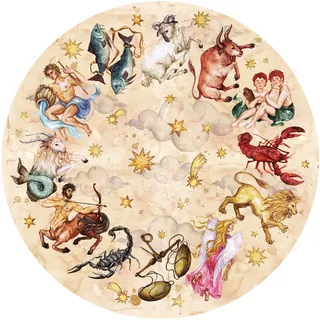
It is the practice of choosing the hour something begins. The technical name for the choice is election, and the idea behind it is the same as the birth chart's: the sky of the instant something is born describes what was born. A baby, a company, a marriage, a consecrated ring. The difference is the order of things. In a birth chart the hour has already happened and the astrologer reads it; in an election the hour has not happened yet, and the astrologer goes looking for it.
That is why an election is a work of search, with a question behind it: of all the hours in the coming month, which ones have the sky this act asks for? Almost always the answer is a handful of them, and sometimes it is none.
What gets done at the chosen hour varies. It can be a ritual, a consecration, the first sentence of a book, opening a company, signing a contract, a cat arriving home. The astrology is the same in all five cases: what changes is what you ask of the sky.
A planetary talisman is the most demanding form of this
A talisman is an object consecrated at a chosen hour so that a planet is in the best condition it can possibly be in. Tradition is specific about what "best condition" means, and there are four requirements that add up:
- The planet in domicile or exaltation. Mars in Scorpio, Venus in Libra, Jupiter in Sagittarius. This is what astrology calls essential dignity, and it is the condition that depends only on the calendar.
- Moving direct. A planet retrograde appears to move back over its own path, and tradition avoids starting things under that.
- Out of the Sun's rays. Within 8.5 degrees of the Sun the planet is combust — invisible in the sky, covered by the light. It is the condition most people forget, and the one that rules out the most hours for Mercury and Venus, which always travel close to the Sun.
- Close to an angle of the chart. In houses 1, 4, 7 or 10, the four corners. This is the only one of the four that depends on your CITY and the time of day — and that is why an election needs to know where you are.
The first three hold true for the whole world at the same time. The fourth changes every two hours and changes from city to city. A printed calendar can tell you the first three; the fourth only comes out of a calculation made for you.
How much time each planet spends in condition
This part is usually stated and almost never measured, so I measured it. I swept the 87,660 hours of the ten years starting in 2026, with the same ephemeris that builds charts on this site, asking of every hour: is this planet in domicile or exaltation, moving direct and out of the Sun's rays?
| Planet | In domicile or exaltation | And also direct and out of the rays | Hours per year |
|---|---|---|---|
| Mars | 27.7% | 22.3% | 1.959 |
| Venus | 24.9% | 20.9% | 1.836 |
| Sun | 16.9% | 16.9% | 1.482 |
| Moon | 16.5% | 15.7% | 1.378 |
| Jupiter | 23.6% | 15.0% | 1.312 |
| Mercury | 16.4% | 11.0% | 961 |
| Saturn | 0.0% | 0.0% | 0 |
Two things jump out of this table.
The first is the middle column against the one on the left. Jupiter is in domicile or exaltation 23.6% of the time and drops to 15.0% once you require it to move direct and be visible. Eight percentage points vanish because of two conditions almost nobody remembers to check. For Mercury the damage is proportionally bigger: from 16.4% to 11.0%, because it turns retrograde three times a year and lives close to the Sun.
The second is the last row. Saturn went the whole decade without a single hour in essential dignity, and there is a calendar reason for that.
Why the Saturn talisman does not exist for the next thirteen years
Saturn rules Capricorn and Aquarius and is exalted in Libra, and it does not enter any of the three before 5 September 2039. Between 2026 and 2036 it moves through Aries, Taurus, Gemini and Cancer — and Cancer is exactly the sign of its fall.
The reason is the orbit: Saturn takes twenty-nine years to go round the zodiac, so its windows come by the decade. Anyone who wants a Saturn talisman made the way tradition asks for has two honest options: wait thirteen years or give up on essential dignity and work with what is left.
This contrast is the most useful thing on this page, and it is worth seeing in order. From the date I am writing this — 21 September 2026 — here is the next hour each of the seven enters condition:
| Planet | Next window | Where | Wait |
|---|---|---|---|
| Moon | 28/09/2026 | Taurus, exaltation | one week |
| Venus | 14/11/2026 | Libra, domicile | two months |
| Sun | 20/03/2027 | Aries, exaltation | six months |
| Mercury | 09/05/2027 | Gemini, domicile | eight months |
| Mars | 02/09/2027 | Scorpio, domicile | one year |
| Jupiter | 23/10/2030 | Sagittarius, domicile | four years |
| Saturn | 05/09/2039 | Libra, exaltation | thirteen years |
From the Moon to Saturn it goes from one week to thirteen years. It is the same question with answers that differ by a factor of 676, and anyone who treats "choosing a good hour" as a single thing is lumping together two problems of very different sizes.
Notice too what the table does to the price. A Venus hour comes every couple of months and a Jupiter hour comes once every four years — the distance between the two is a matter of the calendar, and nobody selling it made it up.
The fourth condition — the planet being angular — depends on your city and your hour, and it is the one no published calendar can give you. It is this one that separates a chosen date from a copied date.
See the date electionsAstrological magic and witchcraft ask for different things
Both use the same tool and organise the work in different ways. It is worth telling them apart, because whoever looks for one usually arrives under the other's name.
- Astrological magic organises by PLANET. You choose Venus, or Jupiter, or the Moon, and the hour is hunted down by that body's condition. The consecrated object carries that hour. This is where planetary talismans come in, along with fixed stars and the twenty-eight lunar mansions.
- What is usually called witchcraft organises by PURPOSE. Prosperity, protection, cutting ties, drawing in, banishing. Astrology comes in to choose the moment to act, and what it looks for in the sky varies with what you want.
There is a rule that holds for both and is almost never said out loud: a waxing Moon suits what you want to grow, and a waning Moon suits what you want to cut down. That alone rules out half the calendar for any working — and it is why a cutting election and a drawing-in election never fall in the same week. The phases of the Moon have a page of their own.
What an election does not do
It does not replace the act. An hour chosen to start a business does not make the business, and an hour chosen for a difficult conversation does not write the conversation. What an election gives you is the starting sky of that thing — the same way a birth chart is for a person.
And there are three limits worth saying out loud, because they are the ones that come up most in questions:
- The date for a medical procedure has an owner, and it is not astrology. The window for a surgery is the one the professional has cleared. Inside it there is room to choose; outside it there is no choosing anything.
- An election does not undo a deadline. If the contract is due Tuesday, the best hour of the month falling on a Thursday is useless information. A good election works within what is possible, which is why it starts by asking what your real window is.
- A chosen hour does not promise a result. It describes the beginning. What comes after depends on who does the work, on who is on the other side, and on everything no chart contains.
That said, the gain is concrete and fits in one sentence: instead of doing something important in the first free hour on the calendar, you do it in an hour that was sought out. Anyone who has ever chosen a wedding date knows the difference between the two without needing any astrology at all.
Frequently asked questions about astrological magic
What is astrological magic?
It is the practice of choosing the hour an act begins, so that the sky of that moment describes what you want. The act can be consecrating an object, opening a business, signing a contract or performing a ritual. Choosing the hour is called an election, and it is the astrological part of the work: the chart of the chosen instant becomes the birth chart of whatever started there.
What is a planetary talisman?
It is an object consecrated at a chosen hour so that a planet is in the best condition it can be in. Tradition asks that the planet be in domicile or exaltation, moving direct, out of the Sun's rays and close to an angle of the chart. The first three conditions depend only on the calendar; the fourth depends also on the city and the time of day.
How often does a good hour for a talisman come around?
It depends on the planet, and the difference is huge. I swept the 87,660 hours of the ten years starting in 2026 with this site's ephemeris: Mars is in domicile or exaltation, direct and out of the Sun's rays in 22.3% of the hours, Venus in 20.9%, Jupiter in 15.0% and Saturn in none. Anyone who also wants the angular condition sees these numbers drop to a fraction of themselves.
Why is there no Saturn talisman right now?
Because Saturn rules Capricorn and Aquarius and is exalted in Libra, and it does not enter any of the three before 5 September 2039. Saturn takes 29 years to go round the zodiac, so its windows are measured in decades, not months. Between 2026 and 2036 there is not a single hour with Saturn in essential dignity.
Is astrological magic the same thing as witchcraft?
They are different practices that use the same tool. Astrological magic chooses the hour by a planet's condition, and the consecrated object carries that hour. What is usually called witchcraft organises the work by purpose — prosperity, protection, cutting ties — and astrology comes in to choose the moment to act. In practice both ask the astrologer for the same thing: a calculated window, with date, time and city.
Astrological magic in brief
Keywords election, planetary talisman, essential dignity, decade window
The numbers on this page hold for the whole world, because they come from the sky. What they do not give you is your own hour. The angular condition changes every two hours and depends on the city, and your real window depends on the time you have. An election is the sum that brings both things together — and it starts with the question no calendar asks: how long can you wait?
