No position in the birth chart identifies a witch; what exists is a set of symbols, from Water to houses 8 and 12, from Pluto and Neptune to Lilith and Mercury, which modern astrology associates with themes that witchcraft also works with: the occult, transformation, ancestry, dreams and study. Read by that measure, the chart stops answering whether someone is a witch and starts answering a different, far more interesting question: what kind of relationship with the occult does each symbol suggest, and how could you approach it? We can investigate this with rigour and imagination at the same time, and that is what we are going to do here.
The word witch carries very different figures. There is the priestess, the healer, the oracle reader, the student of the occult, the alchemist, the sorceress who works with ritual and the keeper of ancestral knowledge. Two people who call themselves witches may have little in common: one arrived through philosophy, another through plants, another through reading symbols, another through a spiritual tradition in the family. That is why no single position represents all of them, and any list that promises otherwise is oversimplifying.
Before any position, the limit. Everything that follows belongs to modern, psychological and esoteric astrology, and these are symbolic correspondences, built by reading and by tradition. No one has shown that practitioners of witchcraft have these positions more often than the rest of the population, and none of them measures magical aptitude. Pluto, Neptune and Uranus, for example, stay in the same sign for years, and millions of people are born with the same sign position; what changes from one person to another is the house, the aspects and the rest of the chart. There is also a counting trap: Moon in Pisces, Moon in a Water sign and several planets in Pisces can describe the same configuration seen from three angles, and adding them up as three pieces of evidence gives a precision the chart does not have.
The figure of the witch also has a history, and it helps us understand why certain symbols stuck to her. In Antiquity, Circe, Medea and the goddess Hecate, tied to crossroads and magic, already gathered together feminine power, knowledge of herbs and the territory of the night. In Europe from the 15th to the 18th century, “witch” was above all an accusation, levelled at women who healed, who delivered babies, who lived on the margins or who simply bothered someone; the word was only claimed by practitioners much later, with the modern witchcraft of the 20th century. Astrology, for its part, always stood close to magic: the Picatrix, Ficino's Neoplatonism and Agrippa's occult philosophy, in the Renaissance, chose the hour of rituals by the sky, a subject of Astrological magic. And the ancient traditions already had, in the chart itself, houses of sombre reputation: the 8th, the house of death and of what belongs to others, and the 12th, the house of hidden enemies, confinement and what stays out of sight. It is no accident that these are the two that appear most in this conversation.
The symbols work like an alphabet, and it is worth starting with Water. Cancer, Scorpio and Pisces are the signs of subjectivity, memory and the perception of what cannot always be explained by reason. In Cancer live ancestry, home and the cycles of the Moon; in Scorpio, the interest in taboos, power and deep transformations; in Pisces, imagination, spirituality and the dissolving of the boundaries between self and world. The Sun in these signs suggests that these themes take part in identity, and the Moon, that they organise the way we process reality through emotion. The Moon in Scorpio and the Moon in Pisces differ considerably: the first, traditionally in its fall, tends to be read as an intense and wary relationship with security, turned toward transformation and the facing of taboos; the second, as a sensitivity that opens to image, dream and the wish for connection with something larger. Many planets in Scorpio can point to an attraction to rituals that close a cycle and to the study of death and regeneration, without that making the sign dark or dangerous; many planets in Pisces are associated with meditation, visualisation and the search for the sacred, and can just as well be expressed in music, in literature or in caring for others.
After Water come the houses. Planets in the 8th house tend to develop their subjects through vulnerability, loss and what is not under our control: Mercury there investigates mysteries, Saturn tries to understand limits, the Moon gives emotional weight to what many people avoid. Planets in the 12th house find expression in privacy, retreat and the inner world, which suits solitary study, meditation, private rituals and dream interpretation. The 4th house, of roots, comes in through ancestry, family traditions and domestic practices. A stellium, three or more planets in the same house, makes the subject of that house weigh more, and it is worth looking at which planets form it, because three personal planets say more about someone's life than a line of generational planets. The combined emphasis on houses 4, 8 and 12 tells a lovely story, one of origin, transformation and introspection, but this association is a contemporary construction and not a traditional category of witchcraft houses. Here too nothing is automatic: an occupied 12th house can speak of work behind the scenes or of institutions, and the 8th house, of shared money.
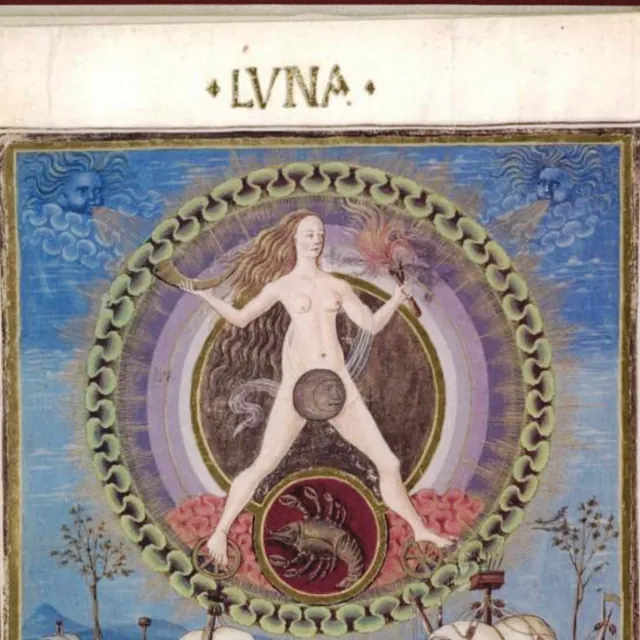
The slow planets make the backdrop of this scene. Pluto, in modern astrology, is transformation and what is hidden: in the 4th house, it can symbolise the need to investigate family histories and inherited patterns; in the 8th, the interest in taboos and mortality; in the 12th, the investigation of unconscious contents. Neptune is imagination, idealisation and the transcendent: in the 6th house, it brings the sacred into routine and care; in the 8th, into spiritual readings of death and intimacy; in the 10th, into professional identity, which can gain an artistic or spiritual side; in the 12th, into retreat and dreams. Neptune is also confusion and idealisation, and it should not be taken as mediumship. Uranus in the 8th and 12th houses describes an unconventional interest, that of someone who questions religious authorities and builds their own spirituality in private. When these planets touch sensitive points, the image intensifies: Neptune conjunct the Sun or the Moon blends identity or emotion with symbol and dream; Neptune or Pluto conjunct the Ascendant place imagination or the reinvention of oneself in the way the person arrives in the world. The Moon conjunct the Ascendant is too wide a conjunction to indicate any inclination on its own, but it ties identity to cycles, the body and memory, and speaks to the long cultural history of the Moon with the night, fertility and calendars.
Lilith deserves a paragraph of her own, because she is the one who speaks most to the image of the witch. Here we are talking about the Black Moon, a calculated point on the lunar orbit, with no planetary body. In contemporary astrology, she represents autonomy, rejection, sexuality and the parts of identity that challenge norms. In the 8th house, she confronts taboos tied to power and intimacy; in the 10th, she suggests a public identity that goes against expectations; in the 12th, she brings shame, repression and desires that are hard to acknowledge; on the Ascendant, she claims individuality in a visible way. The link with the witch is above all cultural: the two figures can be read as the woman who refuses to fit what is expected of her. This is an archetypal association, and it says more about independence and transgression than about any magical practice.
The South Node, in houses 8 and 12 or conjunct the Moon or Pluto, enters through another door: that of evolutionary and karmic astrology, which reads it as the set of patterns already established, almost familiar. Some esoteric currents see in this position an ancient familiarity with occult knowledge, and the conjunction with the Moon emphasises family and emotional inheritance, such as traditions handed down at home. This is a terrain of belief, and honesty asks us to say so: the chart does not demonstrate that anyone practised witchcraft in another life. Anyone interested in the idea can use it as an image for looking at what in their own history seems to be born already known.
The aspects between the Moon, Mercury, Neptune and Pluto form the finest layer, and the nature of the aspect matters: a conjunction does not behave like a square, a trine or an opposition. The Moon with Pluto can be read as an intense relationship with one's own emotions and a wish to understand hidden motives, the terrain of grief, ancestry and repressed aspects. The Moon with Neptune joins emotion and image, and gives more weight to dreams, music and contemplation; a sensitivity like that, however, can also idealise. Mercury with Neptune suggests a mind that likes metaphor and narrative, which serves the tarot reader and equally the poet or the screenwriter. Mercury with Pluto describes a mind that wants to see what lies behind appearances and to investigate what is difficult or forbidden, an approach more analytical than intuitive. When several of these aspects appear together, the interplay between thought, emotion and imagination comes to the fore, and it is an interesting portrait of the oracle reader, who interprets symbols and deals with emotionally heavy subjects. Counting aspects, however, does not measure intensity: orbs, dignities and rulerships also come into it.
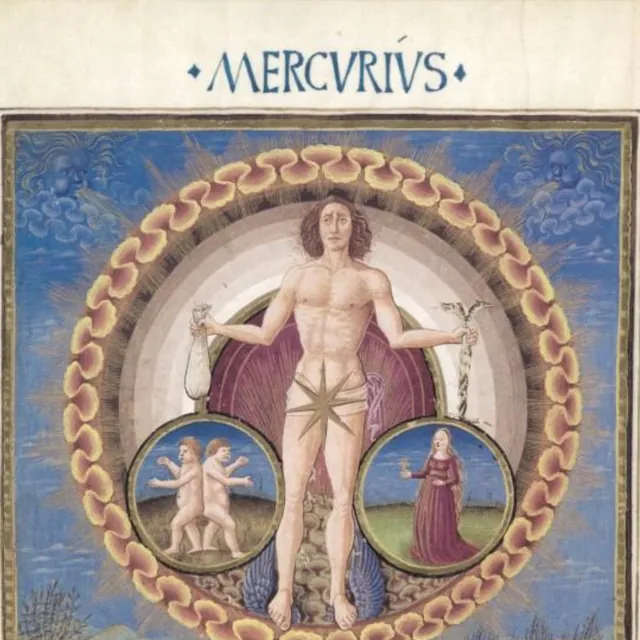
There is a side of witchcraft that popular imagination forgets: study. Many practices depend on reading, memory, classification and transmission, and that is the territory of Mercury. Planets in Gemini, or Mercury in Gemini, point to a curious intellectual life, one that compares systems of thought and wants to know how things work, and may take an interest in tarot, astrology, numerology and grimoires. Mercury in Scorpio goes deeper instead of comparing: it investigates motives, taboos and power structures. In the 8th house, Mercury is the investigator of mysteries, and in the 12th, the scholar who works far from public recognition, although both can just as well be in entirely secular research. Saturn in the 8th and 12th houses adds method: this is the person who is not content with intuition and wants to know rules, foundations and history, the profile of ceremonial witchcraft, where sequences and correspondences count. Jupiter in the 8th and 12th houses, and Jupiter, Mercury or Neptune in the 9th house, pull the conversation toward philosophy: understanding the principles behind a tradition, comparing religions, studying life after death. The symbolic risk is a familiar one, that of turning conviction into certainty without putting it to the question. Mercury in aspect to Saturn and the Moon in aspect to Mercury come in here as useful complements: the first represents disciplined study and the systematisation of esoteric knowledge, the second, the relationship between memory, emotion and interpretation.
One piece is missing, the one that organises all of this: the rulers. The planet that rules the sign of the Ascendant is a structural piece of the chart, and the house where it falls shows where life tends to be directed. With the ruler of the Ascendant in the 8th house, identity is built in contact with transformation, intimacy and power relations; in the 12th, it is oriented toward introspection and toward what happens away from the stage. There is also the ruler of the 8th house in the 12th, which links the occult to private life and suggests reserved research, and the ruler of the 12th house in the 8th, which does the reverse and takes retreat into the investigation of taboos. The two positions gather similar themes, and the difference is subtle: the house the planet rules tells the subjects it brings, and the house where it sits tells the terrain in which this happens.
All these positions gain meaning when they stop being a list and become archetypes. The lunar witch combines the Moon in Water, the Moon in houses 8 or 12 and the Moon in aspect to Neptune. The ancestral witch gathers an emphasis on the 4th house, the Moon with Pluto and the South Node with the Moon. The occultist witch appears with Mercury in the 8th house, Mercury with Pluto and a strong emphasis on Scorpio. The oracle reader adds up Mercury with Neptune, Mercury in Gemini and the Moon with Mercury. The ceremonial witch has Saturn in houses 8 or 12, a well-structured Mercury and a prominent 9th house. The philosophical witch joins Jupiter and Mercury in the 9th house with the bridge between houses 8 and 9. The transgressor has Lilith or Pluto on the Ascendant and Uranus in the 8th house. The same person may recognise themselves in two or three of these figures, and the mixture is part of the portrait; what counts is when the themes repeat through sign, ruler, house and aspect, always with the personal planets in the foreground.
What human question lives here? Perhaps the one about what to do with what does not show itself. Heraclitus left a short fragment that seems written for the subject: “Nature loves to hide.” (Fragment 123). If what matters stays hidden, the witch is the one who will not settle for the surface, and astrology is a way of naming the hiding place. Carl Gustav Jung carried the idea into the psyche in The Philosophical Tree (Collected Works, volume 13): “No one becomes enlightened by imagining figures of light, but by making the darkness conscious.” We can read houses 8 and 12, Pluto, Lilith and the South Node as maps of that darkness, and witchcraft, in its more reflective forms, as a way of walking through it with method, without running away.
There is a tension in this investigation. If we look in the symbols for confirmation that we are special, can we notice when we are reading our own wish to be? And if the historical witch was the one whom society's fear gave a name, what happens when we take on an identity that was once an accusation? These questions do not call for a quick answer, and the answers change over time.
In practice, the chart is read in layers. First, look for the themes that repeat: Water, houses 4, 8 and 12, Mercury, the Moon, Pluto, Neptune, Lilith, and see whether they show up through more than one path. Then separate what is a personal planet, which speaks of you, from what is generational, which speaks of the time you were born in. Next, ask yourself what figure the position suggests: the one who heals, the one who studies, the one who reads symbols, the one who organises rituals. Finally, compare it with what you actually do. The chart can point to study, contemplation, care or research, and who decides whether that becomes practice is your routine, your interest and the tradition you choose to belong to. Without the birth time, the chart loses the Ascendant, the houses and the rulers, and a good part of what was said here is left out; the planets and the aspects remain, and a lot can be read from them.
Spirituality and magic · R$ 147,00
Your spiritual gifts, your intuition and the spiritual path that matches your chart.
If you would like to see these themes drawn on your own sky, the reading Spirituality and magic looks at your intuition, your gifts and the practices that tend to suit you. And if the question touches on what comes from before and what repeats, the Karmic chart continues this investigation through the nodes and Saturn.
The question that remains is: what in you asks to be studied, and not only felt?
Some questions that tend to come up about the birth chart and witchcraft:
Is there such a thing as a witch's birth chart? No. No configuration identifies a witch, and there is no study showing that certain positions are more frequent among practitioners. What modern astrology does is associate certain positions, such as Water, houses 8 and 12, Pluto, Neptune and Lilith, with themes that witchcraft also works with.
Is someone with the Moon in Scorpio or Pisces a witch? No. These positions suggest an intense relationship with emotion, transformation, imagination and dreams, and those qualities show up in artists, therapists, researchers and plenty of people who never thought about witchcraft. The Moon in Scorpio and the Moon in Pisces are also expressed in quite different ways.
Does Lilith on the Ascendant indicate witchcraft? At most it indicates an identity that refuses imposed roles, and it is in that archetypal sense that it speaks to the image of the witch. It is a reading about autonomy and transgression, and has nothing to say about magical practice.
Does the South Node in the 12th house mean I was a witch in another life? The chart does not demonstrate that. Some spiritualist currents read the South Node as a memory of other existences, and anyone who is interested can use the idea as an image. As a fact, there is no way to confirm it.
Do I need these positions to practise witchcraft? No. Practice depends on interest, study and choice, and each of the positions points to a way of approaching the subject: through study, contemplation, ritual or philosophy.
In short, no birth chart proves that someone is a witch, and the positions associated with witchcraft (Water, houses 4, 8 and 12, Pluto, Neptune, Lilith, Mercury and the 9th house) work as symbols describing ways of relating to the occult: the lunar, the ancestral, the occultist, the oracle reader, the ceremonial, the philosophical and the transgressor. What gives weight to a reading is the repetition of the same themes through sign, ruler, house and aspect, with the personal planets in front, and what decides the practice is what you choose to do with it.
Keywords witch birth chart, witchcraft and astrology, 8th house, 12th house, Lilith, Pluto, Neptune, Moon in Scorpio
If what you want is to have this read in your own chart, with the intuition, the gifts and the practices that tend to suit you, that is what you get from the reading Spirituality and magic. See the reading