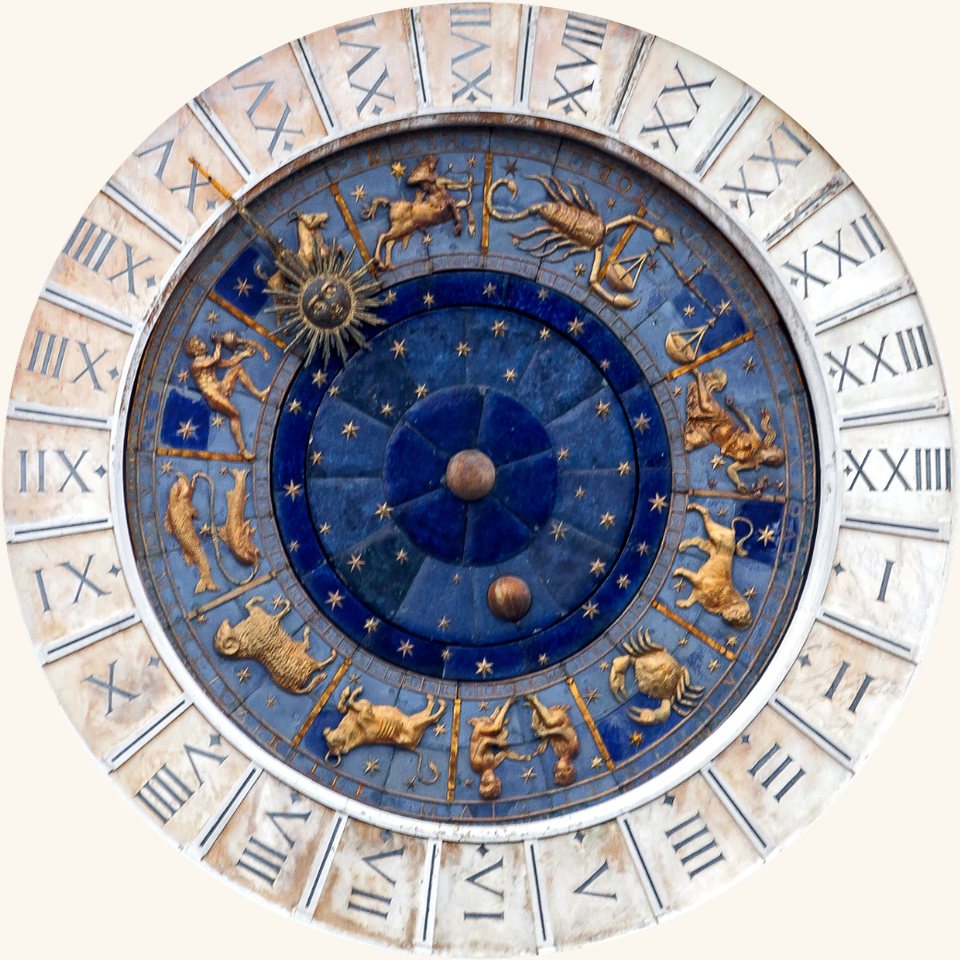
Astrologer Shelly Gonella cross-referenced Donald Trump's chart with those of Flávio Bolsonaro, Lula and Brazil, compared the chart of the United States with Brazil's, and followed the sky from the runoff through to the middle of 2027. The answers, in three questions:
- Will Trump intervene in Brazil? The sky shows pressure and influence from Washington on Brazil, strongest in December and in March 2027. It does not show the classic signature of armed conflict between the two countries: the pressure tends to be economic, diplomatic and verbal.
- How does the economy look? Saturn and Neptune pass through the house of money in Brazil's chart: a year of adjustment in the accounts and of uncertainty about what things are worth, whoever wins.
- And the stock exchange? Optimism until the runoff, because the market is betting on Flávio, and a risk of correction in December, when the promises meet the numbers.
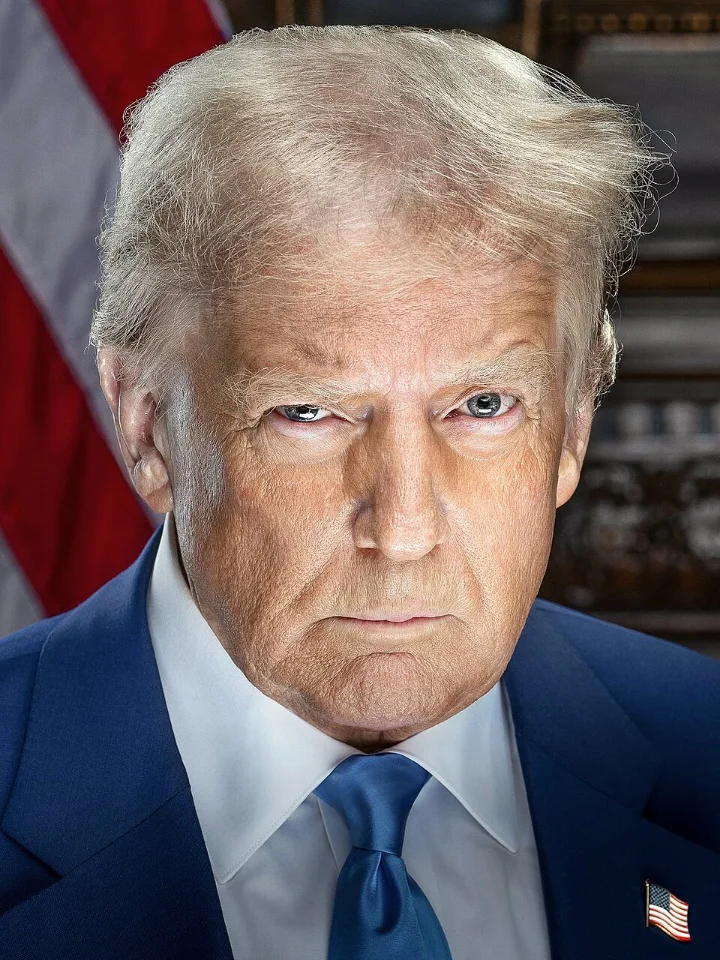

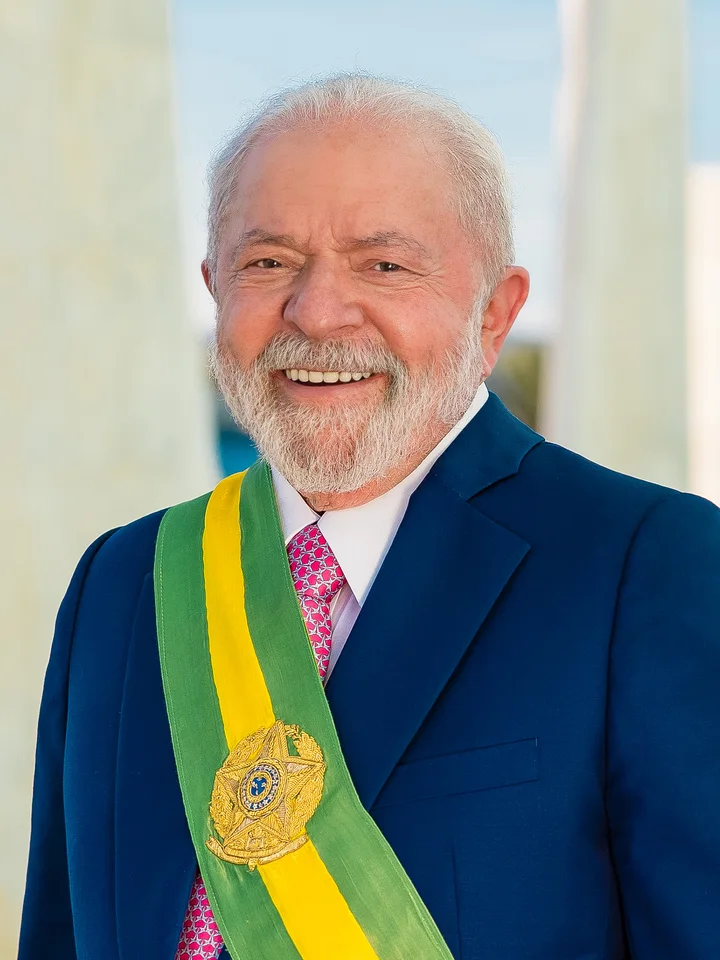
The market has already placed its bet. On the Friday before the vote, the Brazilian stock exchange closed up 2.63%, at 192,115 points. After the first-round result, the main fund of Brazilian shares traded in the United States rose about 10% while it was still the early hours of the morning. American banks run the numbers openly: JPMorgan projects the dollar at R$ 4.90 with a Flávio victory and at R$ 5.50 with Lula's re-election.
Trump is watching. In early October, asked whether he would support Flávio, he answered that he is "watching everything" and following the election "very closely". In May, he received Flávio in the Oval Office. The State Department denies any interference in the electoral process.
And the tariff war still has no deal. The United States keeps tariffs on Brazilian products, the Lula government has refused the demands made to ease them and talks of using the Reciprocity Law. At the same time, in 2025, Trump said he had "excellent chemistry" with Lula.
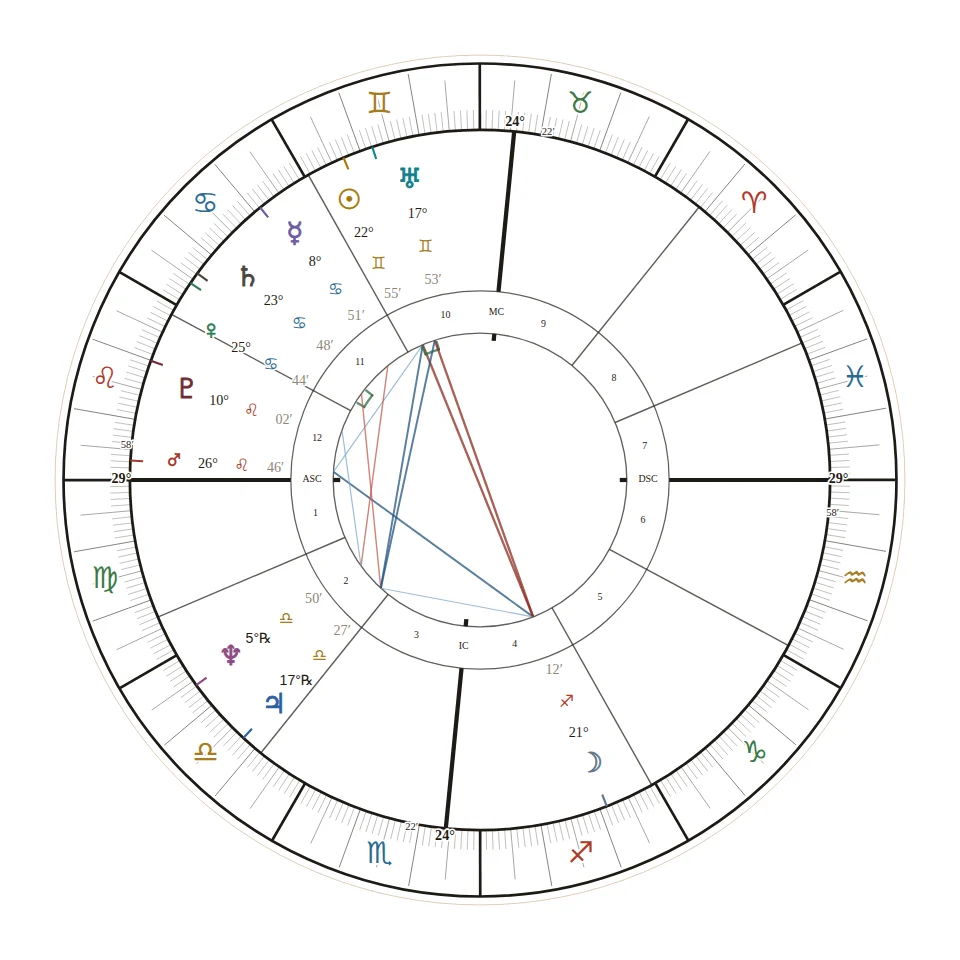
Trump's Mars falls on Brazil's Descendant, within two tenths of a degree. The Descendant is the house of other countries and of declared opponents, and Mars is force, pressure and confrontation. In Brazil's chart, Trump occupies exactly the place of the foreigner who applies pressure. That is what happened in 2025, with the tariff war, and it is what the sky keeps showing.
Trump's Pluto squares Brazil's Saturn, within a tenth of a degree. Saturn is the law, the institutions and the government; Pluto is power that wants to transform by force. It is Washington's pressure on Brazilian institutions: on the courts, on the rules of trade, on who is in charge.
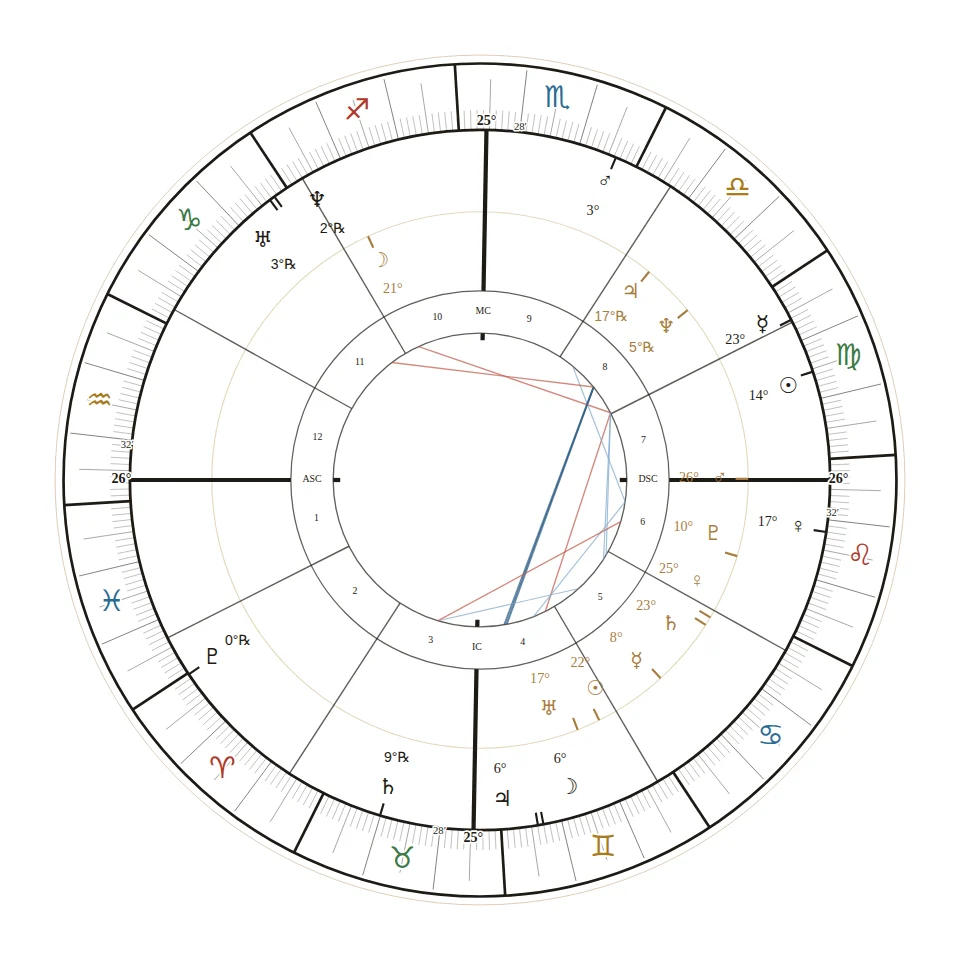
The two countries also cross. The Midheaven of the United States, the point of the American government, makes an exact opposition to Brazil's Pluto, which is the country's underlying power. They are two power structures staring each other down, with interests that often clash.
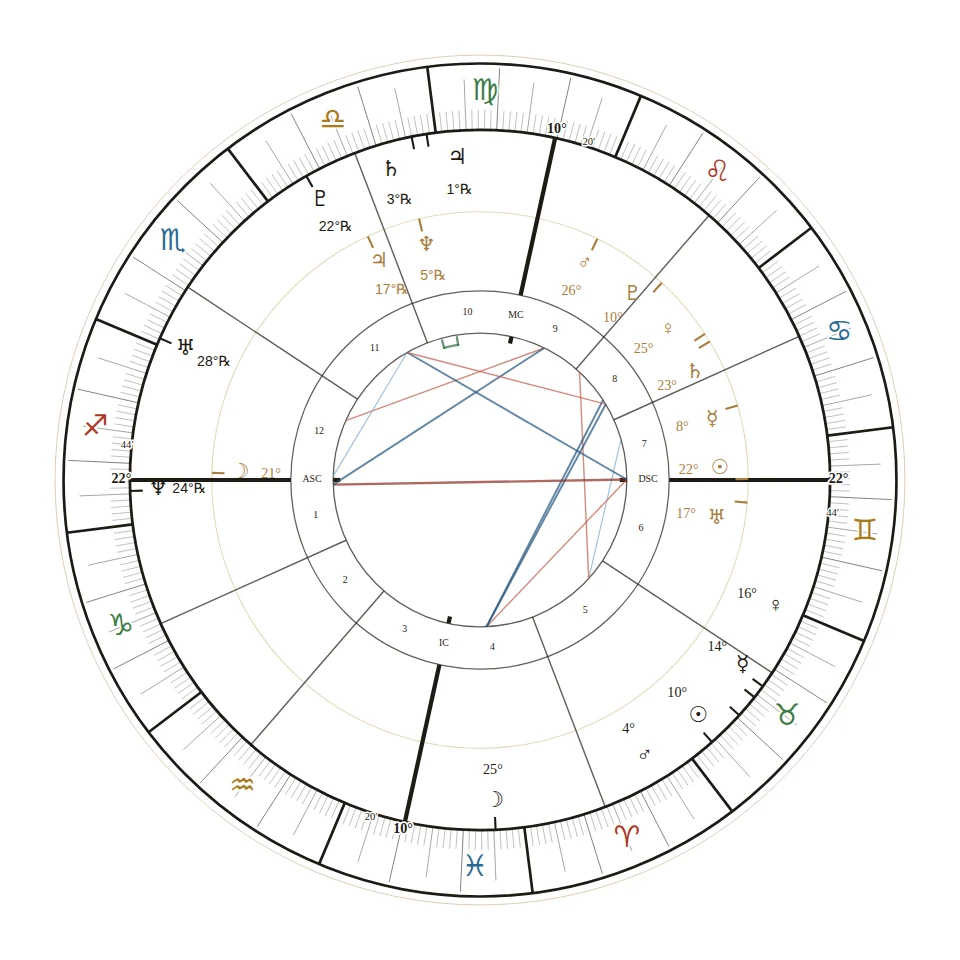
Trump's Sun falls on Flávio's Descendant, within two tenths of a degree. In reading two charts together, whoever falls on the other's Descendant occupies the place of the partner, the ally. Trump's Venus trines Flávio's Moon: there is personal affinity. But Trump's Pluto squares Flávio's Sun, and Pluto on the Sun is the power of one that can overshadow the identity of the other. It is the risk of Flávio appearing as a subordinate, and that is why each gesture he makes toward Washington can cost him votes at home.
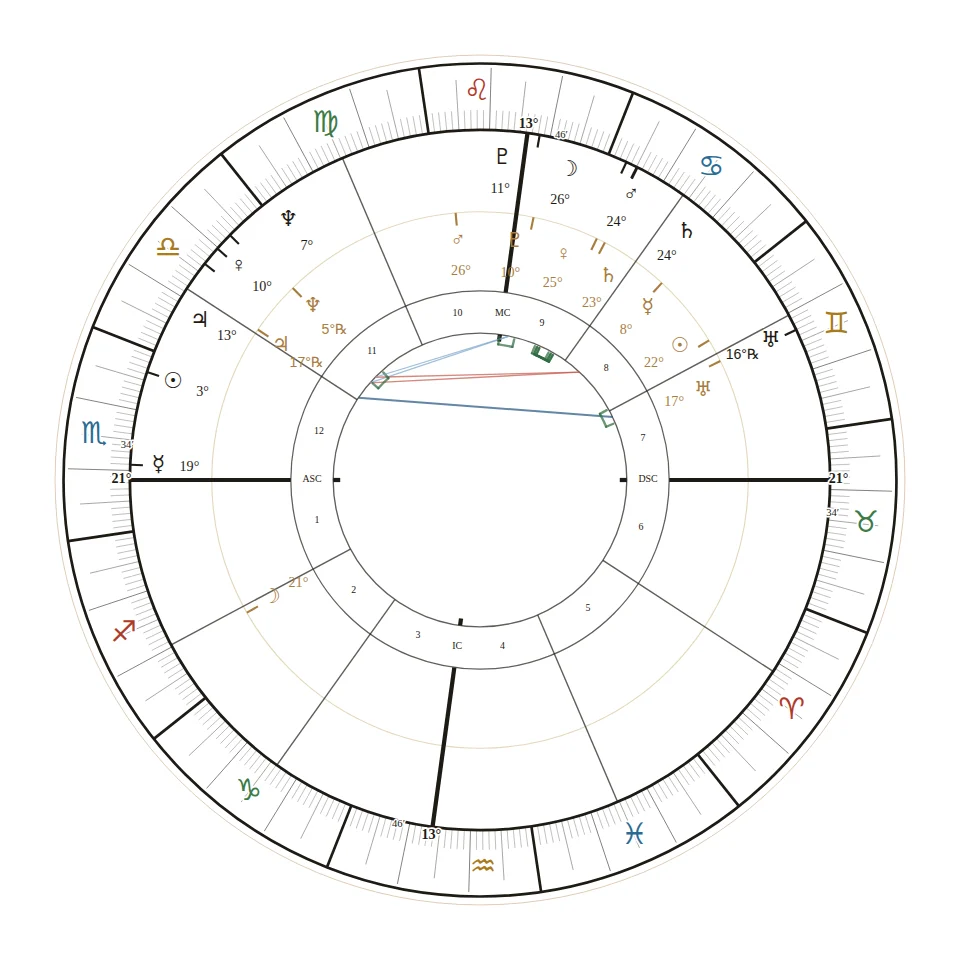
Trump's Venus falls on Lula's Moon, Mars and Saturn, all in Cancer. Venus is warmth and meeting. The sky explains the "excellent chemistry" Trump said he felt in 2025: the two get along personally, even with their governments at odds. With Lula, Washington's pressure tends to be commercial and negotiated; with Flávio, it tends to come through alliance, with the price every unequal alliance charges.
On 3 January 2026, the United States carried out a military operation in Venezuela and captured Nicolás Maduro, and Trump said the action should serve as a warning to anyone who threatened American sovereignty. In September, at the UN, he again cited the operation as proof that Washington is willing to act across the whole continent. Since then, many people have asked whether Brazil could be next.
In mundane astrology, armed conflict between two countries usually appears when the Mars or Pluto of one falls on the angles or on the Mars of the other, or when an eclipse hits those points. These are the classic signs of war.
The chart of the United States and Brazil's chart do not have that meeting: the American Mars and Pluto do not touch Brazil's angles or its Mars. The tensest contact between the two is the American Mars with the Brazilian Mercury, which is friction in words, in trade and in negotiation. And no eclipse in 2026 or 2027 falls on Brazil's Mars or angles; the one in February 2027 opposes the country's Venus, which speaks of agreements and trade.
Three points call for attention. Trump's Mars, his personal one, falls on Brazil's Descendant: the threat and the pressure come from him as a figure, more than from the country he governs. Pluto makes an exact square to Brazil's Mars on 7 December, which is pressure on the Brazilian Armed Forces. And Mars passes over Brazil's Descendant, the house of declared opponents, three times: on 18 November 2026, on 3 March 2027 and on 5 May 2027. These are the moments of the loudest tone, of threats and shows of force.
The sky describes pressure, threats and a war of words, with peaks in November, December, March and May. The signature of a war or an invasion does not appear. And Jupiter, which stations on Brazil's Descendant in December, is the planet of diplomacy and agreements: the path the sky points to for this pressure is negotiation. Foreign policy analysts reach the same place by another route: given Brazil's size and its institutions, American pressure tends to be economic, diplomatic and institutional.
Astrology reads tendencies and does not erase the unexpected. What it can say is that the pattern of the sky, today, is one of pressure and negotiation.
December is the month of pressure from abroad. On 12 December, Jupiter stations in the sky on Brazil's Descendant, the house of other countries. During the government transition, the relationship with the United States moves to the centre of the agenda: agreements, tariffs, statements.
At the inauguration, Jupiter passes over Trump's Mars. On 5 January 2027, Trump is in a moment of expansion and action. That is when he tends to move: to announce, to demand, to negotiate out loud.
By mid-2027, the sky weighs on Trump himself. Saturn squares his Saturn, and Neptune opposes his Neptune. These are transits of limits and wear, which ask him to split his attention with his own problems. The pressure on Brazil tends to lose strength from then on.
Saturn and Neptune, which met in February at the start of Aries, pass through house 2 of Brazil's chart, which is the house of money, income and the value of the currency. Saturn is adjustment, cuts and the bill that arrives; Neptune is uncertainty, inflated expectations and whatever cannot be seen clearly.
Together, they describe a year in which the country has to put its accounts in order without really knowing what things are worth. Economists say the same in other words: Citi's chief economist for Brazil calculates that an adjustment of 3% to 3.5% of GDP is needed to stabilise public debt. The sky adds a fact that matters: this adjustment comes whoever wins, because Saturn is passing through the country's own house 2.
Until the runoff, the mood is one of optimism. On voting day, Jupiter, the planet of expansion and confidence, trines Flávio's Ascendant. The market, which is already betting on him, lives this transit before the result.
In December, the risk of a correction appears. On 12 December, Neptune stations in exact opposition to Flávio's Jupiter, the ruler of his chart. Jupiter is promise; Neptune is illusion. It is the moment when euphoria meets the numbers, and when expectations that are too high tend to be revised downward.
If Lula wins, the market, going by the banks' own projections, reacts with a higher dollar. The sky over Brazil's house 2 stays the same: the adjustment in the accounts awaits any government.
Money is, at bottom, a belief: a banknote is worth what everyone believes it is worth. That is why Neptune, the planet of belief, stirs currencies and stock exchanges so much. The market rises and falls with what people expect, long before any fact. Reading the sky of an economy is reading the mood of a collective belief. At the end of 2026, it swings between hope in a new government and the adjustment that awaits whoever wins.
In short, the answers of this study are these:
- Will Trump intervene in Brazil? The sky shows pressure and influence from Washington on Brazil, strongest in December and in March 2027. It does not show the classic signature of armed conflict between the two countries: the pressure tends to be economic, diplomatic and verbal.
- How does the economy look? Saturn and Neptune pass through the house of money in Brazil's chart: a year of adjustment in the accounts and of uncertainty about what things are worth, whoever wins.
- And the stock exchange? Optimism until the runoff, because the market is betting on Flávio, and a risk of correction in December, when the promises meet the numbers.
The data behind this study: Donald Trump, 14 June 1946, 10:54, Jamaica (New York), AA rating in Astro-Databank. United States, 4 July 1776, 17:10, Philadelphia. Brazil, 7 September 1822, 16:30, Ipiranga (São Paulo). Lula, 27 October 1945, 06:10, Caetés (PE). Flávio Bolsonaro, 30 April 1981, 20:10, Resende (RJ), AA rating in Astro-Databank. Tropical zodiac, Placidus houses.
And the questions that come up most on this subject, with the short answer:
Could the United States carry out a military intervention in Brazil? In astrologer Shelly Gonella's research, the sky shows pressure and threats, with peaks in November 2026 and in March and May 2027, without the classic signature of armed conflict between the two countries: the Mars and Pluto of the United States do not touch Brazil's angles or its Mars, and no eclipse hits those points.
Will Trump intervene in Brazil? In astrologer Shelly Gonella's research, the sky shows pressure and influence from Washington on Brazil, already visible in the tariffs and the statements, and growing stronger in December, when Jupiter stations on the Descendant of Brazil's chart, the house of other countries.
How does Brazil's economy look in 2027, according to astrology? Saturn and Neptune pass through house 2 of Brazil's chart, the house of money: it is a year that calls for adjustment in the accounts and brings uncertainty about what things are worth. The adjustment comes whoever wins.
What does the sky show for the stock exchange? Optimism until the runoff, with Jupiter in trine to Flávio's Ascendant, and a risk of correction in December, when Neptune stations in opposition to his Jupiter and the promises meet the numbers.