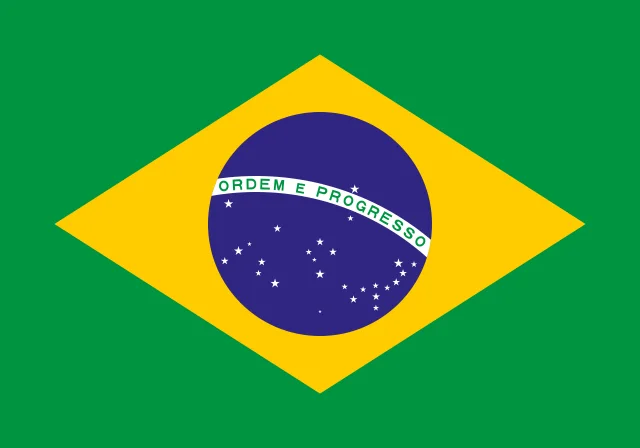
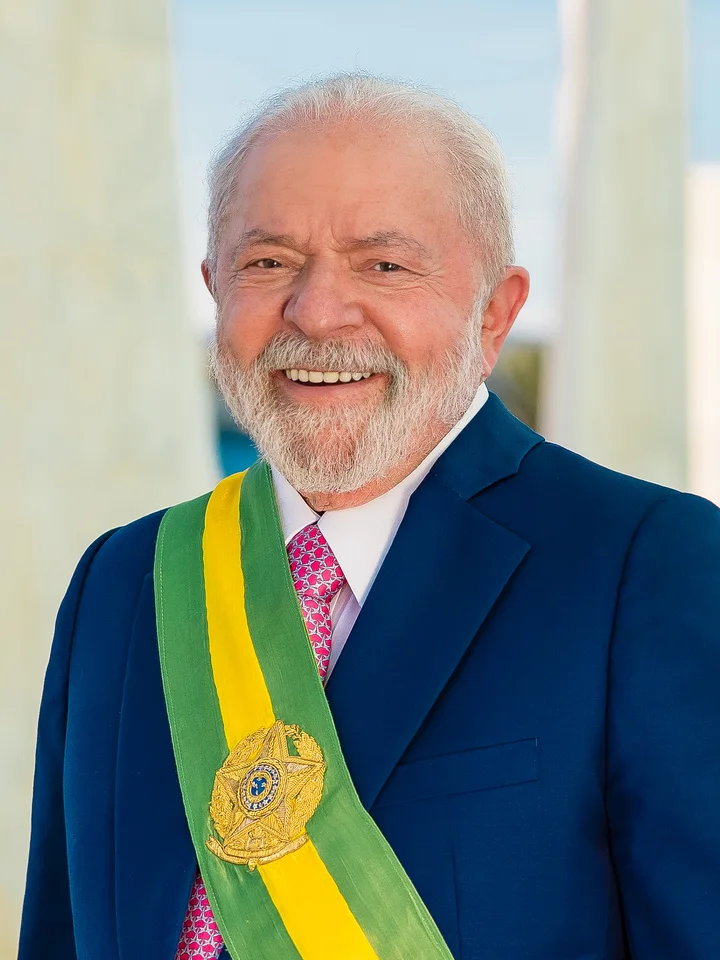
In astrologer Shelly Gonella's analysis, the strongest tendency for the 2026 runoff points to Flávio Bolsonaro, with 68% of the signs in the sky when the horary astrology technique is counted, and 85% when it's left out. Lula's chance exists, it's low, and it depends almost entirely on the horary chart. Whoever wins takes on a worn-out office, after a dispute that runs until mid-November.
The public reacts in waves: high turnout and a country split down the middle on 25 October, protest and blocked roads at the Full Moon in the early hours that follow, new peaks between 16 and 19 and on 24 November, and tempers settling by mid-December. The path to these answers, with the data, the charts and each method, follows below.
The analysis follows the order that classical mundane astrology recommends, from André Barbault to Nicholas Campion. First come the birth data, with what is solid and what is doubtful. Then, each candidate against Brazil's chart. Then, the theme of the era, given by the slow cycles and the eclipses. Then, the charts of the moment: the Sun's ingress into Libra, the two rounds, the horary astrology technique and the inauguration. Finally, the count, the public's reaction and a reflection on what all this says about us.
Some words come up again and again, and it's worth saying what each one means. The birth chart is the sky drawn for the minute and place someone is born, and that's why it needs the date, the time and the city. The Ascendant and the Midheaven are the two points that depend on the exact time: the Ascendant speaks of the person and their image, and the Midheaven, of career and public standing. Synastry compares two charts, here each candidate's with the country's. Transits show where the planets are on a given day and what point of a birth chart they're crossing. The event chart is the sky of a happening, such as the polls opening or the inauguration, calculated for Brasília. The ingress is the chart for the moment the Sun enters a sign that opens a season, and in the astrology of nations it describes the three months that follow. And the horary astrology technique is the chart for the minute the astrologer asks a question, which answers without depending on anyone's birth time.
All charts were calculated by the same engine that builds the charts on this site, with the tropical zodiac and Placidus houses. The positions, in degrees and minutes, are in the technical sheet at the end of the text, for anyone who wants to check the maths.
A chart is only as good as the time it was cast for. For public figures, that time comes by three routes: the birth certificate, an account from the person themselves or a family member, and rectification, which is the time an astrologer works out backwards, testing the events of a life against the sky. All three show up in this election.
Brazil's chart is the Independence one: 7 September 1822, on the banks of the Ipiranga, in São Paulo. The date and the place are solid. The hour comes from the historical account, which says "between 4pm and 5pm", and Brazilian astrologers have argued for decades over which minute holds, because the Ascendant changes sign in the middle of that span.
Paulo Duboc proposes two times: at 4:08pm, the Ascendant falls in Aquarius 22°14′ and the Midheaven in Scorpio 20°44′; at 4:58pm, the Ascendant moves to Pisces 3°26′ and the Midheaven to Sagittarius 2°53′. The most widely used version is the 4:30pm one, with the Ascendant in Aquarius 27°09′ and the Midheaven in Scorpio 26°08′.
In this piece I use 4:30pm, which is the most cited version. The planets barely move between one hour and the other; what changes is the Ascendant and, with it, the house of some planets.
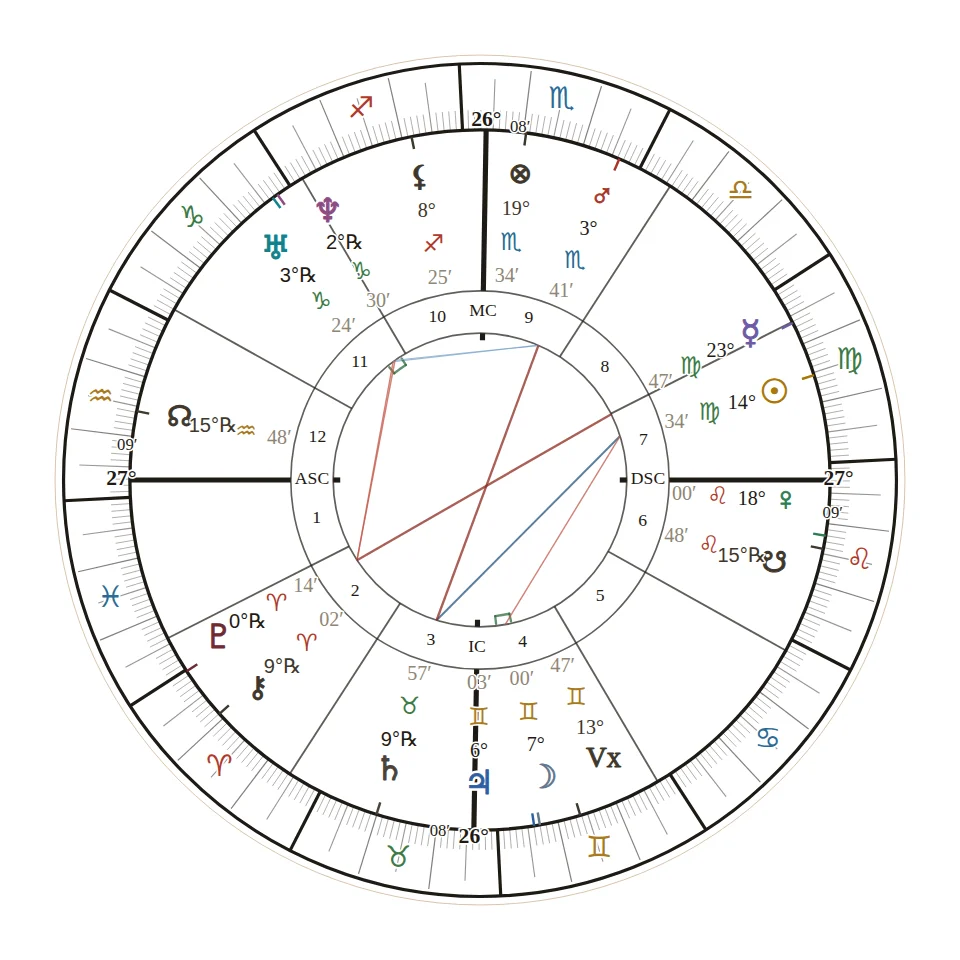
It is a country with the Sun in Virgo in house 7: it knows itself through the other, through agreements and partnerships, and measures itself by work well done. The Moon, which in the astrology of nations is the people, sits in Gemini next to Jupiter, in the Imum Coeli. A talkative, curious, changeable people, who expand through conversation. Venus in Leo and Mars in Scorpio give this country a taste for celebration and an intensity that does not forgive easily. Uranus and Neptune together in Capricorn, in house 11, speak of a collective ideal of institutional reform that never quite arrives finished.
Flávio Bolsonaro was born on 30 April 1981, at 8:10 pm, in Resende, Rio de Janeiro. Astro-Databank, the largest birth data archive used by astrologers worldwide, records this time with an AA rating, which is given to those whose birth certificate is in hand. The date and city match the Senate's official record.
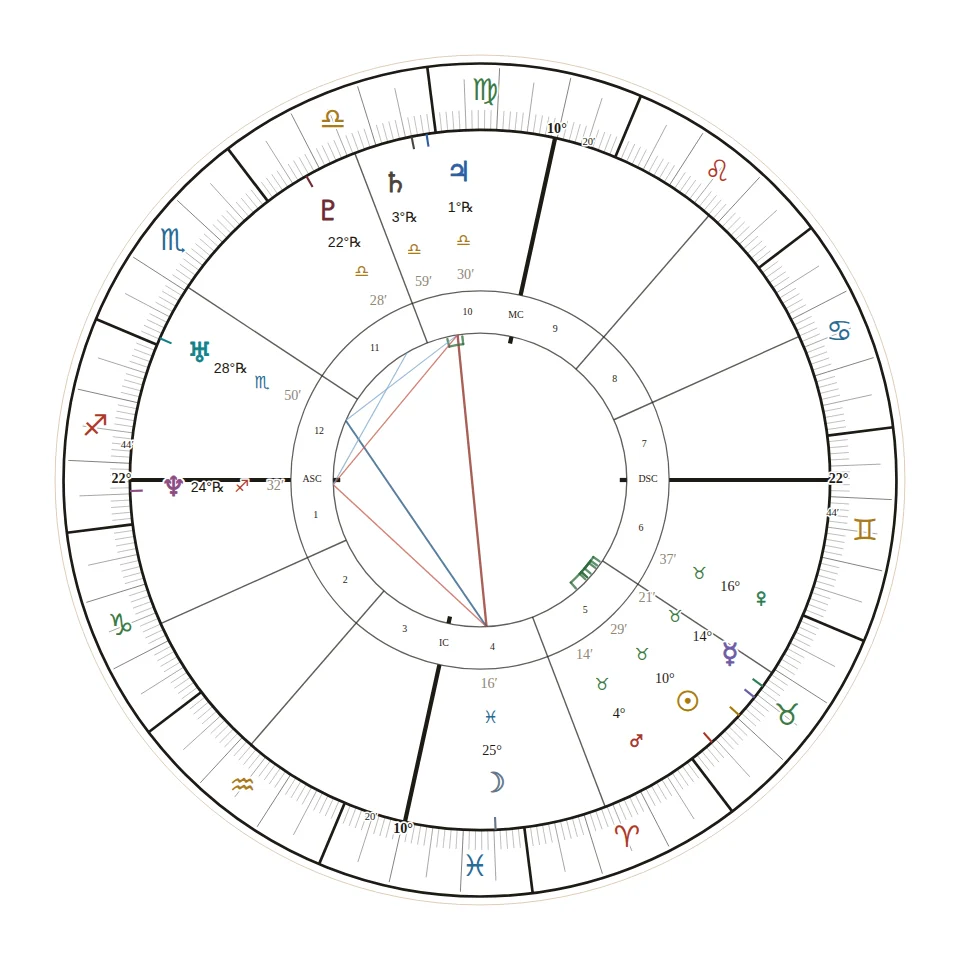
The chart has the Ascendant in Sagittarius 22°43′ and the Midheaven in Virgo 10°20′. The ruler is Jupiter, which sits in Libra, in house 10, alongside Saturn. It is the classic signature of someone whose public career is the centre of their life: the planet that represents the person lives in the house of office.
Four personal planets sit in Taurus, in house 5: the Sun, Mercury, Venus and Mars. Taurus is permanence, assets and loyalty to what already exists, with the stubbornness that comes with it, and house 5 is what a person puts on display. His public strength lies in persistence and in putting himself forward. The Moon, in Pisces 25°, falls in house 4, the house of family and origin: his surname and his bond with his father are the emotional foundation of his career. Neptune sits in house 1, two degrees from the Ascendant, and his public image arrives wrapped in a projection bigger than the person. Jupiter and Saturn together in Libra, both retrograde, are the conjunction of the 1980–1981 generation, here turned toward office: the law, the rule and the inheritance placed at the centre of public life.
Luiz Inácio Lula da Silva was born in Caetés, Pernambuco, which in 1945 was part of Garanhuns. The first doubt is the date. The certificate says 6 October 1945; Lula celebrates on 27 October. According to the Lula Institute, he and his siblings were registered years after being born, as was common in the Northeast backlands, and the clerk mixed up the dates when writing them down.
The second doubt is the time, and at least six versions circulate for it. The most cited is the one Lula himself gave astrologer Ivan Freitas: 27/10/1945, at 6:10 am, with the Ascendant in Scorpio 21°34′. Getulio Bittencourt gives 5:06 am, also with the Ascendant in Scorpio. Antonio Facciollo and Adonis Saliba's rectification arrives at 7:04 am, with the Ascendant in Sagittarius. Astrotheme records 8:00 am, "from memory or autobiography", with the Ascendant in Sagittarius 18°34′, and Maurice Jacoel, 8:27 am, also in Sagittarius. Constelar uses the registration date, 06/10/1945, with the time rectified to 6:29 am and the Ascendant in Scorpio 4°38′.
I go with 27 October, at 6:10am. It is the only version that explains the "06/10" on the certificate: there is an account that this number was the hour of birth, not the day. It also matches the date Lula has celebrated all his life. Even so, it is an account, and an account is not a certificate.
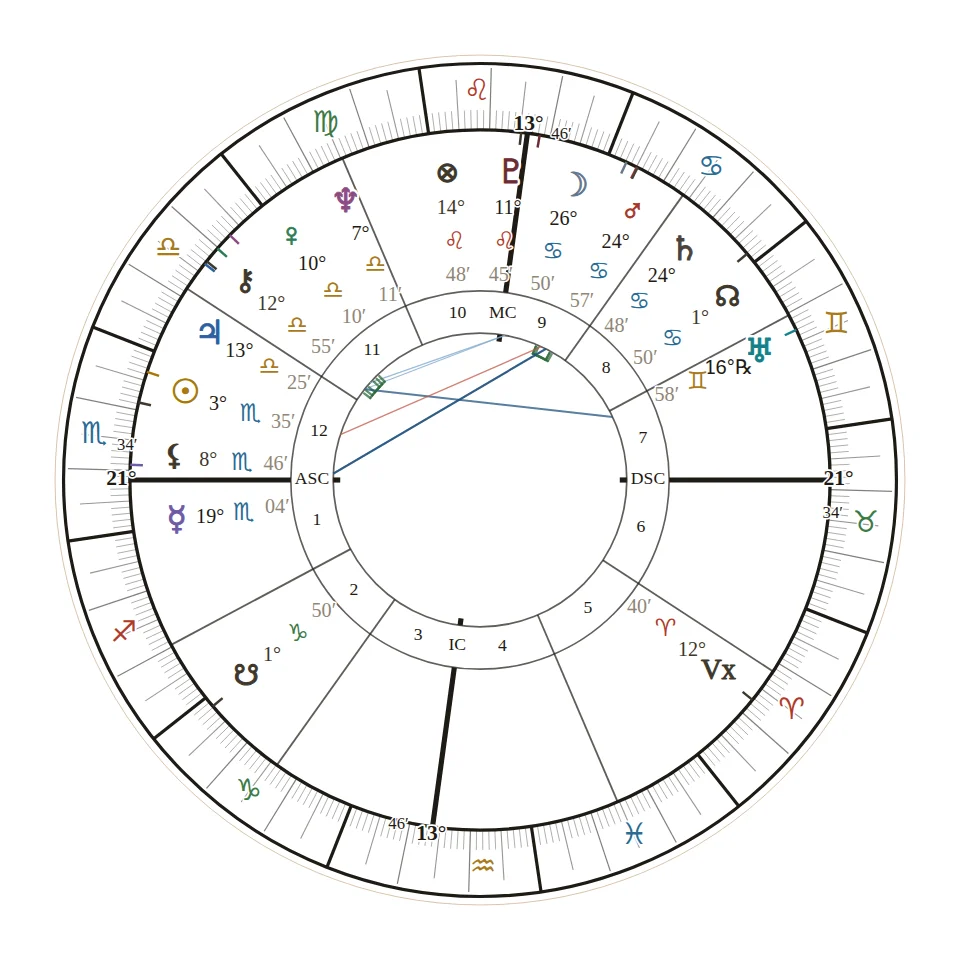
What holds true at any hour on the morning of 27 October: Sun in Scorpio, Moon in Cancer pressed against Mars and Saturn, Venus and Jupiter in Libra. The Moon only moves into Leo close to midday, and every version of the time falls in the morning, so the Moon in Cancer stands firm.
Scorpio is the sign of the one who survives and comes back, and Lula came back from more than one ending that had been declared final. The Moon in Cancer together with Mars and Saturn is the strongest mark on the chart: an emotion tied to family, to hunger and to origin, which turned into working strength and also into a burden. Venus and Jupiter in Libra, close to the Midheaven for anyone born at that hour, describe the negotiator, the man of the deal.
Synastry is the comparison between two charts: where one person's planets touch the other's. Between a person and a country, it shows what the country sees in that person, and what that person stirs up in it.
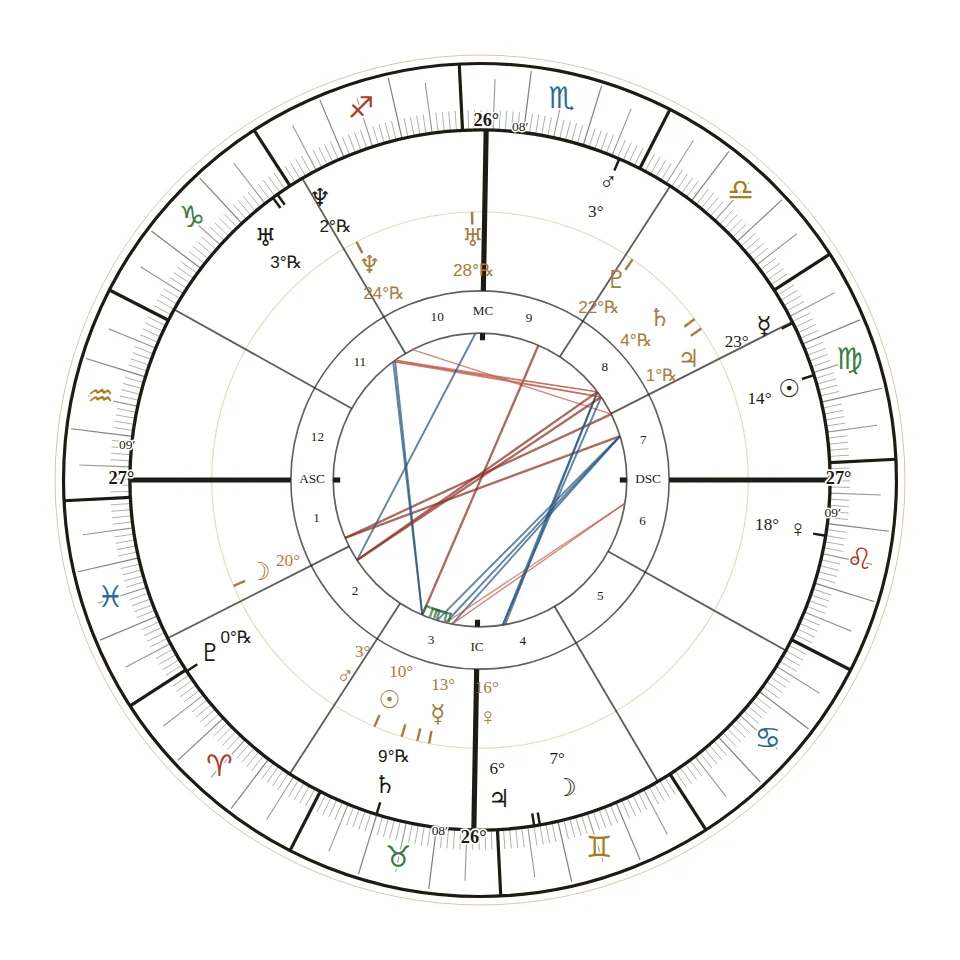
Flávio's Sun sits exactly on Brazil's Saturn, within two tenths of a degree. Saturn is authority, order, law and the weight a country carries. For part of Brazil, Flávio embodies the wish for order and hierarchy, and he also carries the demand Saturn always makes of those who identify with it. His Mars in exact opposition to Brazil's Mars is direct confrontation: his strength and the country's face each other.
With the birth-certificate time, the synastry gains the angles. Flávio's Moon trines Brazil's Midheaven, within less than a degree: an emotional link between him and the seat of government. His Midheaven falls close to Brazil's Sun, in Virgo, and his career goal aims at the country's centre. His Ascendant squares Brazil's Mercury, which is friction with discourse and with the press. And his Mercury and Venus trine Brazil's Sun, showing that his speech speaks the language of the country's identity.
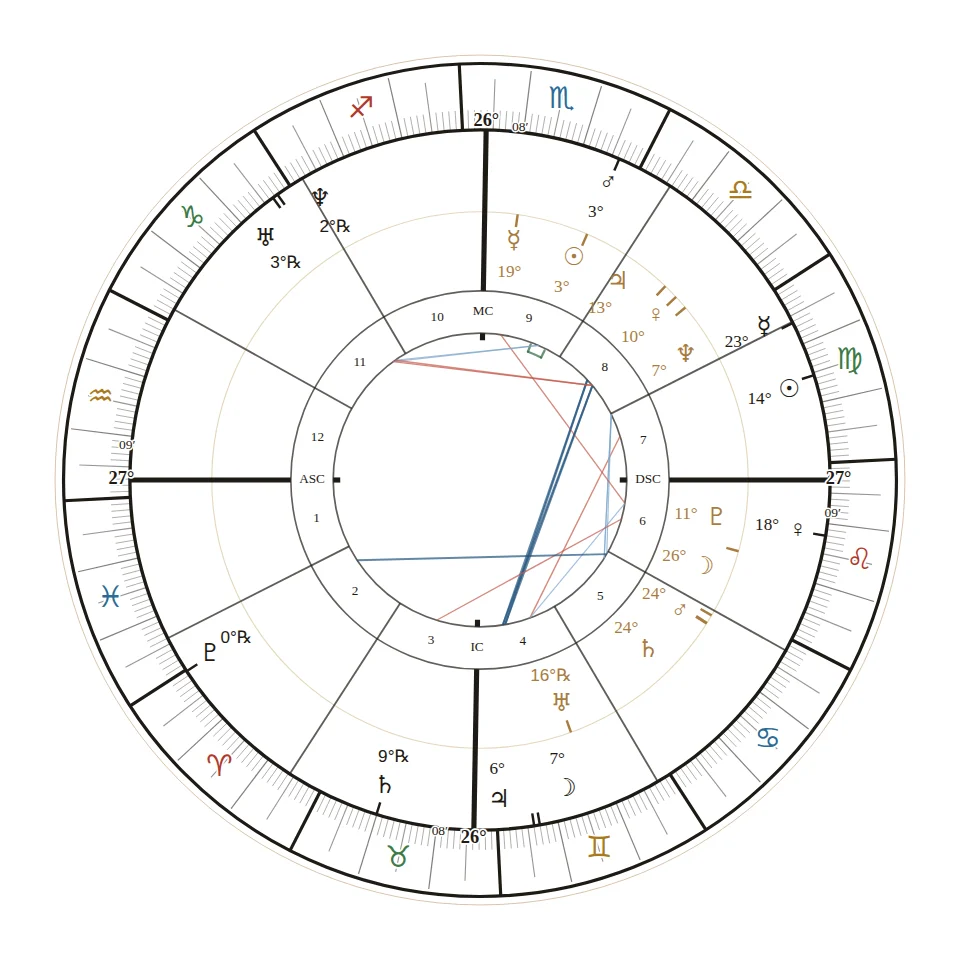
Lula's Sun sits exactly on Brazil's Mars, within a tenth of a degree. Mars is a country's fighting strength, its capacity to mobilise and also to clash. Lula embodies this for Brazil: he stirs up the country's combative spirit, for him and against him. There is no middle ground in this contact, and the history of the last forty years confirms it.
His Moon, Mars and Saturn, that trio in Cancer, trine Brazil's Midheaven, the seat of government. There is a natural affinity between Lula's emotion and the country's command post. His Neptune trine Brazil's Moon is the idealised image: the public projects a dream onto him, and Neptune is also the planet of disillusion when the dream goes unfulfilled. The tensions lie in Uranus and Pluto. His Uranus square Brazil's Sun is the break with the country's established identity; his Pluto square Brazil's Saturn is the clash with structures and institutions.
The other half of the synastry is the overlay: which area of the country's chart each candidate's planet falls into. Flávio occupies the houses of the street, of money and of the top. His four personal planets fall in Brazil's house 3: communication, the press, networks, everyday talk. His Moon, born at 8:10 pm, falls in house 2, which is money and income: voters connect with him through their pockets, which fits with how much purchasing power weighs on the vote. And his Uranus falls on the country's Midheaven, the figure who arrives at the seat of government as a break with the past.
Lula occupies the houses of work, of the world and of negotiation. His Sun and Mercury fall in Brazil's house 9, that of foreign policy and ideas: it's the diplomatic profile he's built. His Moon, Mars and Saturn sit at the end of house 5, within five degrees of house 6, and by the traditional rule they count in house 6. A country's house 6 is its workers, and for someone who came up through the union, that's exactly the place.
Both have planets in Brazil's house 8, that of crises, other people's money and what gets inherited. Lula brings Venus, Jupiter and Neptune there; Flávio brings Jupiter and Saturn, and on the most direct reading Flávio's house 8 is also political inheritance.
2026 opens a 36-year cycle. On 21 February, Saturn and Neptune met in Aries 0°45′, in the first degree of the zodiac. Saturn is structure, law and limit; Neptune is belief, dream and also illusion. When the two meet, ideologies wear down and remake themselves: what a country believed in loses shape, and a new belief asks for structure. In Brazil's chart, the meeting fell on Pluto, within less than a degree, and Pluto is the power behind the scenes, whoever actually controls things. It's a shift in the country's power structures, and it explains the tone of this election: the voter is choosing between two visions of the country, and the platforms fall into the background.
The same meeting touched Flávio's planet. Saturn and Neptune opposed his Jupiter, within 0.7°, and Jupiter is the ruler of Flávio's chart. Saturn in opposition demands proof and sets limits; Neptune in opposition inflates the image and blurs it. For Flávio, this means growing up fast, weighed down with expectations no one can fully meet, with voters projecting onto him more than he is.
Eclipses marked the year. The solar eclipse of 17 February, in Aquarius 28°, fell on Brazil's Ascendant: the country's identity in dispute, running through networks and groups. The lunar eclipse of 3 March, in Virgo 12°, fell on Brazil's Sun, the point of whoever governs, with jobs, health and public accounts on the table. And the total solar eclipse of 12 August, in Leo 20°, the one presiding over the election, squared Lula's Mercury and Ascendant: his campaign began with his message and image under strain. This layer stays out of the count on who wins, as mundane astrology dictates. It shows the election happening in a year of cycle change, with Flávio's ruler and Lula's Mercury both marked at the same time.
For a contest, traditional astrology has two main tools. The first is the event chart: the sky of the moment the dispute takes place, read by the rule William Lilly left behind in the seventeenth century, in which the candidate whose planets fall on the angles is the side the chart represents. The second is the horary astrology technique, which answers the direct question. I used both, plus the transits: where the planets of the day cross over the birth charts.
The quarterly chart opens the election. The Sun's ingress into Libra, calculated for the capital, rules the three months that follow, and in 2026 it happened on the night of 22 September, at 9:05 pm Brasília time. This chart's Ascendant sits in Taurus 13°, on Flávio's Mercury, within just over a degree, and the Midheaven sits in Aquarius 12°, opposite Lula's Midheaven, within less than a degree. Lula's point of government falls on the quarter's Imum Coeli, which is where a cycle ends, and Flávio's voice sets the agenda.
In the first round, on 4 October, Flávio took 47.03% of valid votes, and Lula 45.16%. At 5 pm, when the polls closed, Brasília's sky had the Ascendant in Pisces 25°43′, on Flávio's Moon, within less than half a degree. The Moon, in an election, is the people, and in the minute voting closed, the sky placed Flávio's Moon in the chart's most visible spot.
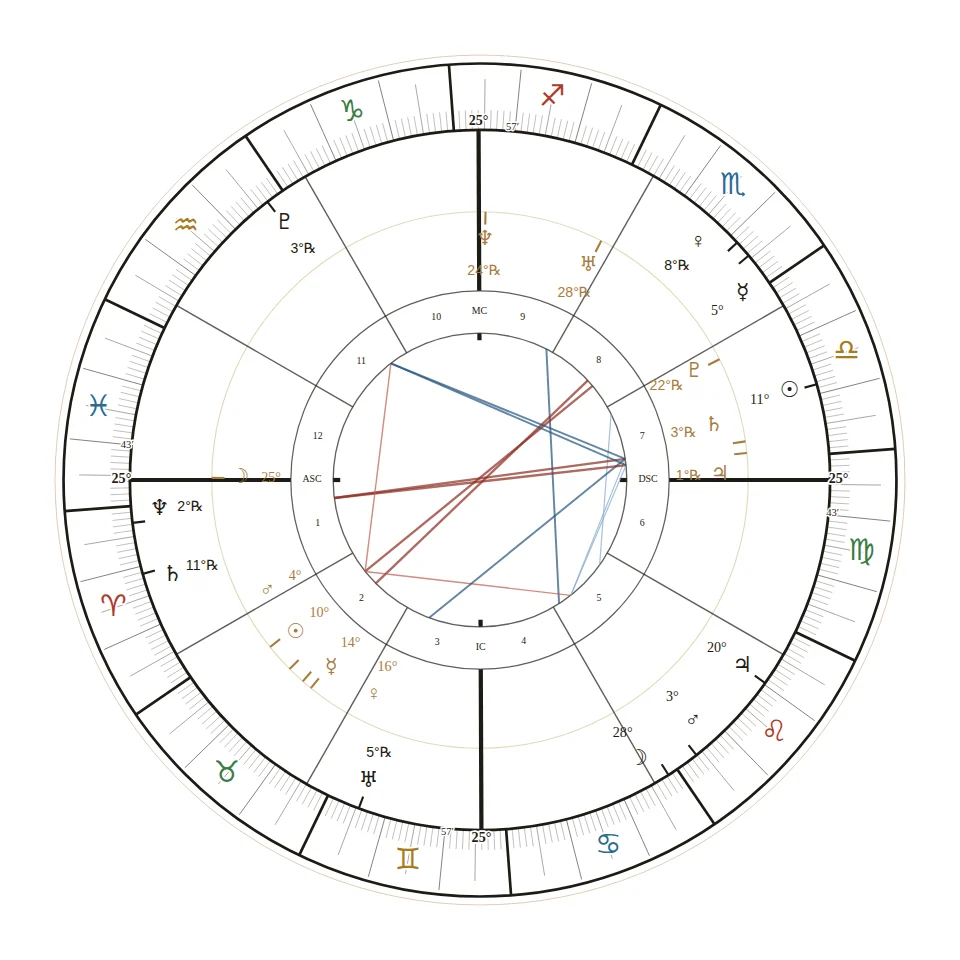
At 5:25 pm the first partial results came in, with Flávio ahead from the very first number. At that minute, the Ascendant sat in Aries 1°48′, in exact opposition to Flávio's Jupiter, and the Midheaven squared the same Jupiter. The planet that represents Flávio sat on an angle of the sky when the country saw the first result, and Jupiter on an angle is visibility and luck.
Lula, that same day, had two planets weighing on his Sun. Mars and Pluto squared his natal Sun, within less than half a degree. The Sun is identity and personal strength; Pluto in square is the feeling of losing control of something once held firmly. Saturn was still opposing his Venus, which is the capacity to charm and to be chosen. And the Moon spent the entire count in Cancer without forming a single aspect, which in tradition marks a matter that doesn't resolve that day: the election would go to a runoff.
On Saturday, 3 October, at 11:44 am, in Porto Ferreira, in the interior of São Paulo, I asked the question: which of the two has a better chance of winning the presidency? This chart has the Ascendant in Capricorn 14°15′ and the Midheaven in Libra 6°21′, and it can be judged: the Ascendant is neither at the start nor the end of the sign, the Moon still has an aspect to make, and Saturn isn't in houses 1 or 7.
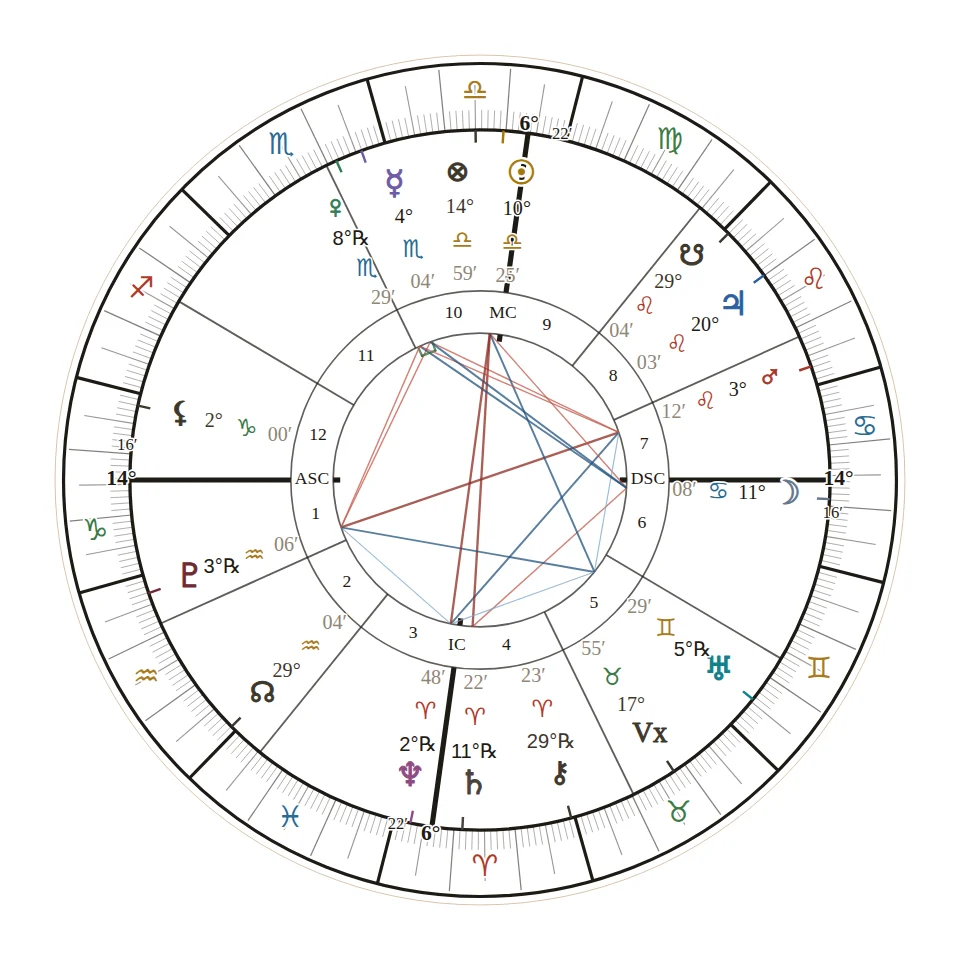
In an election with a sitting president running, the rule is to give house 10, that of office, to whoever already holds it, and house 4, its opposite, to the challenger. Lula is house 10, in Libra, and its ruler is Venus, in Scorpio 8°29′, inside house 10 itself. Flávio is house 4, in Aries, and its ruler is Mars, in Leo 3°12′, in house 7. Venus is weak: in Scorpio she's in detriment and about to turn retrograde. And Scorpio is Mars's domicile, so Lula's planet sits under the power of Flávio's planet. It's the clearest power relation in the horary chart, and it favours the challenger. Mars, for its part, moves direct, in an angular house and without debility.
On Lula's side, the horary chart holds a date. At 6 am on 25 October, Venus returns to Libra, where she rules the house, and in tradition the significator that regains strength on the day of the outcome carries weight. It's the strongest argument on Lula's side in this election, and the only one that doesn't depend on anyone's birth time. The office, in the horary chart, is worn down: the Sun, the natural ruler of whoever governs, is in fall in Libra, inside house 10.
Between the two rounds, three transits stay active over Brazil's chart the whole time. Uranus crosses the country's Moon and Jupiter, in house 4: a restless public, with sudden swings in mood and voting intention. Neptune squares Brazil's Neptune and Uranus, in house 2: a hazy economy, rumour, disinformation, expectations that don't pan out. And Pluto squares Brazil's Mars, in house 12: pressure on the Armed Forces and security, conflict running underneath.
Week by week, the first round fell on a day of confrontation, with Mars in exact square to Brazil's Mars. On the 8th, Mercury opposite the country's Saturn brings hard news and gridlocked debate, and between the 8th and the 10th, Mars sextile Brazil's Jupiter and Moon mobilises the voter. The New Moon of 10 October, in Libra 17°, in house 8, opens the cycle of alliances. Between the 11th and 12th comes a truce: the Sun sextile Brazil's Venus brings support, and Mercury sextile the country's Sun favours debate and proposals. Then comes the tensest week. On the 14th, Neptune exactly squares Brazil's Neptune, the peak of disinformation. On the 15th, Mars square the country's Saturn is the clash with institutions, and between the 15th and 16th Pluto stations and turns direct again, with the aspect on Brazil's Mars at its peak. On the 16th, Mercury square the country's Venus brings a speech that damages the image. The final week cools down: Venus crosses Brazil's Mars on the 19th, the Sun trines the country's Ascendant on the 20th and lifts spirits, and Venus sextile Brazil's Neptune on the 21st brings the emotional appeal.
The runoff is on 25 October. At 8 am, when the polls open, the Ascendant sits in Sagittarius 9°, and the morning Moon, in Aries, trines Flávio's Ascendant, within two tenths of a degree. The voter's mood, on the morning of the vote, flows in his direction. On Lula's side, the opening Ascendant sextiles his Venus, within a degree, and the morning also opens a door for Lula's charm.
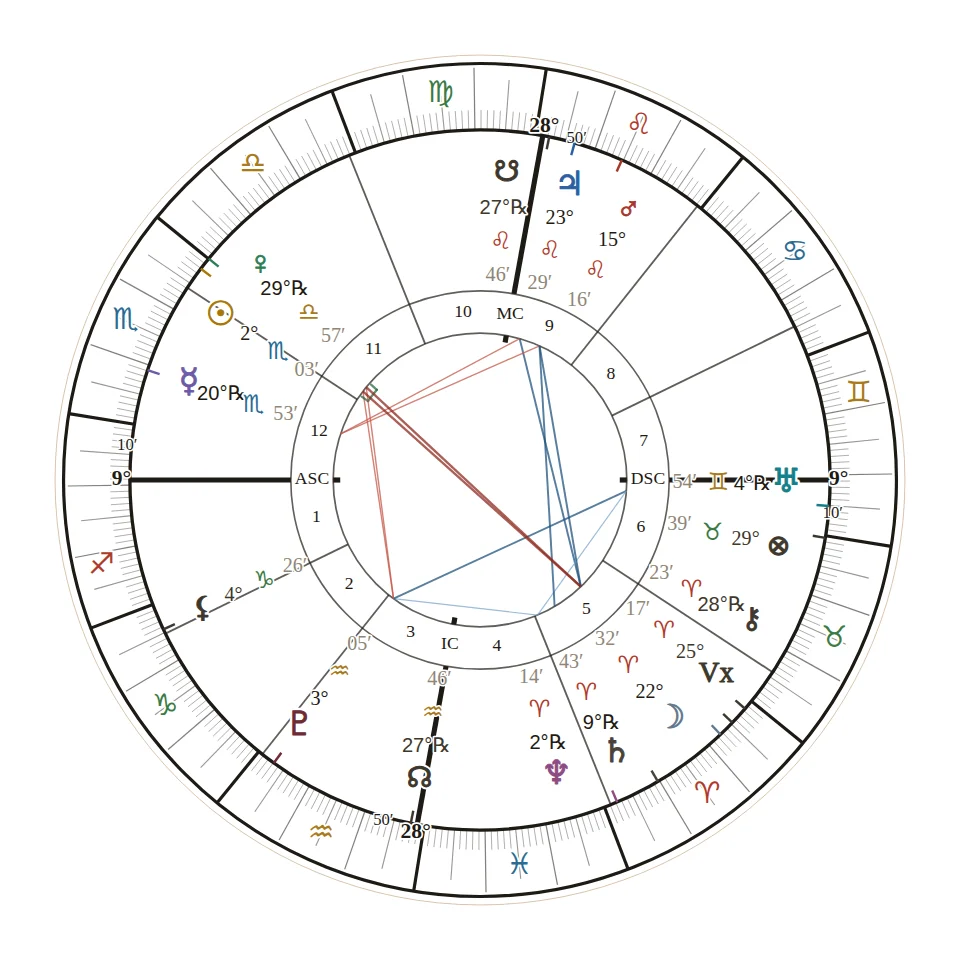
In the candidates' charts, the strongest sign of the day is a transit. Jupiter sits in Leo 23°, trine Flávio's Ascendant, within less than a degree. Jupiter is the ruler of his chart: it's the planet that represents Flávio moving in harmony over the point that represents Flávio, and in electoral astrology it's one of the most cited transits for victory.
Lula reaches the day under a heavy sky. Saturn opposes his Venus within less than half a degree, which puts resistance into his ability to charm voters, and Pluto keeps squaring his Sun, drawing closer to the exact hit, which comes on 2 December. The day before, 24 October, Mercury stations and turns retrograde in Scorpio 20°58′, right on Lula's Ascendant. Mercury stationed on the Ascendant is his words under review: the appeal, the dispute, the speech that needs reworking.
Astrology does not produce statistical probability, and I won't pretend it does. What can be done honestly is to weigh each sign in the sky and see how the total splits. I gave a weight of 3 to the strong sign, 2 to the medium one, and 1 to the weak one. The weights are my own choice, as an astrologer, and that's why they're all written out here, for anyone who wants to redo the sum with their own criteria. Only the runoff signs count, because that's where it's decided who governs.
On Flávio Bolsonaro's side there are six signs. Jupiter, the ruler of his chart, trine the Ascendant on election day, with strong weight (3). The heavy transits and arcs on Lula, which are Pluto square the Sun, Saturn opposite Venus and, by solar arc, Pluto over his natal Sun, also with strong weight (3). The Sun's ingress into Libra, with the Ascendant on Flávio's Mercury and the Midheaven opposite Lula's Midheaven, with medium weight (2). The synastry with Brazil, with the Sun over the country's Saturn and the Moon trine the Midheaven, with medium weight (2). Mars dominating Venus in the horary astrology technique, with medium weight (2), which only counts with the horary chart. And the Moon at the polls' opening trine Flávio's Ascendant, with weak weight (1).
On Lula's side there are four. Venus regaining strength on election day, by returning to Libra on the 25th itself, with strong weight (3), which only counts with the horary chart. Venus turning direct again on the night of 13 November, the closing of the horary dispute, with weak weight (1), which also only counts with it. The opening Ascendant sextile Lula's Venus, with weak weight (1). And the synastry with Brazil, with Lula's Sun over the country's Mars, with weak weight (1).
With the horary astrology technique, the count gives Flávio 13 points and Lula 6: 68% and 32%. Without it, it gives Flávio 11 points and Lula 2: 85% and 15%. Flávio stays ahead in both scenarios, and the horary chart, which is Lula's strongest argument, only narrows the gap.
What this number measures: each sign in the sky enters the count with a weight, and the 68% is the share of that weight pointing to Flávio. It shows which way the reading leans and how firmly. An electoral poll estimates votes; this count measures the tilt of the sky, and the ballot box gives the final score.
Other areas point the same way. On the eve of the first round, JPMorgan projected the dollar at R$4.90 with Flávio and R$5.50 with Lula (Times Brasil, 3 October), and after the result, analysts expected the stock market to rise close to 10%, "with investors anticipating a Flávio victory" (Seu Dinheiro, 4 October). In the polls, Lula was beating Flávio by 7 points in a runoff scenario earlier in the year (Quaest, January), there was a technical tie in March, 46% to 43% (Datafolha, March, via Reuters), and at the end of September Flávio pulled ahead for the first time, still within the margin of error: 47.7% to 47.6% in the AtlasIntel poll with Bloomberg (SP Diário) and 46% to 45% in Nexus with BTG (Gazeta do Povo). The difference lies in the intensity: the polls still call it a technical tie, while the astrological reading gives Flávio 68% of the signs.
Brazilian law only provides for two rounds. "Third round" is the popular name for what happens when the dispute carries on after the vote: court challenges, recount requests, a result not accepted. And the sky marks exactly that. From 24 October to 13 November, Mercury turns retrograde in Brazil's house 9, that of the courts, and since it started on Lula's Ascendant, the review begins on his side. During the retrograde, Mercury opposes Brazil's Saturn, the institutions, twice, on 6 and 21 November. On 13 November, Mercury and Venus both turn direct again. Venus stations in Libra 22°51′, in exact sextile to Flávio's Ascendant and on his Pluto, and that's the moment support firms up and the matter unlocks.
On 18 November, Uranus exactly trines Flávio's Saturn, in house 10: the change in authority starts to be accepted as fact. Between 16 and 19 November comes the peak of confrontation, with Mars square to Brazil's Midheaven and then over the Descendant, the house of declared opponents, and on the 19th Jupiter exactly squares the country's Midheaven: expectations for the next government rise faster than its capacity to deliver.
On 2 December, Pluto exactly squares Lula's Sun, the strongest pass of this transit: it's the month the pressure on his figure reaches its peak. On 6 December, Pluto exactly squares Brazil's Mars, the third pass, with pressure on security. The New Moon of 9 December, in Sagittarius 17°, falls in Brazil's house 10 and marks the start of the new government's cycle. On 12 December, Neptune stations in exact opposition to Flávio's Jupiter, the ruler of his chart: it's the fog over the one elected, with promises bigger than the government can deliver, rumour and disillusion for those who expected too much. The same day, Jupiter stations over Brazil's Descendant, and relations with other countries enter the transition carrying weight. On 19 December, Pluto exactly trines Flávio's Saturn, and his power gains structure, with team, alliances and base organising ahead of the inauguration. On 27 December, Pluto exactly squares his Mars: the first tug of war of a government that hasn't even started yet.
The Sun's ingress into Capricorn, on 21 December, at 5:50 pm Brasília time, rules the three months that begin there. This chart's Midheaven, the seat of government, falls in Pisces 24°, on Flávio's Moon, within less than a degree. It's the figure of whoever holds power in the quarter when the sash changes hands. And on 3 January Venus crosses Brazil's Midheaven, giving the new government a good image in its first days.
At the inauguration, on 5 January 2027, at 3pm, the Moon is in Sagittarius 22°26′, on Flávio's Ascendant, three tenths of a degree away. On the day the office changes hands, the people are on the point of the chart that represents him as a person. The inauguration's Ascendant falls in Taurus 24°, and Lula's Ascendant falls on that chart's Descendant, the place of the opposition.
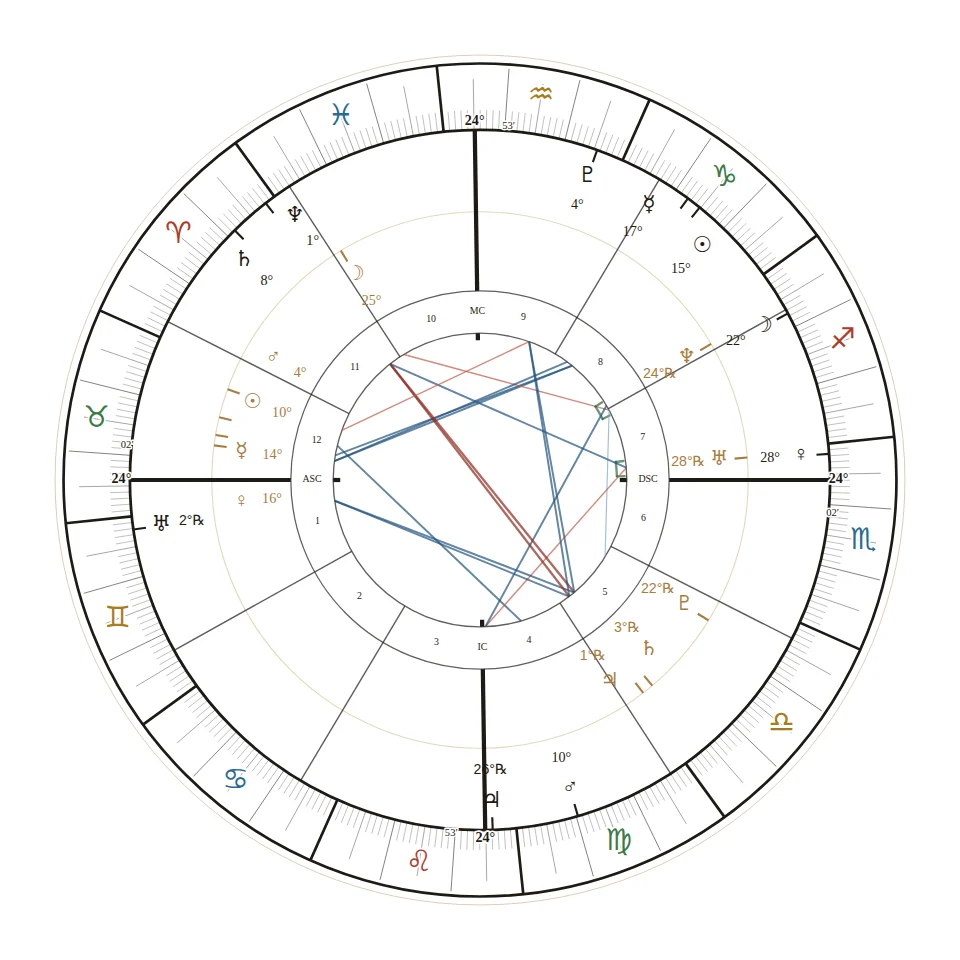
The office arrives worn out. The ruler of the inauguration's house 1 is Venus in Scorpio, in detriment, in house 7. The ruler of house 10 is Saturn in Aries, in fall, in house 11. It's a government that starts dependent on Congress and its allies, with difficulty talking to those who lost. The same day, Jupiter exactly squares Brazil's Midheaven, the second of three passes, which closes in early July 2027: big promises, big spending, and friction over the scale of what's promised. Flávio's chart for this period favours his arrival in office. His progressed Midheaven trines his natal Ascendant, and his progressed Ascendant sextiles his Sun, which are the slow movements within his own chart that tend to accompany a public promotion. The weight comes after the inauguration, with Neptune and Pluto over the house 10 planets.
In the astrology of nations, the people are the Moon. To know how the country reacts, I look at the Moon of each day, the lunations, which are the moments collective feeling reaches its peak, and what crosses over Brazil's natal Moon. That Moon sits in Gemini, beside Jupiter, and has Uranus on it the whole autumn, within less than two degrees. It is the sky of a restless people, who change their mind suddenly and speak louder than usual.
In the runoff, the Moon spends the day in Aries, the sign of impulse and quick decisions. In the morning it trines Jupiter, in Leo: people waking up early to vote, long queues, the feeling that every vote decides, in a turnout driven by the wish to win. In the late afternoon, at the moment the result comes out, the Moon opposes Venus, who has just returned to Libra. Libra is the sign of the scales, and opposition is the mirror aspect: two halves of equal size, facing each other, each one seeing in the other what it can't stand in itself. The Moon reaches the last degree of Aries and goes void of course, and the number comes out without convincing whoever lost.
In the early hours of 26 October, a few hours after the count, there's a Full Moon in Taurus 3°50′. The Sun sits exactly on Brazil's Mars, and the Moon opposes it: the country's fighting spirit lit up on both sides at once. Sun and Moon square Pluto, at the same degree, across three fixed signs, a rigid configuration in which no one gives way. The Full Moon falls in Brazil's house 3, that of roads, transport and networks, and sits within less than half a degree of Flávio's Mars, his combative strength exposed at the moment the country's feeling runs highest.
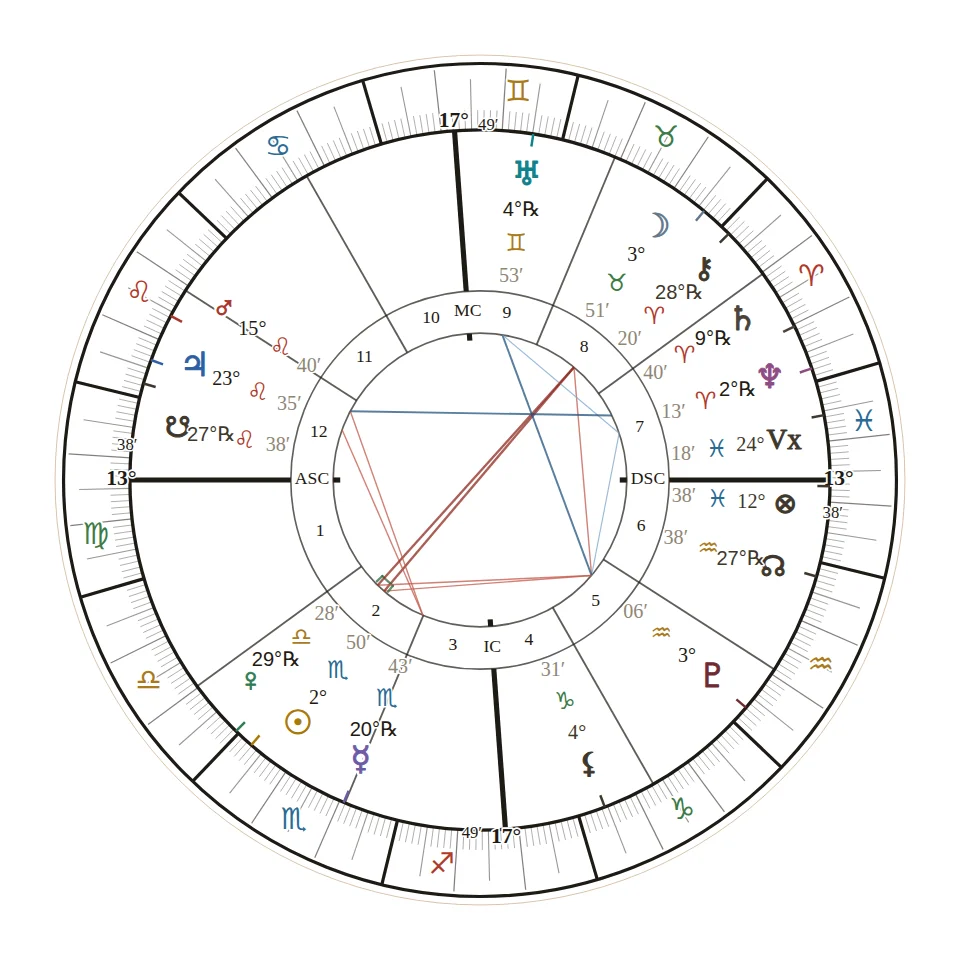
Putting it all together, the picture is one of protest, of blocked roads, of parked lorries, of a wave of outrage that won't accept the number and organises itself by phone. Taurus is the sign of the body and the land: it's a protest that stays put, that occupies, that won't move. And it's also the sign of money and supply, through which the pressure reaches the rest of the country. In the weeks that follow, with Mercury retrograde in the house of the courts, the feeling leaves the street and moves into the legal appeal. It rises again between 16 and 19 November, in the confrontation over who governs, and on 24 November, at the Full Moon in Gemini 2°, which forms alongside Uranus and over Brazil's Moon and Jupiter: the public reacting with surprise to news or a decision nobody expected. Between 10 and 13 December, Saturn and Neptune both turn direct again and Jupiter stations in the sky, and three slow planets changing direction in the same week is the sign that solid ground returns. The country reaches Christmas tired of the fight, the wound still open, but off the streets.
After so many numbers, it is worth looking at the whole picture, because it says more about Brazil than about the two men.
The leader is a mirror. Lula's Sun falls on Brazil's Mars; Flávio's Sun falls on Brazil's Saturn. The two tightest contacts in this election, one and two tenths of a degree apart, show each candidate embodying a part of the country that already existed before them. Mars is the Brazil that fights, that mobilises, that takes to the streets. Saturn is the Brazil that wants order, rules, hierarchy, firm ground. No country is only one of the two. When we choose a candidate, we choose which of these parts leads for four years, and the other stays here, whole, waiting its turn.
The division is a symptom. Uranus crosses Brazil's Moon, the people, and Neptune touches the country's own Neptune, the collective dreams. It is the portrait of a nation on edge and of a collective imagination in a fog, where it's hard to tell what's fact. Jung's psychology calls shadow what we don't recognise in ourselves and so see, magnified, in the other. A polarised society is one in which each half carries the other's shadow, and the opponent becomes the dumping ground for everything one refuses to look at at home.
The third round is the difficulty of losing. Mercury retrograde in the house of Justice describes an election that refuses to close. Greek myth gives Hermes, their Mercury, the role of messenger between worlds and also patron of tricksters and of borders. When speech moves backwards, each side revises the message until it says what it wanted to hear. A democracy depends on something no chart calculates: the willingness of the loser to go on living in the same country as the winner.
And the office arrives worn out. In the horary chart and at the inauguration, the ruler of government comes out weak: the Sun in fall, Saturn in fall. The sky of this election promises no one a strong government, and that may be the most useful message of all: the question "who will win" matters less than the question "how will we be governed, by ourselves, afterwards".
There is an old idea in philosophy that fits here: that a city is made of its people before it is made of its laws, and that a people gets the government their shared character is able to sustain. Brazil's chart has the Sun in house 7, the house of the other. It is a country that discovers itself through partnerships and loses itself when it treats the other as an enemy. The sky shows the mood of the election. The vote, and the day after it, remain ours.
Two things could change this reading. The first is Flávio's birth time: the AA rating comes from a certificate sent to the data archive by a contributor, and I haven't seen the document myself. The second is the horary astrology technique, which still says that Venus, who represents Lula, regains strength on the 25th. It's the strongest argument on his side, and the only one that doesn't depend on anyone's birth time.
In short, in astrologer Shelly Gonella's analysis, the winner of the 2026 election is Flávio Bolsonaro, with 68% of the signs in the sky for the runoff when the horary astrology technique is counted, and 85% when it's left out. Lula's chance exists, it's low, and it comes almost entirely from the horary chart, through Venus's return to Libra on election day. The dispute carries on in the courts until mid-November, the country reacts in the streets in the early hours of 26 October, and the government begins, on 5 January 2027, with the Moon on Flávio's Ascendant and a worn-out office.
Technical sheet: positions and aspects
All charts in the tropical zodiac, Placidus houses and Brasília time.
In Brazil's chart, of 7/9/1822, at 4:30pm, the Sun is in Virgo 14°34′, in house 7; the Moon, in Gemini 7°00′, in house 4; Mercury, in Virgo 23°47′, in house 7, or in house 8 with the 4:08pm time; Venus, in Leo 18°00′, in house 6; Mars, in Scorpio 3°41′, in house 9; Jupiter, in Gemini 6°03′, in house 4; Saturn, in Taurus 9°57′ retrograde, in house 3; Uranus, in Capricorn 3°24′ retrograde, and Neptune, in Capricorn 2°30′ retrograde, in house 11; and Pluto, in Aries 0°14′ retrograde, in house 2.
In Lula's chart, of 27/10/1945, at 6:10am, the Ascendant is in Scorpio 21°34′ and the Midheaven in Leo 13°46′. The Sun is in Scorpio 3°35′, in house 12; the Moon, in Cancer 26°50′, in house 9; Mercury, in Scorpio 19°04′, in house 12; Venus, in Libra 10°10′, in house 11; Mars, in Cancer 24°57′, in house 9; Jupiter, in Libra 13°25′, in house 11; Saturn, in Cancer 24°48′, in house 9; Uranus, in Gemini 16°58′ retrograde, in house 7; Neptune, in Libra 7°11′, in house 11; and Pluto, in Leo 11°45′, in house 9.
In Flávio Bolsonaro's chart, from 30/4/1981, at 8:10 pm, the Ascendant sits in Sagittarius 22°43′ and the Midheaven in Virgo 10°20′. The Sun is in Taurus 10°30′, Mercury in Taurus 14°21′, Venus in Taurus 16°37′ and Mars in Taurus 4°14′, all four in house 5; the Moon, in Pisces 25°18′, in house 4; Jupiter, in Libra 1°35′, and Saturn, in Libra 4°03′, in house 10; Neptune, in Sagittarius 24°33′, in house 1; Uranus in Scorpio 28°53′ and Pluto in Libra 22°30′. Jupiter, Saturn, Uranus, Neptune and Pluto are retrograde.
Between Lula and Brazil, the aspects, from tightest to widest, are these: Lula's Sun conjunct Brazil's Mars, within 0.1°; his Neptune trine the country's Moon, within 0.2°; the Sun sextile Uranus, within 0.2°; the Moon trine the Midheaven, within 0.7°; Saturn sextile Mercury, within 1.0°; Uranus sextile Venus, within 1.0°; Mercury square Venus, within 1.1°; Neptune trine Jupiter, within 1.1°; Mars trine the Midheaven, within 1.2°; Saturn trine the Midheaven, within 1.3°; Pluto square Saturn, within 1.8°; and Uranus square the Sun, within 2.4°.
Between Flávio and Brazil, the aspects are these: Flávio's Sun conjunct Brazil's Saturn, within 0.2°; his Mars opposite the country's Mars, within 0.3°; Mars trine Uranus, within 0.6°; Saturn square Uranus, within 0.6°; the Moon trine the Midheaven, within 0.8°; Neptune square Mercury, within 0.8°; Mercury trine the Sun, within 0.9°; Jupiter square Neptune, within 1.0°; the Ascendant square Mercury, within 1.1°; Jupiter opposite Pluto, within 1.3°; Venus trine the Sun, within 1.6°; Uranus square the Ascendant, within 1.7°; Uranus conjunct the Midheaven, within 2.7°; and the Midheaven conjunct the Sun, within 4.2°.
With Brazil's three times, 4:08pm, 4:30pm and 4:58pm, Lula's points fall almost always in the same houses of the country. The Sun, in Scorpio 3°35′, and Mercury, in Scorpio 19°03′, are in house 9; Venus, in Libra 10°10′, Jupiter, in Libra 13°24′, and Neptune, in Libra 7°10′, in house 8; Pluto, in Leo 11°44′, and the Midheaven, in Leo 13°46′, in house 6; and Uranus, in Gemini 16°58′, in house 4. Only four points change with the time: the Moon, in Cancer 26°49′, Mars, in Cancer 24°56′, and Saturn, in Cancer 24°48′, fall in house 6 with the 4:08pm time and in house 5 with the other two; and the Ascendant, in Scorpio 21°34′, falls in house 10 at 4:08pm and in house 9 at the others.
Flávio's Sun, Mercury, Venus and Mars fall in Brazil's house 3 across all three times; Jupiter and Saturn, in house 8; the Moon, in Pisces 25°, in house 2. Pluto falls in house 9 at 4:08 pm and in house 8 at the other times; Uranus, in house 10 at 4:08 pm and at 4:30 pm, and in house 9 at 4:58 pm; and Neptune, in house 11 at 4:08 pm and in house 10 at the other times.
Solar return: forecasts for your year · R$ 197,00
Forecasts for your coming year, from birthday to birthday: what changes in love, work, money and health.
The data behind this text: Brazil, 7 September 1822, 16:30, Ipiranga (São Paulo). Lula, 27 October 1945, 06:10, Caetés (PE). Flávio Bolsonaro, 30 April 1981, 20:10, Resende (RJ), AA rating in Astro-Databank. Horary astrology, 3 October 2026, 11:44, Porto Ferreira (SP). Sun ingresses into Libra and Capricorn, charts for the two rounds and the inauguration in Brasília. Tropical zodiac, Placidus houses, Brasília time.
And the questions that come up most on this subject, with the short answer:
Who will win the 2026 election according to astrology? Based on astrologer Shelly Gonella's analysis, Flávio Bolsonaro: 68% of the signs in the sky for the runoff using the horary astrology technique, and 85% without it. The strongest sign is Jupiter, the ruler of his chart, trine the Ascendant on election day.
Does Lula have a chance of winning the 2026 election, according to astrology? He does, and it's low: 32% of the signs in the sky with the horary astrology technique, and 15% without it. Almost all of Lula's chance comes from the horary chart, because Venus, who represents him, returns to Libra on election day.
Will there be a third round? The law only provides for two rounds, but the sky shows the dispute carrying on in the courts: Mercury turns retrograde from 24 October to 13 November in house 9 of Brazil's chart, and the matter unlocks on 13 November.
What is Flávio Bolsonaro's birth time? 30 April 1981, at 20:10, in Resende (RJ), with the AA rating on Astro-Databank, which indicates a birth certificate. The chart has the Ascendant in Sagittarius 22° and the Midheaven in Virgo 10°.
What is Brazil's birth chart? The most widely used chart is the Independence one: 7 September 1822, at 4:30pm, at Ipiranga, in São Paulo. It has the Ascendant in Aquarius 27°, the Sun in Virgo in house 7, and the Moon in Gemini next to Jupiter, in house 4.