I lean right, but as an astrologer I have to analyse the astrological data.
A politician who lasts decades stops being just a person. He becomes a figure who lives in the heads of millions of people who never saw him up close, and this figure has an old shape, one humanity has been telling through myth, prayer and soap opera for thousands of years. Jung called these shapes archetypes: images that exist in everyone before any biography, and that light up when someone appears to embody them.
Lula and Bolsonaro are two such cases. Each one lit up a different image in Brazil, and that is why elections between the two sides look so much like a family fight: they are, in part, a dispute between two ideas of father.
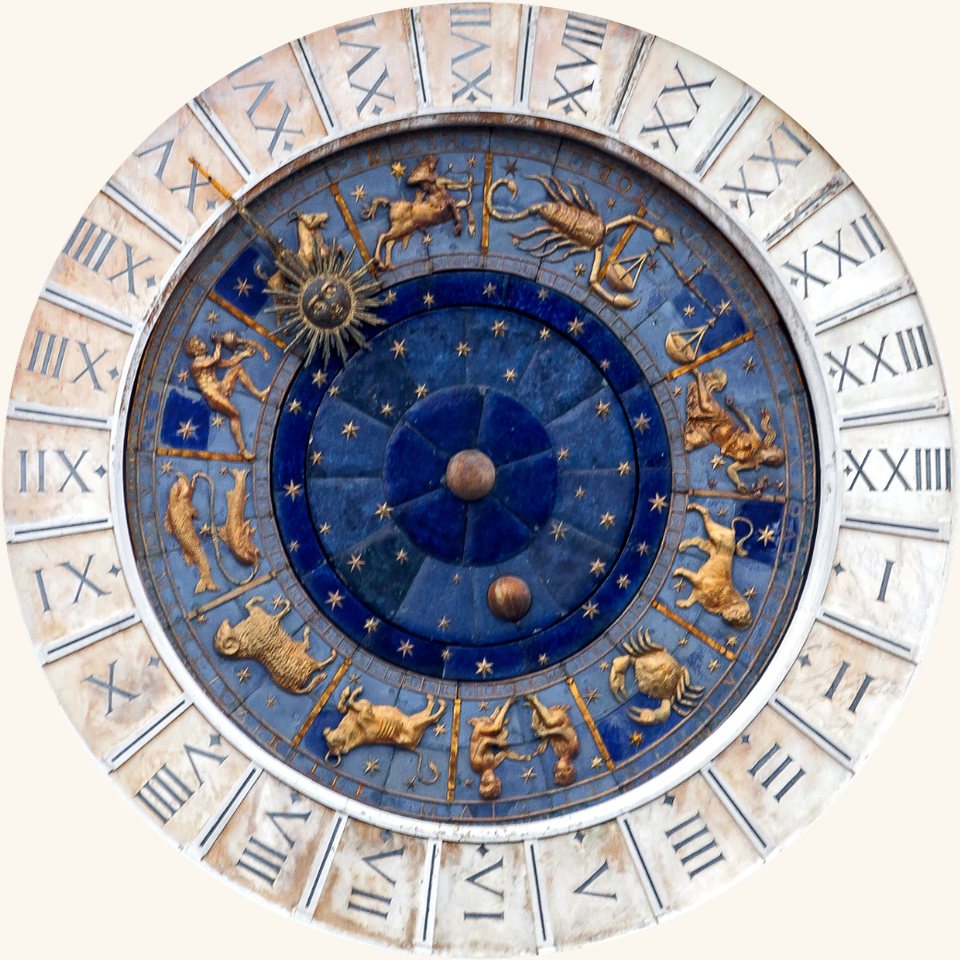
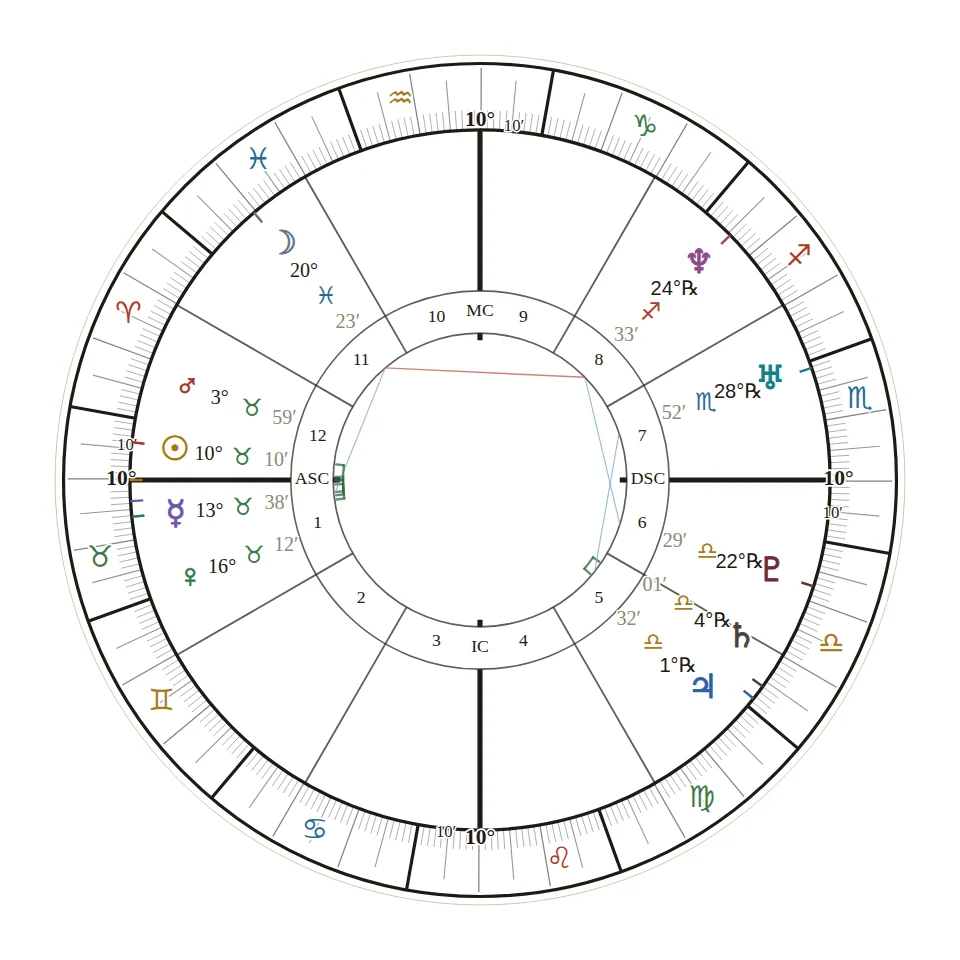
In this text I look at the two figures with the charts in hand. For Lula, I use the chart for 27 October 1945, at 6:10am, in Caetés. For the name Bolsonaro, whose candidate today is Flávio, I use Flávio's chart, from 30 April 1981, in Resende, with no known time. And I use Brazil's chart, from 7 September 1822, at 4:30pm, at Ipiranga. The full analysis of the election, with all the data, is in the text Who will win the 2026 election.
An archetype is a mould of image that every human being carries before learning anything: the mother, the father, the hero, the wise old man, the traitor, the saviour. Nobody teaches a child to fear the wolf in the story or to trust the white-haired grandfather. These figures are already there, deep in the psyche, ready to be filled in by whoever shows up in front of us with the right shape.
Jung called this shared ground the collective unconscious. It is the part of the mind that is not only yours: it belongs to everyone, it was inherited, and it works without asking reason for permission. When an archetype lights up, it brings along a charge of emotion that no argument can reach. The person does not feel like she is choosing; she feels like she is recognising.
This is why the archetype rules the vote even when it does not match the facts. The fact speaks to reason, and reason weighs things up, compares, grows suspicious. The archetype speaks to the unconscious, and the unconscious does not read balance sheets, does not check biographies and does not change its mind because of a chart. It responds to images, to the smells of childhood, to a phrase that sounds like the voice of someone from the family. A campaign can lose the debate on numbers and win on image, and it is the image that reaches the ballot box first.
In Brazil, the archetype that weighs most is the one of effort. It is the figure of the father or grandfather who leaves home before sunrise, catches two buses, carries his packed lunch, comes home tired at night and puts food on the table. Almost every Brazilian family has this person in its memory, and he is who comes to mind when someone says the word "struggle".
Brazil's chart explains why this image is so strong here. The country's Sun is in Virgo, the sign of work, of service, of daily effort and usefulness. A country with the Sun in Virgo recognises itself in those who work with their hands and measures a person's worth by the sweat they spend.
And this is where a knot of Brazilian political culture lives: most people do not see the entrepreneur and the business owner as someone who struggles, but as someone who exploits. In Brazil, the archetype of effort stayed on the side of the employee. The boss, even the small one, even the one who opened the bakery with his severance pay and works fourteen hours a day, falls on the other side of the image: he is the owner, and the owner is the one who keeps the share of other people's sweat.
Brazil's chart shows this distrust. Pluto sits in the country's house 2, the house of money and possessions. Pluto is the planet of power, of what is hidden and of what dominates. In the house of money, it makes the country feel wealth as a form of power over others, and sees whoever has money as someone who stands, in some way, above someone else. Saturn, the planet of weight and limit, is in Taurus, the sign of property. Possession, in the Brazilian unconscious, carries guilt and suspicion with it.
Those who run a business in Brazil fight twice over: against the market and against the image. And nobody sees this second fight, because the archetype of effort has no room for it.
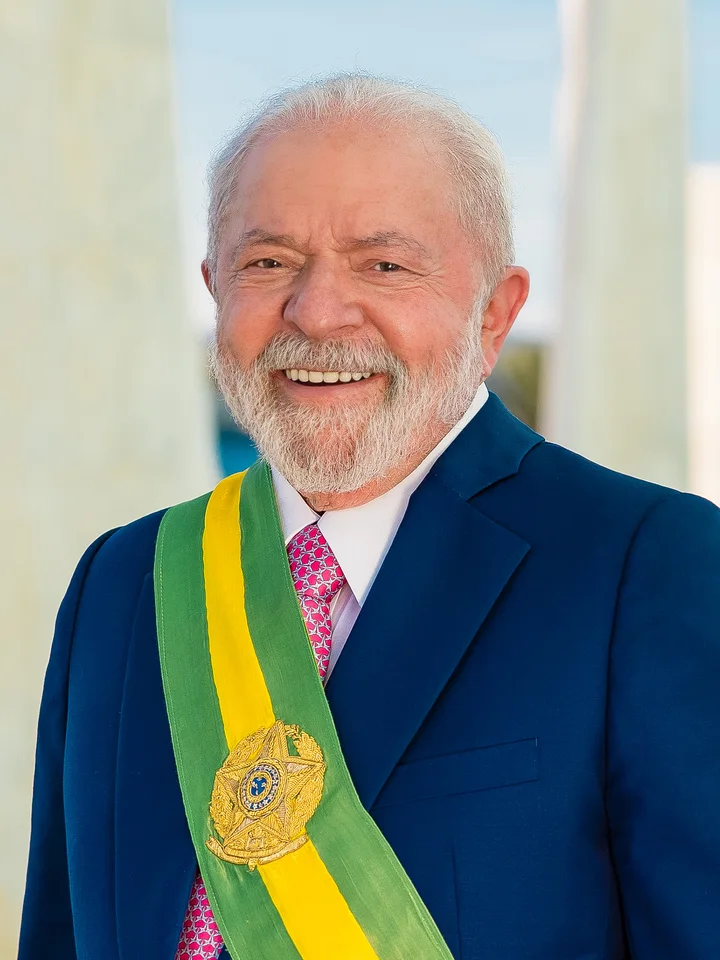
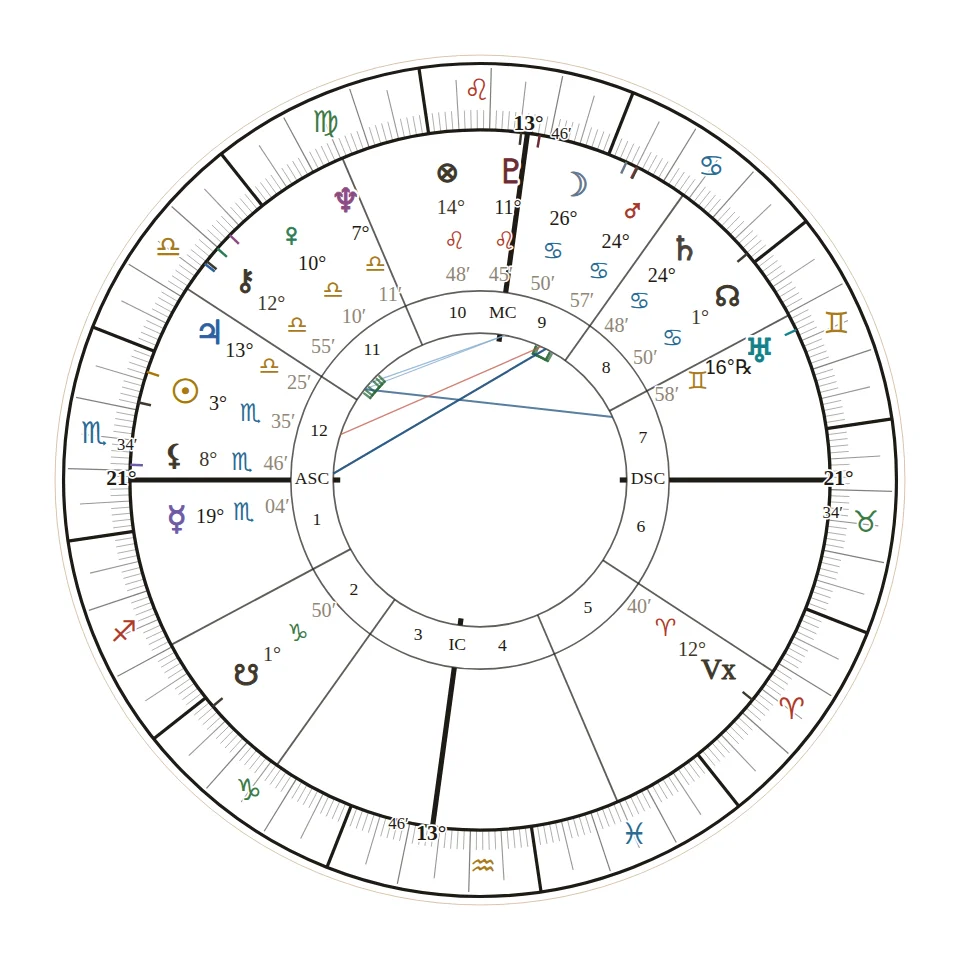
Lula is the figure of the father, of the utopia Brazil longs for, of the worker, and of pain. And each of these four things has an address in his chart.
The father who feeds. The strongest mark in Lula's chart is the Moon in Cancer pressed close to Mars and Saturn. Cancer is the sign of home, of the table, of family and of food. The Moon there is the memory of the mother and of hunger; Mars turns that memory into struggle; Saturn turns the struggle into duty. It is the portrait of someone who left the backlands on a crowded open-top truck and made his own hunger a banner. The father this chart sketches is the providing father, the one who guarantees the plate. For anyone still living in fear of having nothing to eat, no image carries more weight.
The utopia. Lula's Neptune makes an exact trine to Brazil's Moon, two tenths of a degree apart. Neptune is the planet of dreams, of faith and of the promise of a better world; Brazil's Moon is the people. It is the contact that makes the people project a dream onto Lula, and it explains why the relationship with him carries something of devotion. Neptune is also the planet of disillusion, which is why, when that dream fails, the disappointment comes in the same size.
The worker. When Lula's planets are placed in Brazil's chart houses, his Moon, Mars and Saturn fall together in house 6, the house of workers, of service and of daily effort. The man who came up through the union occupies, in the country's chart, the place of the one who works.
The pain. Lula's Sun is in Scorpio, the sign of the one who loses and comes back, who knows death and resurrection. His life has told this story in public more than once. And his Sun falls exactly on Brazil's Mars, one tenth of a degree apart: he lights up the country's fighting force, for him and against him.
Put the four things together and the identification with the poor masses makes sense. Anyone still fighting for the basics, for housing, for food, for work, looks at Lula and sees someone who went through the same. In Jung's psychology, the archetype of the wounded healer is the one who heals because he too was wounded. That is the authority Lula holds before the poorest: he does not speak from above.
Lula connects with the masses by speaking of a reality they know well: the plate of food, the struggle, the difficulty of making ends meet. He speaks of beans, of picanha, of the worker who wakes up early. Even though this has not been his reality for a long time, between jet trips and millionaire dinners.
From the standpoint of facts, this would be a contradiction. From the standpoint of the archetype, it makes no difference at all. The unconscious does not keep today's Lula; it keeps the boy who arrived in São Paulo on a migrant truck and the metalworker who lost a finger in the press. The archetype stayed frozen at the moment of pain, and it is with that archetype that the voter talks.
In the chart, it is Lula's Neptune in trine to Brazil's Moon, and his Venus also in trine to Brazil's Moon. Neptune is the image that overlays the real; Venus is affection. Both touch the country's Moon, which is the heart of the people. Lula speaks to the heart of the Brazilian chart, and the heart does not ask for a bank statement.
Every archetype has a shadow, and that of the providing father is familiar to any family. The father who gives everything can stop the child from growing up. The full table that protects also traps, once the child learns the plate comes from the father and not from his own work.
In the chart, that shadow sits in Saturn in Cancer, which is where Saturn feels ill at ease: rule and limit inside the house of emotion, duty mistaken for affection. And it sits in Neptune: the dream that, if it never becomes ground, becomes dependency. This is where Lula's figure loses the one who has risen.
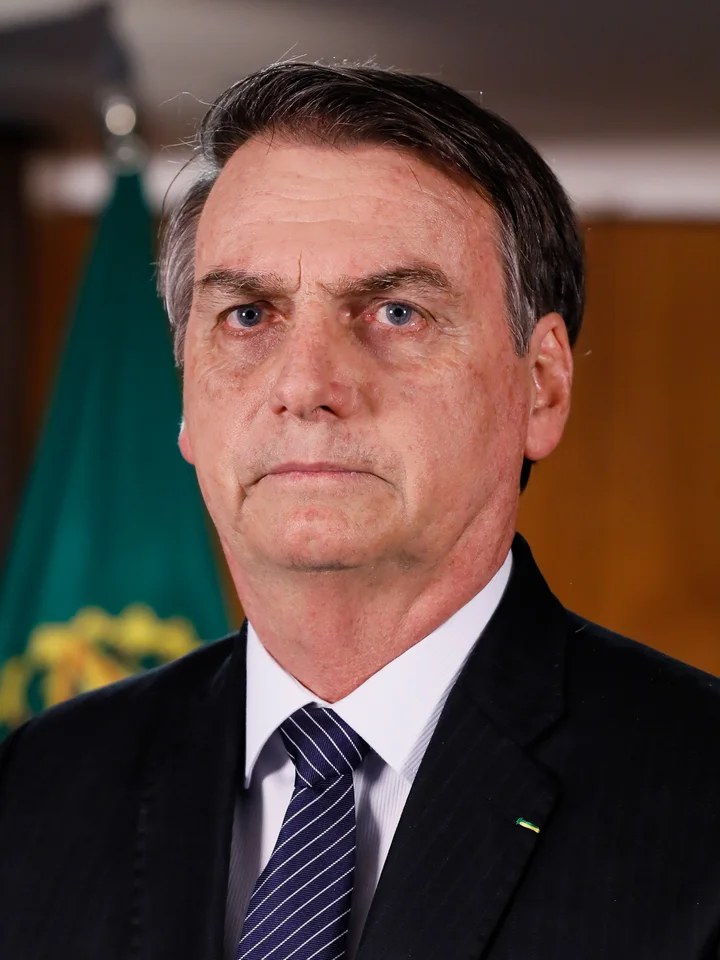
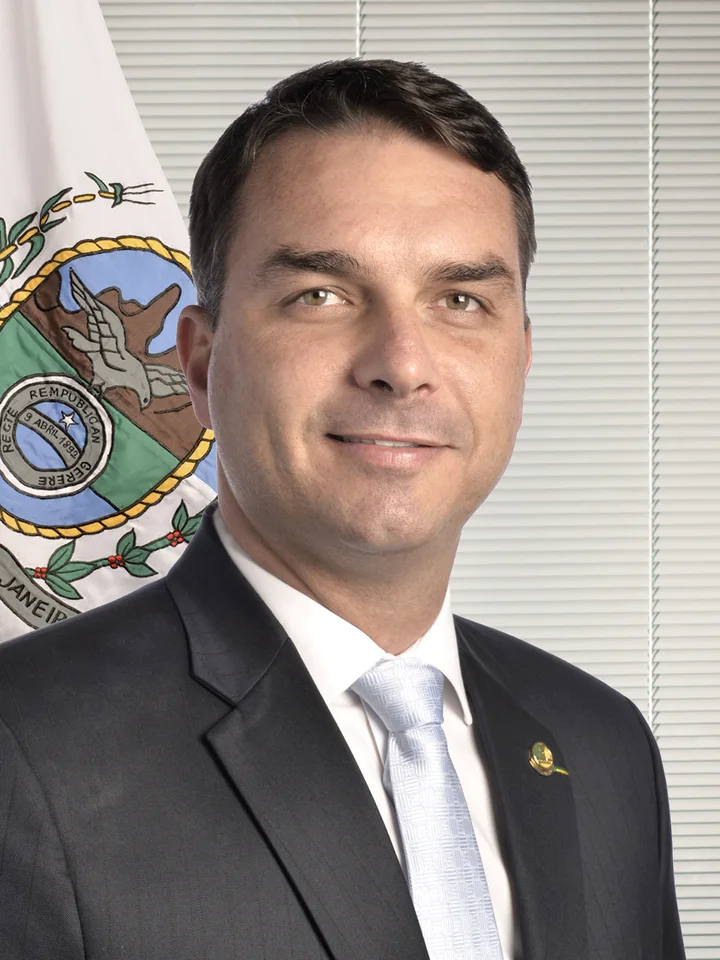
The Bolsonaro name is still seen as the elitist soldier and the wealthy family. The archetype he lights up is that of the warrior and the guardian: the captain who brings order to the house, the stern father who enforces the limit.
Order. Flávio's Sun falls exactly on Brazil's Saturn, two tenths of a degree apart. Saturn is authority, law, hierarchy, the weight of a country. It mirrors Lula's contact: where Lula lights up Brazil's Mars, struggle, Flávio lights up Brazil's Saturn, order. The two tightest contacts in this election show each side embodying one half of the country.
The soldier. Flávio's Mars makes an exact opposition to Brazil's Mars. It is direct confrontation, the warrior face to face with the country's fighting force. In his public image, it is the uniform, the salute, the speech of someone who treats politics as a battlefield.
The wealthy family. Flávio has four personal planets in Taurus: the Sun, Mercury, Venus and Mars. Taurus is the sign of property, of holdings, of what gets accumulated and kept. And his Jupiter and Saturn fall in Brazil's house 8, the house of inheritance. Read most directly, he is the heir of a political name. That is where the image of the wealthy family comes from, and with it the distance from the poor masses: to anyone still fighting for the plate, Taurus with four planets looks like someone who never had to fight for his.
The bridge that exists. There is an emotional link to the people in Flávio's chart, and it goes mostly unnoticed. His Moon is in Pisces and falls in Brazil's house 1, the house of the people and of national identity. Pisces is the sign of faith and compassion. It is the side that speaks to the religious Brazil, the one that prays, and it does not show up in the soldier's image.
Bolsonaro's speech is made of GDP, data, inflation, foreign policy, alignment with other countries. It is a speech of Taurus and of Saturn: concrete, economic, from someone who thinks of the nation as an estate to be managed. And it has little feel for the themes that touch the heart of the Brazilian chart: the table, the family, the fear of going without.
The chart shows this with precision. Flávio's Mercury and Venus form a trine to Brazil's Sun, which is the country's identity and reason: his speech makes sense to those who think things through. But none of his personal planets touch Brazil's Moon, which is the people and their feeling. The only planet of Flávio's that reaches the country's Moon is Saturn, in a trine: he reaches the heart of Brazil through limit and order, not through affection.
For those still fighting for their plate of food, talking about GDP is speaking another language. The number may well be right, and it still moves nobody who does not yet know what they will eat tomorrow.
The guardian's shadow is elitism: treating those at the bottom as disorder to be contained, rather than as people to be lifted up. It is the soldier who guards the gate of the condominium and forgets the street. In the chart, it sits in Flávio's Uranus on Brazil's Midheaven, the figure of rupture sitting where government should be, and in the Mars-Mars opposition: force against force, with no room for conciliation.
Between these two archetypes there is a person Brazilian politics took a long time to see: the citizen who worked and moved past life's most basic concerns. He already has a home, already has food on the table, already pays the month's bills. And it was precisely by leaving hardship behind that he began to see the system from a different place.
From the height of that first step up, he sees what cannot be seen from below: a system that seems built to keep people in the lowest tier. The tax that weighs heaviest on those who have just risen, the red tape that blocks anyone wanting to start a business, the benefit that disappears the day a person's life improves. For him, the providing father has stopped being protection and become a ceiling.
That is why this citizen wants a president who stands for more order. His request is clear rules, security, predictability, firm ground to keep climbing on. In astrological language, he has moved from the Moon to Saturn. The Moon is need, the lap, the plate. Saturn is achievement earned through effort, the ladder, the responsibility of someone who wants to own his own life.
Bolsonaro's voters have already moved past these layers. They are no longer moved by the basic issues, because those are no longer the issues of their own table. The talk of the plate of food, which stirs those still fighting for it, sounds to this voter like something from another era, and sometimes like the promise that kept him down. He wants another kind of order and another kind of representation: someone who speaks of tax, of security, of freedom to work and of rules that apply to everyone.
This is where Bolsonaro's archetype finds its most loyal voter. To anyone still at the Moon, the soldier seems distant. To anyone who has already reached Saturn, he is the only one talking about order.
Brazil's chart has the Sun in Virgo in house 7, the house of the other. It is a country that discovers itself through partnerships and measures itself by work well done. And it has the Moon in Gemini next to Jupiter, on the Imum Coeli: a talkative people, who change their minds, who expand through conversation.
Lula acts on Brazil through the Moon and through Mars. He mobilises emotion, the memory of hunger, the hope of those who have not yet arrived, and he lights up the country's fighting force. When he governs, Brazil feels cared for, and also more divided between those who feel cared for and those who feel they carry the weight.
Bolsonaro acts on Brazil through Saturn and through Uranus. He mobilises the desire for order and for limits, and he brings rupture into the place of government. When his name sits at the centre, Brazil feels watched and protected at once, and more divided between those who want order and those who feel order as a threat.
The two are halves of one same country. Brazil has the father who feeds and the father who enforces the limit, and a family needs both. The fight is over which should come first, and the answer changes depending on which step each Brazilian stands on. Those still fighting for the basics want the father who feeds. Those who have already moved past that fight want the father who enforces the rule.
What neither archetype can do alone is what a good father does: prepare the child to no longer need him. That piece stays with each of us.
And the questions that come up most on this subject, with the short answer:
What is an archetype? It is a mould of image that every human being carries before any learning, like the mother, the father, the hero and the saviour. Jung showed that these moulds live in the collective unconscious and light up when someone appears with the right shape, bringing an emotion that no argument can reach. That is why the archetype weighs on the vote even when it does not match the facts.
What is Lula's archetype? That of the providing father, of the worker, of the wounded healer. In his chart, the Moon in Cancer next to Mars and Saturn is the memory of hunger turned into struggle, and his Neptune trine Brazil's Moon is the utopia the people project onto him.
What is Bolsonaro's archetype? That of the soldier and the guardian of order. In Flávio's chart, the Sun falls exactly on Brazil's Saturn, which is authority and hierarchy, and the four planets in Taurus sketch the image of property and family.
Why does the middle class that has risen prefer order? Because once someone has moved past life's most basic concerns, they begin to see a system that keeps people in the lowest tier. In astrological language, this person has moved from the Moon, need, to Saturn, achievement earned through effort, and looks for a president who stands for rules and firm ground.