I lean right, but as an astrologer I have to analyse the astrological data. And the data says this:
- The people's reaction: anxiety in the first round and anger on the night of the result; high turnout and a country split down the middle in the second; protest and blocked roads at the Full Moon of 26 October, new peaks on 16–19 and 24 November, and tempers settling by mid-December.
Who wins the runoff is a technical tie. With the horary question, Lula gets 54% of the signs in the sky; without it, Flávio gets 57%. In both cases, the office arrives worn out. The path to this answer, with the data, the charts and each method, is just below.
Tomorrow, 4 October, Brazil votes in the first round. The day before, I did what an astrologer does when the whole country is asking the same question: I went after the birth data, calculated the charts and looked at the election through every method tradition offers for a contest.
The analysis has four parts. The first shows the data, with what is solid, what is doubtful and what simply does not exist. The second puts each candidate up against Brazil's chart. The third looks at the election: the sky of the first round, the horary question, the path between the rounds, the second round, what comes after it, and the people's reaction. The fourth is a reflection on what all this says about us.
All charts were calculated by the same engine that builds the charts on this site, with the tropical zodiac and Placidus houses. The positions, in degrees and minutes, are in the technical sheet at the end of the text, for anyone who wants to check the maths.
A chart is only as good as the hour it was drawn from. For public figures, that hour arrives by three paths: the birth certificate, an account from the person themselves or from a family member, and rectification, which is the hour an astrologer works out backwards, testing the events of a life against the sky. All three turn up in this election, and none of the three candidates for a full chart has a certificate with a time on it.
Brazil's chart is the Independence one: 7 September 1822, on the banks of the Ipiranga, in São Paulo. The date and the place are solid. The hour comes from the historical account, which says "between 4pm and 5pm", and Brazilian astrologers have argued for decades over which minute holds, because the Ascendant changes sign in the middle of that span.
Paulo Duboc proposes two times: at 4:08pm, the Ascendant falls in Aquarius 22°14′ and the Midheaven in Scorpio 20°44′; at 4:58pm, the Ascendant moves to Pisces 3°26′ and the Midheaven to Sagittarius 2°53′. The most widely used version is the 4:30pm one, with the Ascendant in Aquarius 27°09′ and the Midheaven in Scorpio 26°08′.
In this piece I use 4:30pm, which is the most cited version. The planets barely move between one hour and the other; what changes is the Ascendant and, with it, the house of some planets.
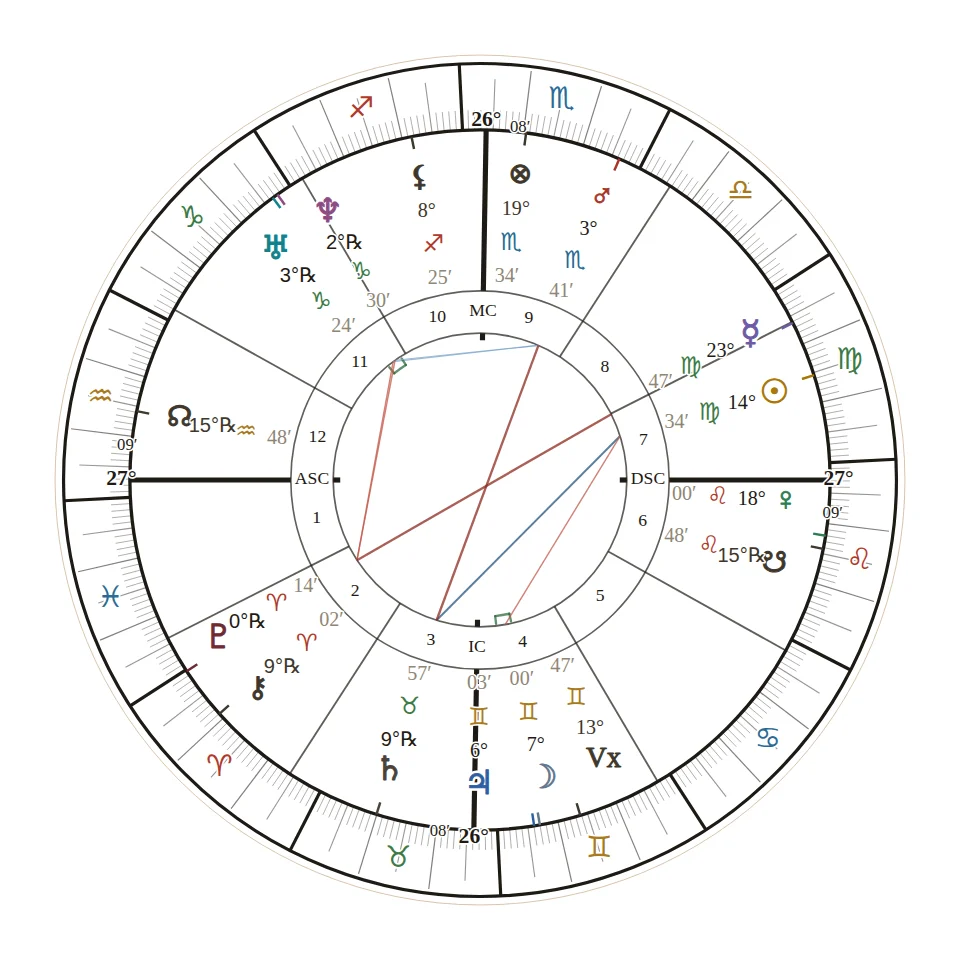
It is a country with the Sun in Virgo in house 7: it knows itself through the other, through agreements and partnerships, and measures itself by work well done. The Moon, which in the astrology of nations is the people, sits in Gemini next to Jupiter, in the Imum Coeli. A talkative, curious, changeable people, who expand through conversation. Venus in Leo and Mars in Scorpio give this country a taste for celebration and an intensity that does not forgive easily. Uranus and Neptune together in Capricorn, in house 11, speak of a collective ideal of institutional reform that never quite arrives finished.
Luiz Inácio Lula da Silva was born in Caetés, Pernambuco, which in 1945 was part of Garanhuns. The first doubt is the date. The certificate says 6 October 1945; Lula celebrates on 27 October. According to the Lula Institute, he and his siblings were registered years after being born, as was common in the Northeast backlands, and the clerk mixed up the dates when writing them down.
The second doubt is the hour, and at least six versions circulate for it:
The most quoted version is the one Lula himself gave the astrologer Ivan Freitas: 27/10/1945, at 6:10am, with the Ascendant in Scorpio 21°34′. Getulio Bittencourt gives 5:06am, also with the Ascendant in Scorpio. The rectification by Antonio Facciollo and Adonis Saliba arrives at 7:04am, with the Ascendant in Sagittarius. Astrotheme records 8:00am, "from memory or autobiography", with the Ascendant in Sagittarius 18°34′, and Maurice Jacoel 8:27am, also in Sagittarius. Constelar uses the registration date, 06/10/1945, with the time rectified to 6:29am and the Ascendant in Scorpio 4°38′.
I go with 27 October, at 6:10am. It is the only version that explains the "06/10" on the certificate: there is an account that this number was the hour of birth, not the day. It also matches the date Lula has celebrated all his life. Even so, it is an account, and an account is not a certificate.
Some lists give an Ascendant in Sagittarius for 6:10am and for 5:06am. With the 1945 time zone (three hours behind Greenwich, with no daylight saving that October) and Caetés's coordinates, the maths gives Scorpio for both, and 5:06am gives an even earlier Scorpio in the sign.
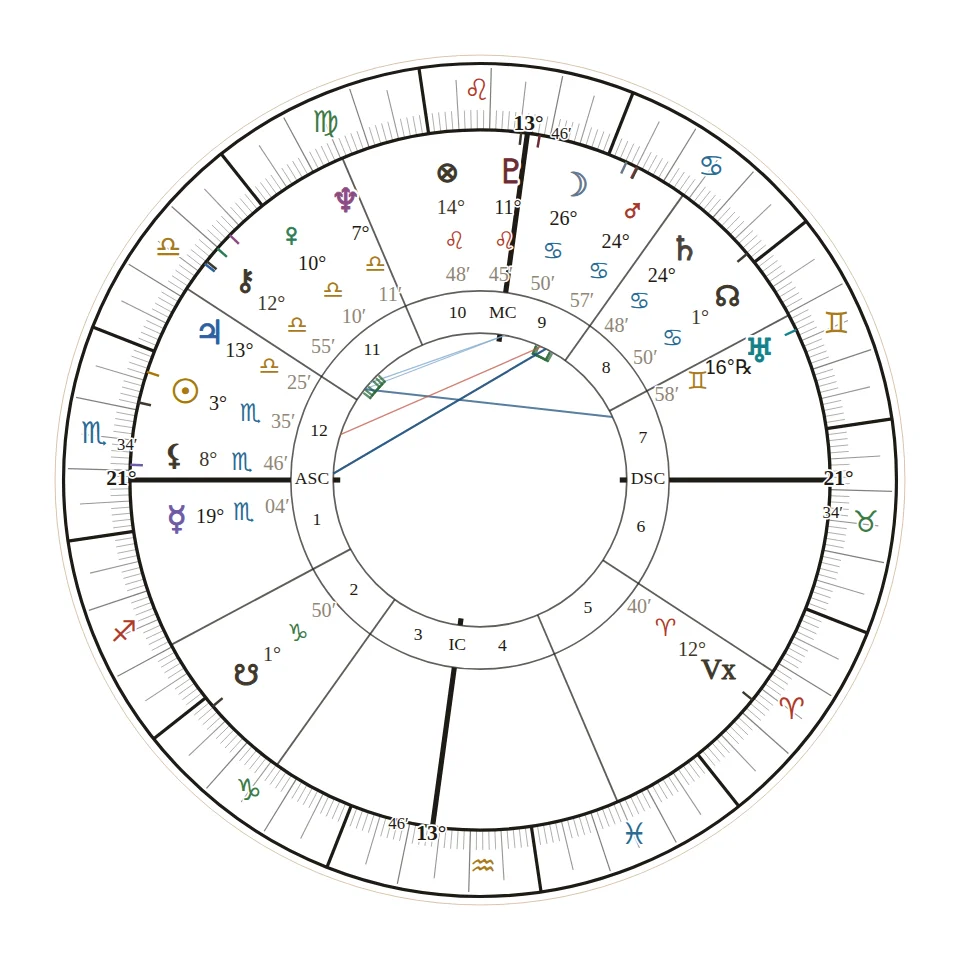
What holds true at any hour on the morning of 27 October: Sun in Scorpio, Moon in Cancer pressed against Mars and Saturn, Venus and Jupiter in Libra. The Moon only moves into Leo close to midday, and every version of the time falls in the morning, so the Moon in Cancer stands firm.
Scorpio is the sign of the one who survives and comes back, and Lula came back from more than one ending that had been declared final. The Moon in Cancer together with Mars and Saturn is the strongest mark on the chart: an emotion tied to family, to hunger and to origin, which turned into working strength and also into a burden. Venus and Jupiter in Libra, close to the Midheaven for anyone born at that hour, describe the negotiator, the man of the deal.
Flávio Bolsonaro was born on 30 April 1981, in Resende, Rio de Janeiro. The date and place are public. The time is not: I found no documented birth time in any source. An astrologer quoted by the press mentions an Ascendant in Sagittarius, without saying where the time came from.
Without a time there is no Ascendant, no Midheaven and no houses. But the planets for a whole day say quite a lot.
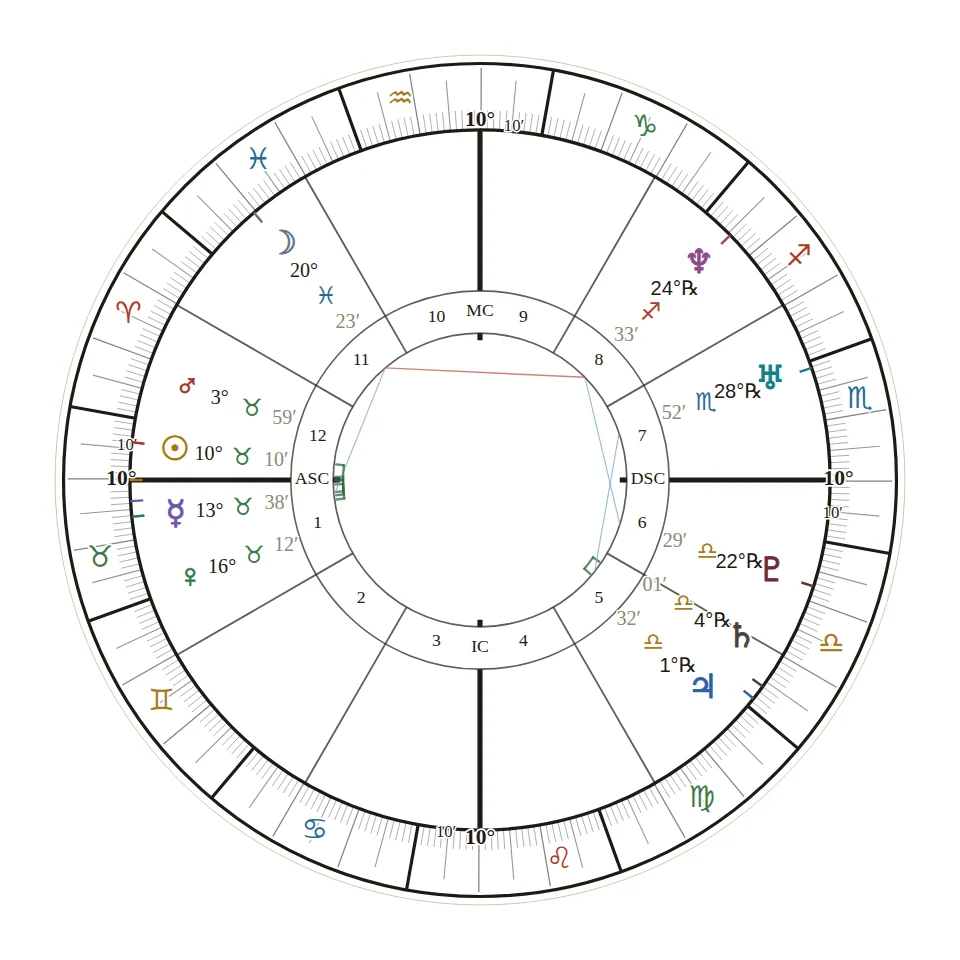
Four personal planets in Taurus: Sun, Mercury, Venus and Mars. This is a chart of permanence, of holdings and of loyalty to what already exists, with the stubbornness that comes along with it. The Moon in Pisces, all day long, gives this Taurus an emotional life that is porous, that soaks up the mood around it. Jupiter and Saturn together in Libra, both retrograde, are the conjunction of the 1980–81 generation, here turned inward: law, rule and inheritance being revisited within his own life.
What we do not have is recorded here, because the strength of every reading below depends on it:
- Flávio Bolsonaro's birth time. Without it, the Ascendant, the Midheaven and his houses are left out. If it surfaces, the synastries gain their angles, and the event chart gains a way to place where he stands.
- A documented birth time for Lula. Everything that depends on his Ascendant (the identification with the election chart, the Ascendant over Brazil's Midheaven) changes if the right time is 8am, and changes even more if the right date is 6 October.
- A version for 5 October 1945, at 10pm, with the Ascendant in Gemini, which turns up attributed to astrological databases. I was not able to confirm the source.
- The exact minute of the Cry of Ipiranga. Between 4:08pm and 4:58pm Brazil's Ascendant moves out of Aquarius and into Pisces.
- The official time each round's result was announced. The Ascendant changes sign every two hours; I worked out three possible times.
Synastry is the comparison between two charts: where one person's planets touch the other's. Between a person and a country, it shows what the country sees in that person, and what that person stirs up in it.
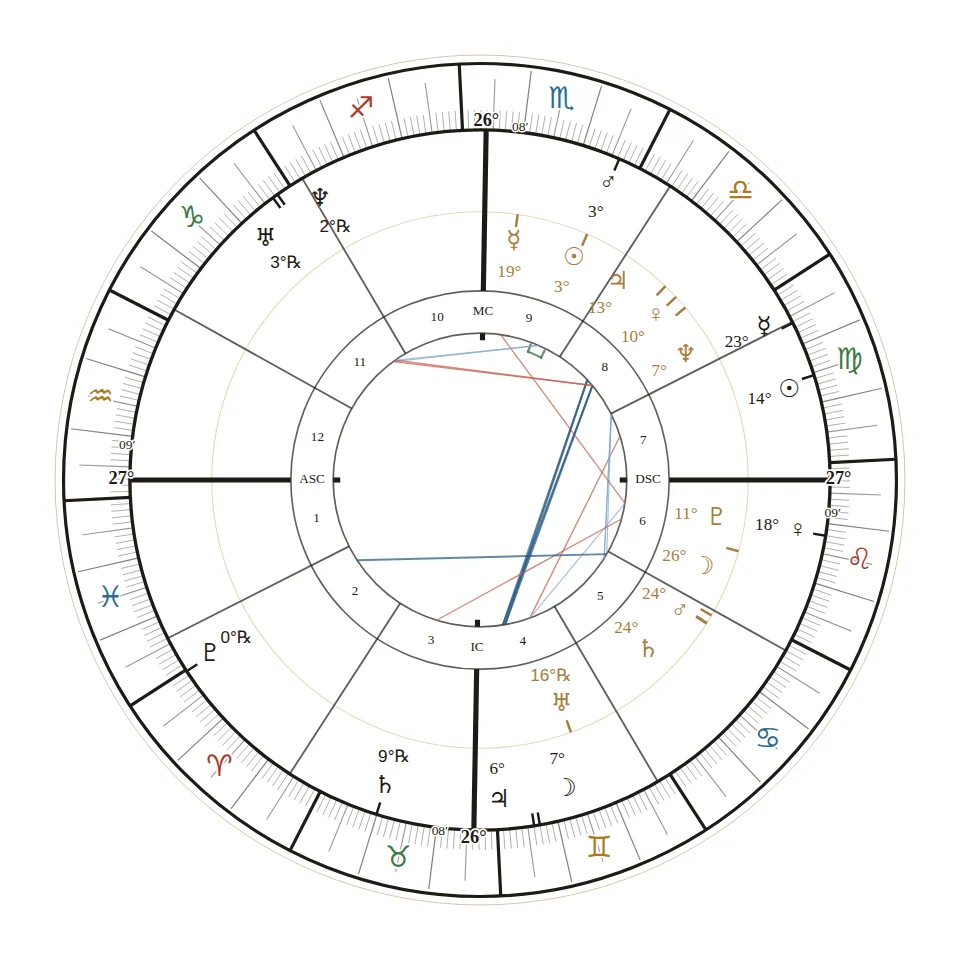
Lula's Sun sits exactly on Brazil's Mars. It is the strongest contact between the two charts, with a distance of a tenth of a degree. Mars is a country's fighting strength, its capacity to mobilise and also to clash. Lula embodies this for Brazil: he stirs up the country's combative spirit, both for him and against him. There is no middle ground in this contact, and the history of the last forty years bears that out.
His Moon, Mars and Saturn, that Cancer trio, trine Brazil's Midheaven, which is the place of government. There is a natural affinity between Lula's emotion and the country's seat of command. His Neptune in trine to Brazil's Moon is the idealised image: the people project a dream onto him, and Neptune is also the planet of disillusion when the dream falls short.
The tensions sit in Uranus and Pluto. His Uranus square to Brazil's Sun is the break with the country's established identity; his Pluto square to Brazil's Saturn is the clash with its structures and institutions.
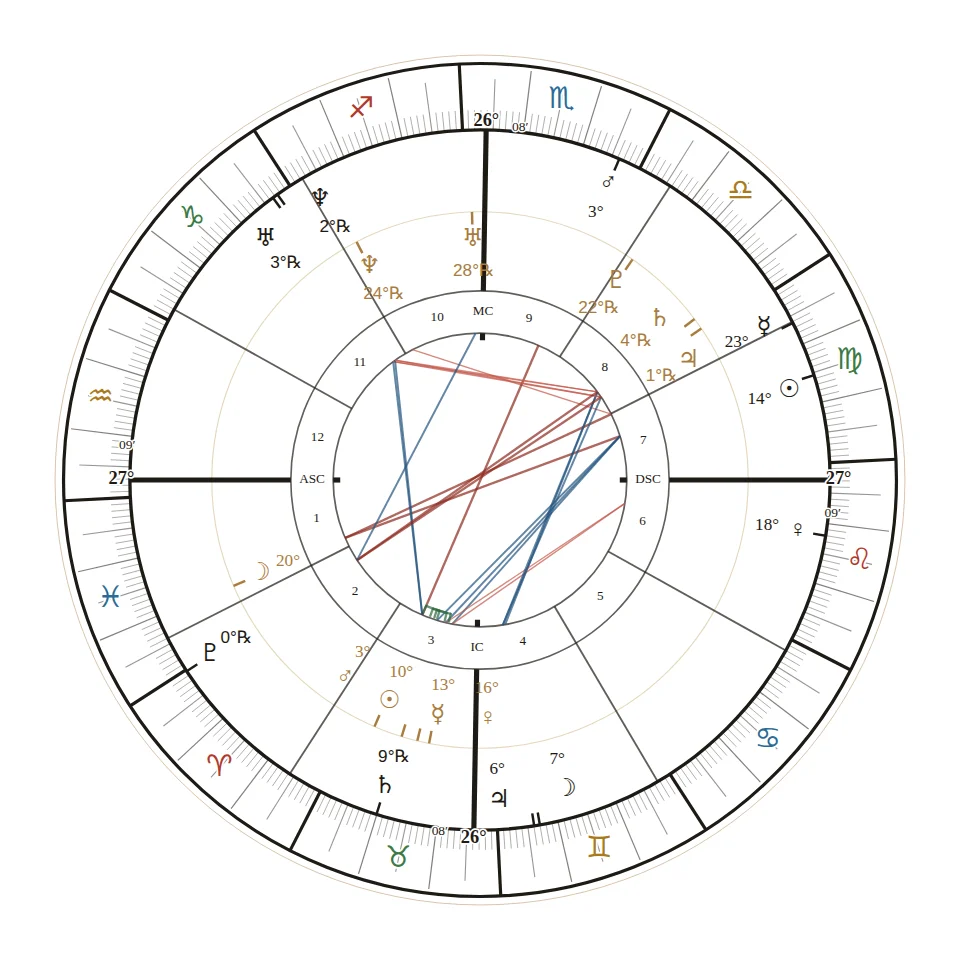
Flávio's Sun sits exactly on Brazil's Saturn. Also within two tenths of a degree, the mirror image of Lula's contact. Saturn is a country's authority, its order, its law and its weight. Flávio embodies for Brazil the desire for order and hierarchy, and he also carries the weight that Saturn always collects from whoever identifies with it.
His Mars in exact opposition to Brazil's Mars is direct confrontation: his strength and the country's stand face to face. His Mercury and Venus in trine to Brazil's Sun show that his speech speaks the language of the country's identity, and his Uranus over Brazil's Midheaven is the figure who reaches the seat of government as a break, not as a continuation.
The other half of the synastry is the overlay: which area of the country's chart each candidate's planet falls into. It uses only Brazil's houses, so it works for Flávio too. The full list, for the three possible times of Independence, is in the technical sheet.
Lula occupies the houses of work, of the world and of negotiation. His Sun and Mercury fall in Brazil's house 9, that of foreign policy and ideas: it is the diplomatic profile he built for himself. His Moon, Mars and Saturn sit at the end of house 5, less than five degrees from house 6, and under the traditional rule they count toward house 6. A country's house 6 is its workers. For someone who came up through the union, it is the exact place. His Ascendant touches Brazil's Midheaven, which is the identification with command, but this contact only holds if both his time and Brazil's time are correct.
Flávio occupies the houses of the street, of the people and of the top. His four personal planets fall in Brazil's house 3: communication, the press, networks, everyday conversation. His Moon falls in house 1, that of the people and of national identity, with an emotional bond. And his Uranus falls on the country's Midheaven. These contacts do not depend on his birth time, because they use only the planets' positions for that day.
Both have planets in Brazil's house 8, that of crises, of other people's money and of what gets inherited. Lula brings Venus, Jupiter and Neptune there; Flávio brings Jupiter and Saturn. Read most directly, Flávio's house 8 is also his political inheritance.
For a contest, traditional astrology has two main tools. The first is the event chart: the sky at the moment the contest takes place, read by the rule William Lilly set down in the seventeenth century. House 1 is one side, house 7 is the opposing side, house 10 is the prize. The side whose ruling planet stands stronger wins. The second is horary astrology: the chart for the moment a question is asked, which answers the question and does not depend on anyone's birth time.
I used both, plus the transits: where today's planets pass over the birth charts.
The first round is on 4 October. Polls open, 8am in Brasília. Ascendant in Scorpio 17°44′, Midheaven in Leo 7°51′.
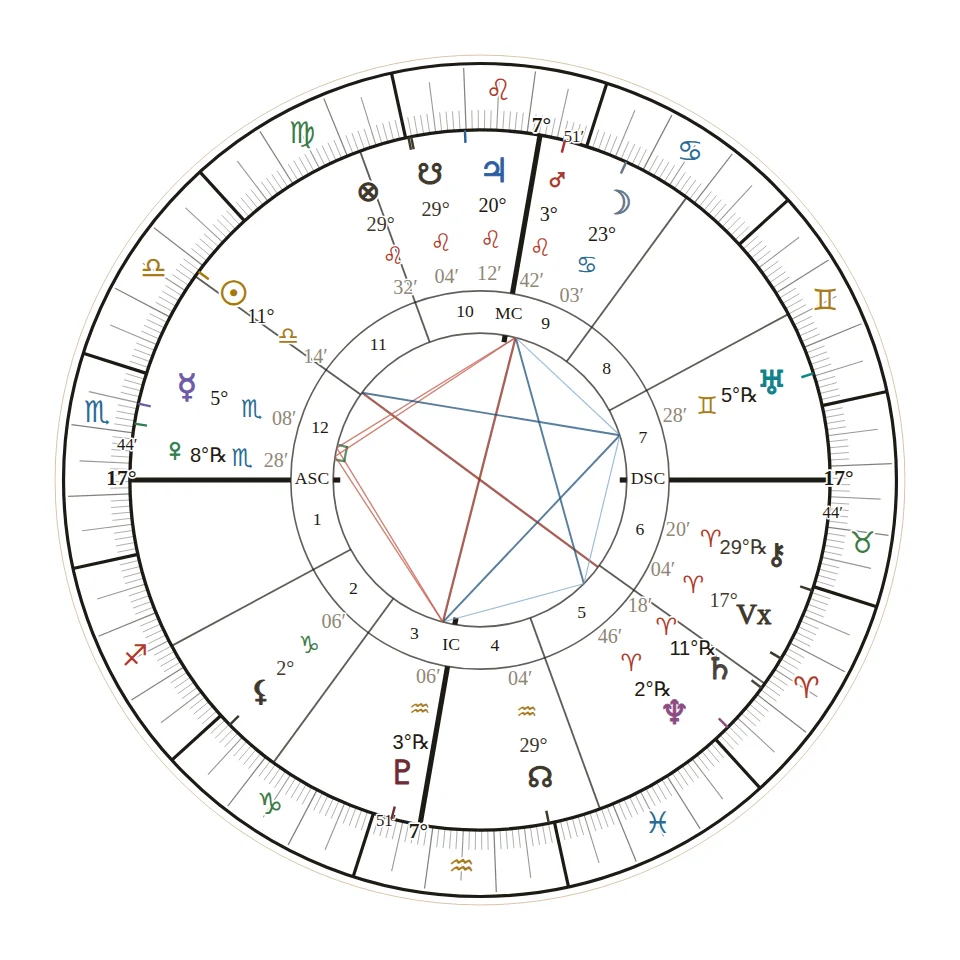
The Ascendant of the election almost coincides with Lula's (Scorpio 21°) and crosses over his Mercury, at 1.3°. The Midheaven of the election falls close to his Midheaven. In the chart for the event, this puts Lula in house 1. On the other side, the Ascendant of the election forms an exact opposition to Flávio's Venus in Taurus 16°, and Venus is precisely the ruler of house 7. Flávio gets house 7.
- Ruler of house 1, Mars in Leo, with no dignity and no debility.
- Ruler of house 7, retrograde Venus in Scorpio, the sign where she is weakened, in house 12. By the rule, this is the weaker side.
- Ruler of house 10, the Sun in Libra, weakened, in house 11. The office itself comes out weak: whoever wins, governs under challenge.
The void of course Moon. On the morning of the vote the Moon is in Cancer 23° and forms no further aspect until it enters Leo, close to 8pm. It spends the whole day of the vote without touching a single planet. In tradition, a Moon out of bounds is the sign that the matter does not reach a conclusion, and in a two-round election that has a name: a second round.
The transits of the day over the three charts:
- Lula: Mars in exact square to his natal Sun (0.1°) and Pluto also in square to the Sun (0.5°), pressure and confrontation over identity. Saturn in opposition to natal Venus (1.1°), Jupiter in square to the Ascendant (1.4°). The Moon of the day crosses over his natal Moon, Mars and Saturn, in Cancer: a day of emotion laid very bare.
- Flávio: Pluto in square to natal Mars (0.9°) and Neptune in opposition to natal Jupiter and Saturn (1.2°), which in traditional reading means wear and confusion at the base. Pluto and Uranus in trine to natal Saturn give him firmness to resist. The Midheaven of the election forms a square to his Sun.
- Brazil: Uranus crossing over the natal Moon and Jupiter (1.5° and 0.6°), the people stirred up. Neptune in square to natal Neptune (0.3°) and Mars in exact square to natal Mars.
The chart of the result. The count has no set time to finish, and the Ascendant changes sign every two hours. I calculated three times. At 7 p.m., the Ascendant is in Aries 24°48′ and falls on neither of them; Lula's Cancer trio sits at the bottom of the sky, in exact square to it. At 8 p.m., in Taurus 8°57′, the Ascendant falls on Flávio's Sun, at 1.2°, and places him in house 1. At 9 p.m., in Taurus 22°47′, it is the Descendant that falls on Lula's Ascendant, at 1.2°, and places him in house 7.
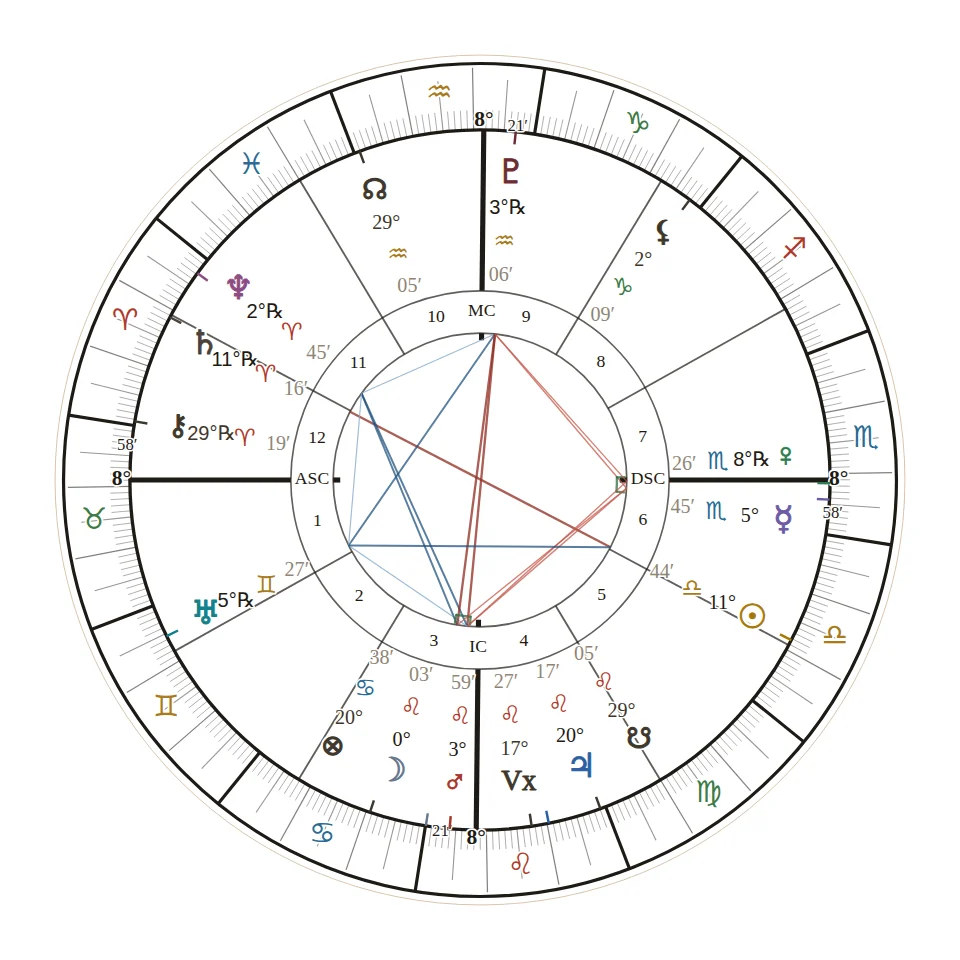
At 8pm, the ruler of house 1 (Flávio's side) is retrograde Venus in Scorpio, in house 6. The ruler of house 7 (Lula's side) is Mars in Leo, in house 3. Both are weak, and Venus is worse off, because she adds debility to retrogradation. The ruler of house 10, retrograde Saturn in Aries, is weakened in house 12. It is the same picture as the morning: Lula's side slightly stronger, and the office worn down.
On Saturday, 3 October, at 11:44am, in Porto Ferreira, in the interior of São Paulo, I asked the question: which of the two has a better chance of winning the presidency? The chart of this moment has the Ascendant in Capricorn 14°15′ and the Midheaven in Libra 6°21′.
The chart can be judged. The Ascendant is neither at the start nor at the end of the sign, the Moon still has an aspect left to make, and Saturn is not in houses 1 or 7 — the three conditions tradition requires before reading a horary.
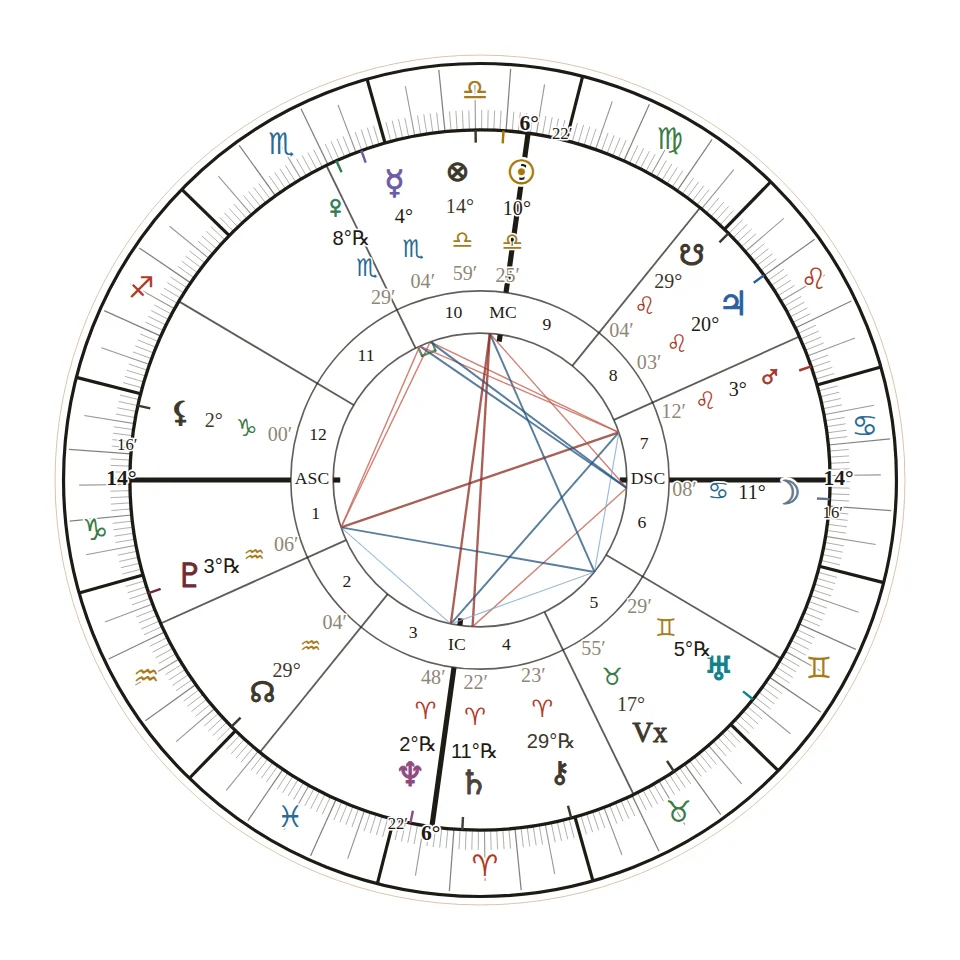
Who is who. In an election with a sitting president as a candidate, the rule is to give house 10, that of the office, to whoever already holds it, and house 4, the opposite one, to whoever challenges.
- Lula is house 10, in Libra. Its ruler is Venus, in Scorpio 8°29′, inside house 10 itself.
- Flávio is house 4, in Aries. Its ruler is Mars, in Leo 3°12′, in house 7.
Venus is weak and inside the office. In Scorpio she is in detriment, the sign where she loses strength, and she is standing still, about to turn retrograde: in a horary, this is the planet that turns back. In her favour, she is inside house 10.
Venus is in Mars's house. Scorpio is Mars's domicile, so Lula's planet is under the power of Flávio's planet, and Mars holds none of Venus's dignities. It is the clearest relation of strength in the chart, and it favours the challenger.
Mars is more whole. It moves direct, sits in an angular house and carries no debility.
The two meet in seven and a half days, around 11 October, between the two rounds, in a square, which is the aspect of confrontation. The one who goes to meet the other is Venus, moving backwards towards Mars.
The Moon, which stands for the people, has just separated from Venus after a trine. In about an hour it goes out of bounds until it leaves Cancer, close to 7:40pm on Sunday, repeating the sign that the first round does not decide anything. When it enters Leo, the first planet it meets is Mars.
The office is worn down. The Sun, natural ruler of whoever governs, is in fall in Libra, inside house 10, and forms an exact opposition to Saturn on the morning of the vote.
That is the sign in Flávio's favour within the horary. But it has a reversal marked on the calendar, which appears further below: on the day of the runoff, Venus returns to Libra, and, adding up the signs, the horary goes to Lula, narrowly.
The transits over Brazil's chart in the stretch between the two votes. Three of them stay active the whole period:
- Uranus crossing over Brazil's Moon and Jupiter, in house 4. The people stirred up, sudden swings of mood and of voting intention. In the astrology of countries, house 4 is also the territory and the opposition to the government.
- Neptune in square to Brazil's Neptune and Uranus, in house 2. A hazy economy, rumour, disinformation, expectation that does not pan out.
- Pluto in square to Brazil's Mars, in house 12. Pressure on the Armed Forces and security, conflict running underneath.
Week by week. The first round, on 4 October, falls on a day of confrontation: Mars makes an exact square to Brazil's Mars. On the 8th, Mercury opposite the country's Saturn brings hard news and a stalled debate, and between the 8th and the 10th Mars in sextile to Brazil's Jupiter and Moon mobilises voters. The New Moon of 10 October, in Libra 17°, in house 8, opens the cycle of alliances for the runoff.
Between 11 and 12 October comes a truce: the Sun in sextile to Brazil's Venus brings support, and Mercury in sextile to the country's Sun favours debate and proposals. Then comes the tensest week. On the 14th, Neptune makes an exact square to Brazil's Neptune, the peak of disinformation. On the 15th, Mars in square to the country's Saturn is the clash with the institutions. Between the 15th and 16th, Pluto stations and turns direct again, with the aspect to Brazil's Mars at its height. And on the 16th, Mercury in square to the country's Venus brings a speech that damages the image.
The last week cools down. Venus passes over Brazil's Mars on the 19th, the Sun makes a trine to the country's Ascendant on the 20th and lifts the mood, and Venus in sextile to Brazil's Neptune on the 21st brings the emotional appeal. On the eve of the vote, 24 October, Mercury stations and turns retrograde in Scorpio 21°, in house 9: contestation, revision and broken communication. On the 25th, Venus returns to Libra.
The runoff is on 25 October. The Moon of the day runs from Aries 22° to Aries 29°. In the morning it trines Jupiter; at night, it opposes Venus; it enters Taurus close to 8:30pm.
Polls open, 8am. Ascendant in Sagittarius 9°, which matches neither of the two. The morning chart does not say who is who.
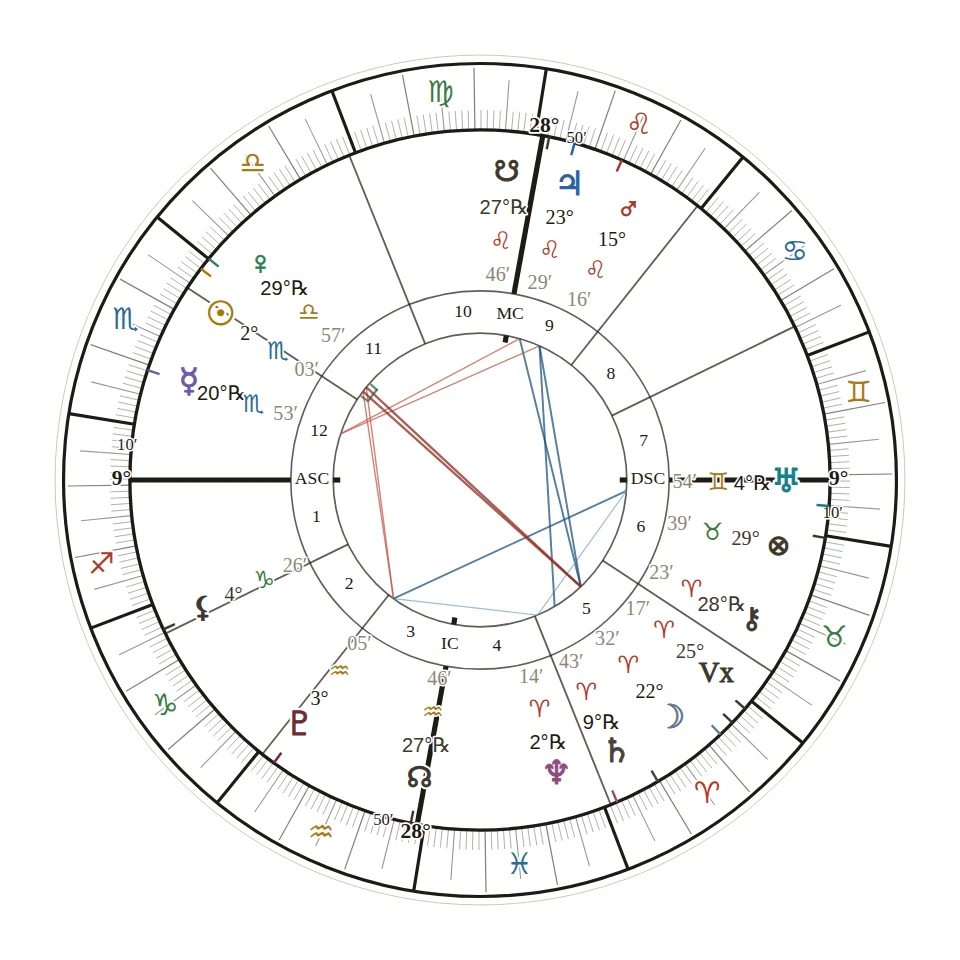
The result. In 2022, the runoff was decided at 7:57 p.m. I calculated three times again. At 7 p.m., the Ascendant is in Taurus 14°11′, on Flávio's Mercury, at 0.6°, and his Venus, at 2°; the Midheaven makes an exact opposition to Lula's Midheaven and a trine to his Jupiter. At 8 p.m., in Taurus 27°54′, Flávio's Uranus falls on the Descendant, at 0.9°, and the Moon reaches the last degree of Aries. At 9 p.m., in Gemini 11°25′, there is no strong contact with Flávio, and the Ascendant makes a trine to Lula's Venus and Jupiter.
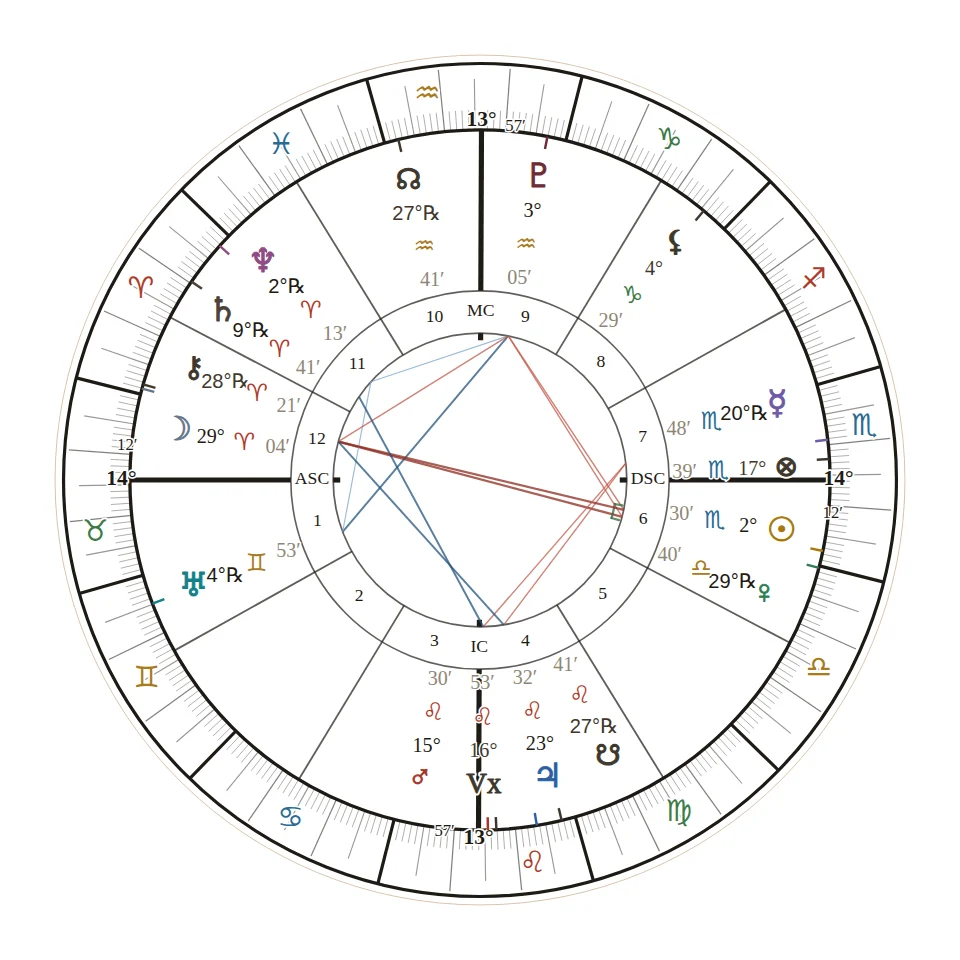
At 7pm, Flávio gets house 1. Its ruler is Venus, which has just entered Libra, its own domicile, and that is strength. But Venus is retrograde and in house 6, and the Moon of the day opposes it: frustration for the side Venus represents. Lula, in house 7, has Mars in Leo in an angular house, with no dignity. The signs point in different directions.
The eve weighs on it. On 24 October, Mercury stands still in the sky and starts moving backwards, in house 9 of Brazil, the house of Justice.
And the horary changes. In the question from 3 October, Venus is Lula, and the central argument against him was a weak Venus in Scorpio. At 6am on the 25th, Venus returns to Libra, where it rules the house. In horary tradition, the significator that regains dignity on the day of the outcome gains strength. Mars's reception and the retrogradation are still there, and even so the return to Libra puts the horary, narrowly, on Lula's side.
Brazilian law only provides for two rounds. "Third round" is the popular name for what happens when the dispute continues after the vote: a court challenge, a request for a recount, a result that is not accepted. And the sky marks exactly that.
- From 24 October to 13 November, Mercury retrograde in house 9 of Brazil, the house of Justice. During the return it opposes Brazil's Saturn twice, which stands for institutions: on 6 and 21 November. The New Moon of 9 November, in Scorpio 17°, falls in the same house 9: a new cycle in the courts in the middle of the review.
- On 13 and 14 November, Mercury and Venus go direct again, one after the other. The matter unblocks. In the horary, Venus is Lula, and it goes direct again in Libra, where it has strength.
- From 16 to 19 November, the peak of the confrontation. Mars squares Brazil's Midheaven and then falls on the Descendant, the house of declared adversaries. On the same 19th, Jupiter makes an exact square to the Midheaven.
- On 6 December, Pluto in exact square to Brazil's Mars, the third pass of this aspect: pressure on security.
- On 9 December, New Moon in Sagittarius 17°, in house 10 of Brazil, the cycle of the new government beginning.
- From 10 to 13 December, three slow planets change direction: Saturn and Neptune go direct again, and Jupiter stands still over Brazil's Descendant and starts to retrograde. The situation settles, and the relationship with the opposition and with other countries goes into review.
- On 3 January, Venus over Brazil's Midheaven: a good image for whoever is about to take office.
- On 5 January 2027, inauguration day, Jupiter retrograde in exact square to Brazil's Midheaven, the second of three passes. A government that starts with big promise and friction, with what was left open in November back on the agenda.
The opening of the polls and the first-round result chart lean slightly towards Lula, and the void-of-course Moon shows, with medium strength, that there will be a runoff. In the runoff, the horary question goes to Lula, narrowly, because Venus regains strength on the 25th. The result chart comes out split, and the synastries with Brazil give Flávio a small edge, through his Moon in the country's house 1. The transits after the vote show, with medium strength, the dispute in the courts until mid-November.
The methods agree on two things: there will be a runoff, and the dispute does not end on the night of the count. On the name of the winner, they split, and the result depends on the weight given to the horary. The count below shows both scenarios.
Astrology does not produce statistical probability, and I will not pretend it does. What can be done honestly is to weigh each sign in the sky and see how the total splits. I gave a weight of 3 to a strong sign, 2 to a middling one, and 1 to a weak one. The weights are my own choice, as an astrologer, which is why they are all written out below, for anyone who wants to redo the count with their own criteria.
I only counted the signs for the runoff, because that is where it is decided who governs. In the first round, every method agrees: the Moon goes the whole voting day without touching a single planet, which points to the election not being settled on 4 October.
The data that favour Flávio Bolsonaro:
- Strong Venus in the runoff result chart: at 7 p.m., the Ascendant falls on Flávio's Mercury and Venus, and the ruler of that side, Venus, has just returned to Libra. Medium weight (2).
- Mars dominates Venus in the horary question: Venus, who is Lula, is in Scorpio, the house of Mars, who is Flávio. Medium weight (2), and it only counts with the horary chart.
- The synastry with Brazil: Flávio's Sun falls on Brazil's Saturn, and his Mercury and Venus touch the country's Sun. Weak weight (1).
- Brazil's houses: Flávio's Moon falls in the country's house 1, the house of the people, and this datum does not depend on his birth time. Weak weight (1).
The data that favour Lula:
- Venus regains strength on election day: in the horary chart, Venus is Lula, and it returns to Libra on 25 October itself. Strong weight (3).
- Mars in a strong house in the result chart: it is the ruler of Lula's side, in house 4. Weak weight (1).
- The Moon forms an opposition to Venus in the late afternoon of 25 October, against Flávio's side. Weak weight (1).
- Venus turns direct again in Libra on 14 November and closes off the challenge. Weak weight (1), and only counts with the horary chart.
- The synastry with Brazil: Lula's Sun falls on Brazil's Mars, and his Neptune touches the country's Moon. Weak weight (1).
With the horary, the count gives 7 points to Lula, 54%, and 6 points to Flávio, 46%; without the horary, it gives 3 points to Lula, 43%, and 4 points to Flávio, 57%.
Both scenarios fall between 43% and 57%. It is a technical tie: the winner switches sides depending on the weight given to a single technique.
The horary has one argument in its favour: it is the only method that does not depend on anyone's birth time. And one against it: tradition says it loses strength when the question has already been asked by many people, and this is the question the whole country is asking. That is why the two scenarios stand side by side. The second, with the data that give Flávio a chance and each one's wheel, is in Is there a chance Bolsonaro could win the 2026 election?
Three things could turn this count around:
- Flávio Bolsonaro's birth time. It is not public. If it surfaces, he gains an Ascendant and houses, and his data points could grow or shrink.
- Lula's birth time. The version I use, 6:10am, comes from an account. If the correct time is 8am, he loses the link to the first round's Ascendant and the contact with Brazil's point of government.
- The official time of the result. By 8pm, the Ascendant has already moved to 27° Taurus, and Flávio's Uranus falls on the Descendant, the side of the opponent. That weakens the first point in his favour.
In the astrology of countries, the people are the Moon. To find out how the country reacts, I look at three things: the Moon of each day, with the aspects it makes while the country votes and waits; the lunations, the moments when the collective mood reaches its highest point; and what passes over Brazil's Moon in its chart. That Moon is in Gemini, next to Jupiter, and has Uranus over it through the whole autumn, within two degrees. It is the sky of a jittery people, who change their mind suddenly and speak louder than usual.
In the first round: fear during the day, anger during the night.
The Moon spends the whole vote in Cancer, the sign of home, family, food and protection. It makes no aspect all day. The voter on this Sunday votes thinking of the price at the market, their child's job, the fear of losing the little they have, and votes without the feeling that anything is being solved. A day of calm queues and a tight stomach.
Close to 8pm, when the count closes, the Moon enters Leo and the tone changes at once. Leo is pride, the stage, the need to be seen. Those who lost ground feel humiliated, and those who gained celebrate loudly. Monday's early hours bring a sequence of Moon aspects, and each one is a phase of the night:
- close to midnight, trine to Neptune: the night of versions, of rumour running faster than the official count;
- around 2am, opposition to Pluto: the feeling that power is being taken away, distrust of the ballot boxes, the word "fraud" circulating;
- around 3am, conjunction with Mars: open anger, attack, offence;
- early in the morning, sextile to Uranus: the mood turning, the news that changes the subject;
- on Monday morning, square to Mercury and then to Venus: the fight leaves the street and enters the family conversation, the message group, the friendship that breaks apart.
The anger of this first round is more about screens than streets. The country goes to sleep late, fighting over the phone.
In the second round: mobilisation in the morning, a country split at night.
The Moon spends the day in Aries, the sign of impulse and quick decisions. In the morning it trines Jupiter, in Leo: people waking up early to vote, long queues, the feeling that every vote decides something. It is a high turnout, driven more by the will to win than by the will to choose.
Late in the afternoon, at the hour the result comes out, the Moon opposes Venus, which has just returned to Libra. Libra is the sign of the scales, and opposition is the aspect of the mirror: two halves of the same size, facing each other, each seeing in the other what it cannot bear in itself. The Moon reaches the last degree of Aries and goes void of course. The number comes out and does not convince whoever lost.
After the result: the street.
In the early hours of 26 October, a few hours after the count, there is a Full Moon in Taurus 3°50′. It is the moment when the feeling of a whole cycle rises to the surface, and this one comes heavy:
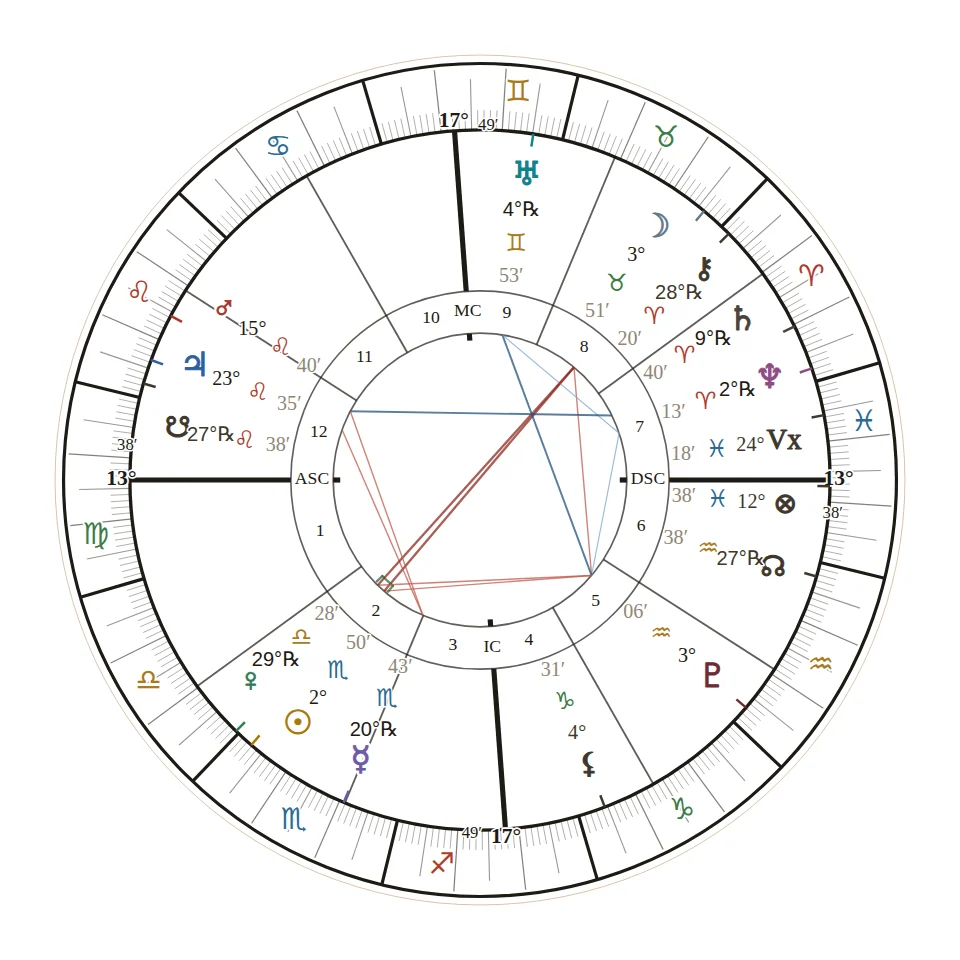
- the Sun sits exactly on Brazil's Mars, and the Moon opposes it: the country's fighting strength lit up on both sides at once;
- Sun and Moon square Pluto, at the same degree, across three fixed signs. It is a rigid configuration, where no one gives way, and Pluto is the planet of survival, of the feeling that losing means disappearing;
- the Full Moon falls in house 3 of Brazil, the house of roads, transport, communication and networks.
Putting the three things together, the picture is one of protest, blocked roads, stopped trucks, a wave of outrage that does not accept the number and organises itself by phone. Taurus is the sign of the body and the land: it is a protest of staying put, of occupying, of not moving. And it is also the sign of money and supply, the channel through which the pressure reaches the rest of the country.
In the following weeks, with Mercury retrograde in the house of Justice, the feeling leaves the street and moves into the appeal, the complaint, the recount redone. It rises again twice:
- from 16 to 19 November, when Mars falls on Brazil's Descendant, the house of declared adversaries, and Jupiter squares the Midheaven. It is the direct confrontation over who governs;
- on 24 November, in the Full Moon in Gemini 2°, which forms next to Uranus and over Brazil's Moon and Jupiter, in house 4. It is the most sudden eruption of the period: the people reacting with surprise to a piece of news, a decision, a turn nobody expected.
The mood settles in mid-December. Between 10 and 13 December, Saturn and Neptune go direct again and Jupiter stands still in the sky. Three slow planets changing direction in the same week is the sign that the ground grows steady again. The New Moon of 9 December, in Sagittarius, falls in house 10 of Brazil and marks the start of the new government's cycle. The Full Moon of 24 December, in Cancer, in house 5, is already a festive end-of-year one. The country reaches Christmas tired of the fight, with the wound still open, but off the streets.
Whoever wins, wins narrowly and receives a worn-out office. The office is house 10, and in all the event charts its ruler is weak:
- at the opening of the first-round polls, the ruler of house 10 is the Sun, in fall in Libra, the sign where the king's light loses strength. It makes an exact opposition to Saturn on voting morning: authority squeezed by limitation;
- in the first-round result, the ruler of house 10 is Saturn, also in fall, in Aries, retrograde and hidden in house 12, the house of hidden enemies and of what cannot be seen;
- in the second-round result, Saturn in fall again, retrograde, now in house 11, the house of support and of parliament.
Three charts, three weak rulers of government. In the language of tradition, whoever is crowned comes out without the strength of the throne: governing dependent on deals, pressed by those who lost and by those who supported them.
The start of the term has a clear signature. Jupiter, the planet of expansion and promise, squares Brazil's Midheaven three times: on 19 November, on 5 January 2027, inauguration day, and again at the start of July 2027. The square is the aspect of friction. It is a government that starts out promising a great deal, spending a great deal and fighting over the size of what it promises, and that only closes this chapter midway through the year.
Two signs ease the picture. On 3 January, Venus crosses Brazil's Midheaven and gives the new government a good image in its first days, with some room for conciliation. And on 10 December Saturn turns direct again in Brazil's house 2, the house of money and the economy: that is where the term's first test comes from, and it is also there that the ground starts to steady.
After so many numbers, it is worth looking at the whole picture, because it says more about Brazil than about the two men.
The leader is a mirror. Lula's Sun falls on Brazil's Mars; Flávio's Sun falls on Brazil's Saturn. The two tightest contacts in this election, one and two tenths of a degree apart, show each candidate embodying a part of the country that already existed before them. Mars is the Brazil that fights, that mobilises, that takes to the streets. Saturn is the Brazil that wants order, rules, hierarchy, firm ground. No country is only one of the two. When we choose a candidate, we choose which of these parts leads for four years, and the other stays here, whole, waiting its turn.
The division is a symptom. Uranus crosses Brazil's Moon, the people, and Neptune touches the country's own Neptune, its collective dreams. It is the portrait of a nation on edge emotionally and an imagination wrapped in fog, where it becomes hard to tell what is fact. Jung's psychology calls the shadow what we fail to recognise in ourselves, and so we see it, magnified, in the other. A polarised society is one where each half carries the other's shadow. The opponent becomes the dumping ground for everything one refuses to look at at home.
The third round is the difficulty of losing. Mercury retrograde in the house of Justice describes an election that refuses to close. Greek myth gives Hermes, their Mercury, the role of messenger between worlds and also patron of tricksters and of borders. When speech moves backwards, each side revises the message until it says what it wanted to hear. A democracy depends on something no chart calculates: the willingness of the loser to go on living in the same country as the winner.
And the post arrives worn down for whoever takes it. In every chart for this event, the ruler of house 10 comes out weak: the Sun in fall, Saturn in fall. This election's sky promises no one a strong government. Perhaps that is the most useful message of all: the question "who will win" matters less than the question "how will we be governed, by ourselves, afterwards".
There is an old idea from philosophy that fits here: that the polis is made of people before it is made of laws, and that a people gets the government its shared character is able to sustain. Brazil's chart has the Sun in house 7, the house of the other. It is a country that discovers itself through partnerships and loses itself when it treats the other as an enemy. The sky shows the climate of the election. The vote, and the day after it, remain ours.
Technical sheet: positions and aspects
All charts in the tropical zodiac, Placidus houses and Brasília time.
In Brazil's chart, of 7/9/1822, at 4:30pm, the Sun is in Virgo 14°34′, in house 7; the Moon, in Gemini 7°00′, in house 4; Mercury, in Virgo 23°47′, in house 7, or in house 8 with the 4:08pm time; Venus, in Leo 18°00′, in house 6; Mars, in Scorpio 3°41′, in house 9; Jupiter, in Gemini 6°03′, in house 4; Saturn, in Taurus 9°57′ retrograde, in house 3; Uranus, in Capricorn 3°24′ retrograde, and Neptune, in Capricorn 2°30′ retrograde, in house 11; and Pluto, in Aries 0°14′ retrograde, in house 2.
In Lula's chart, of 27/10/1945, at 6:10am, the Ascendant is in Scorpio 21°34′ and the Midheaven in Leo 13°46′. The Sun is in Scorpio 3°35′, in house 12; the Moon, in Cancer 26°50′, in house 9; Mercury, in Scorpio 19°04′, in house 12; Venus, in Libra 10°10′, in house 11; Mars, in Cancer 24°57′, in house 9; Jupiter, in Libra 13°25′, in house 11; Saturn, in Cancer 24°48′, in house 9; Uranus, in Gemini 16°58′ retrograde, in house 7; Neptune, in Libra 7°11′, in house 11; and Pluto, in Leo 11°45′, in house 9.
Without the time, Flávio Bolsonaro's planets on 30/4/1981 lie between their midnight position and their 11:59pm position: the Sun, between Taurus 9°41′ and 10°39′; the Moon, between Pisces 13°17′ and 27°35′; Mercury, between Taurus 12°33′ and 14°42′; Venus, between Taurus 15°35′ and 16°49′; and Mars, between Taurus 3°37′ and 4°21′. The slow planets barely move in a day: Jupiter in Libra 1°35′, Saturn in Libra 4°03′, Uranus in Scorpio 28°53′, Neptune in Sagittarius 24°33′ and Pluto in Libra 22°30′, all retrograde.
At the opening of the polls for the first round, on 4/10/2026, at 8am, the Sun is in Libra 11°14′, in house 11; the Moon, in Cancer 23°03′, in house 9; Mercury, in Scorpio 5°08′, and Venus, in Scorpio 8°28′ retrograde, in house 12; Mars, in Leo 3°42′, in house 9; Jupiter, in Leo 20°12′, in house 10; Saturn, in Aries 11°18′ retrograde, in house 5; Uranus, in Gemini 5°28′ retrograde, in house 7; Neptune, in Aries 2°46′ retrograde, in house 5; and Pluto, in Aquarius 3°06′ retrograde, in house 3.
Between Lula and Brazil, the aspects, from the most exact to the widest, are these: Lula's Sun conjunct Brazil's Mars, at 0.1°; his Neptune trine the country's Moon, at 0.2°; the Sun sextile Uranus, at 0.2°; the Moon trine the Midheaven, at 0.7°; Saturn sextile Mercury, at 1.0°; Uranus sextile Venus, at 1.0°; Mercury square Venus, at 1.1°; Neptune trine Jupiter, at 1.1°; Mars trine the Midheaven, at 1.2°; Saturn trine the Midheaven, at 1.3°; Pluto square Saturn, at 1.8°; Uranus square the Sun, at 2.4°; and Lula's Ascendant conjunct Brazil's Midheaven, at 4.6°.
Between Flávio and Brazil, the aspects are these: Flávio's Sun conjunct Brazil's Saturn, at 0.2°; his Mars opposite the country's Mars, at 0.3°; Mars trine Uranus, at 0.6°; Saturn square Uranus, at 0.6°; Neptune square Mercury, at 0.8°; Mercury trine the Sun, at 0.9°; Jupiter square Neptune, at 1.0°; Jupiter opposite Pluto, at 1.3°; Venus trine the Sun, at 1.6°; Uranus square the Ascendant, at 1.7°; Uranus conjunct the Midheaven, at 2.7°; and the Moon opposite the Sun, only if he was born in the early hours.
With Brazil's three times, 4:08pm, 4:30pm and 4:58pm, Lula's points fall almost always in the same houses of the country. The Sun, in Scorpio 3°35′, and Mercury, in Scorpio 19°03′, are in house 9; Venus, in Libra 10°10′, Jupiter, in Libra 13°24′, and Neptune, in Libra 7°10′, in house 8; Pluto, in Leo 11°44′, and the Midheaven, in Leo 13°46′, in house 6; and Uranus, in Gemini 16°58′, in house 4. Only four points change with the time: the Moon, in Cancer 26°49′, Mars, in Cancer 24°56′, and Saturn, in Cancer 24°48′, fall in house 6 with the 4:08pm time and in house 5 with the other two; and the Ascendant, in Scorpio 21°34′, falls in house 10 at 4:08pm and in house 9 at the others.
Flávio's Sun, in Taurus 9°40′, Mercury, in Taurus 12°33′, Venus, in Taurus 15°35′, and Mars, in Taurus 3°36′, fall in Brazil's house 3 with all three times; Jupiter, in Libra 1°34′, and Saturn, in Libra 4°02′, in house 8. The Moon, between Pisces 13° and 27°, falls in house 1, or in house 2 if he was born after 7pm. Pluto, in Libra 22°29′, is in house 9 at 4:08pm and in house 8 at the other times; Uranus, in Scorpio 28°52′, in house 10 at 4:08pm and 4:30pm, and in house 9 at 4:58pm; and Neptune, in Sagittarius 24°33′, in house 11 at 4:08pm and in house 10 at the others.
The data behind this text: Brazil, 7/9/1822, 4:30pm, Ipiranga (São Paulo). Lula, 27/10/1945, 6:10am, Caetés (PE). Flávio Bolsonaro, 30/4/1981, no known time, Resende (RJ). Horary question, 3/10/2026, 11:44am, Porto Ferreira (SP). Tropical zodiac, Placidus houses, Brasília time.
And the questions that come up most on this subject, with the short answer:
Who will win the 2026 election according to astrology? According to astrologer Shelly Gonella's analysis, the runoff is a technical tie. With the horary question, Lula gets 54% of the signs in the sky; without it, Flávio Bolsonaro gets 57%. In both cases, the dispute carries on in the courts until mid-November.
Who wins the first round of the 2026 election? Nobody wins in the first round. The Moon spends the whole day of the vote without forming an aspect, which in tradition points to a matter that is not settled, and Lula comes out ahead.
Is there a chance Bolsonaro could win the 2026 election, according to astrology? Yes. In the runoff, the signs in the sky fall between 43% and 57% for each side, depending on the weight given to the horary question. Without the horary, Flávio Bolsonaro is slightly ahead; with it, Lula is slightly ahead. In practice, it is a technical tie.
Will there be a third round? The law only allows for two rounds, but the sky shows the dispute carrying on in the courts: Mercury goes retrograde from 24 October to 13 November in house 9 of Brazil's chart, and the matter breaks loose between 13 and 14 November.
What is Brazil's birth chart? The most widely used chart is the Independence one: 7 September 1822, at 4:30pm, at Ipiranga, in São Paulo. It has the Ascendant in Aquarius 27°, the Sun in Virgo in house 7, and the Moon in Gemini next to Jupiter, in house 4.