Everyone has one area of life that repeats itself with a curious stubbornness. Money comes in well and vanishes before the month ends, in any job. Love always arrives through someone else, never by chance. Work only moves forward when there is a strong boss nearby, and it stalls the moment you gain autonomy.
The usual explanation is about personality: you are a spender, you are shy, you are dependent. A ninth-century astrologer in Baghdad would have asked a different question, a far more practical one. Who rules this matter in your chart, and what condition is that ruler in?
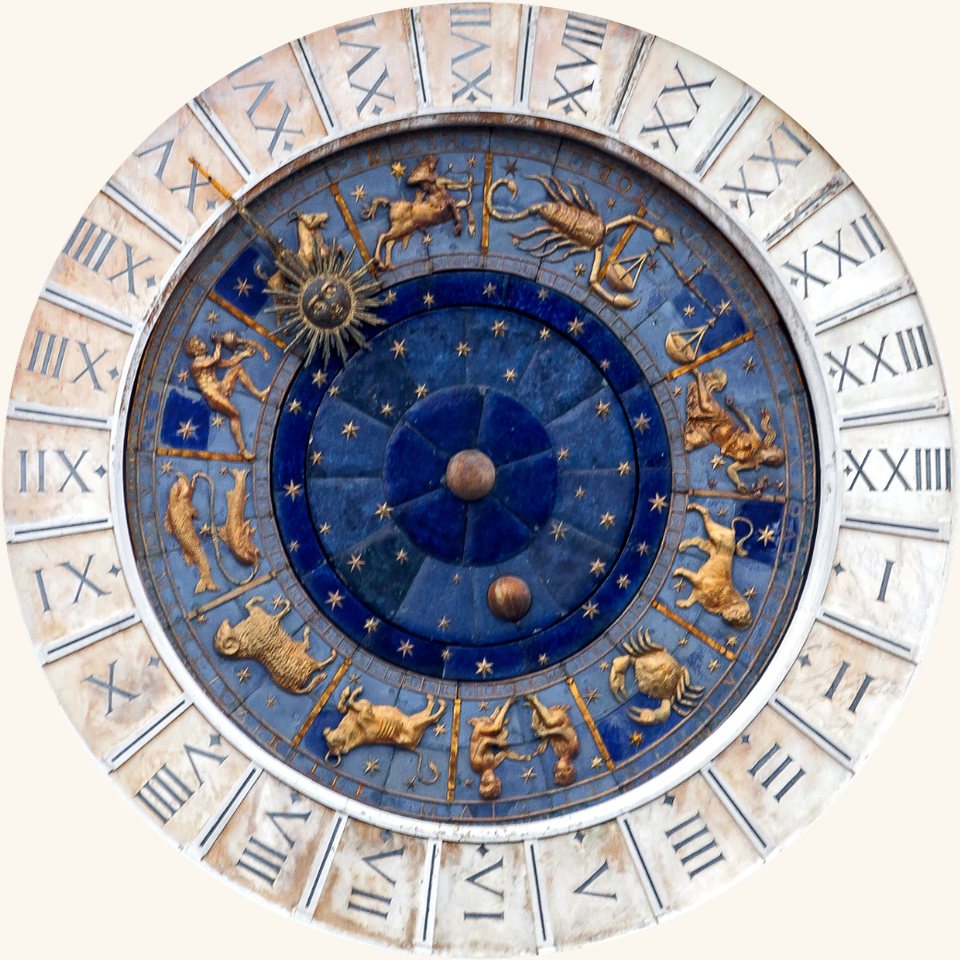
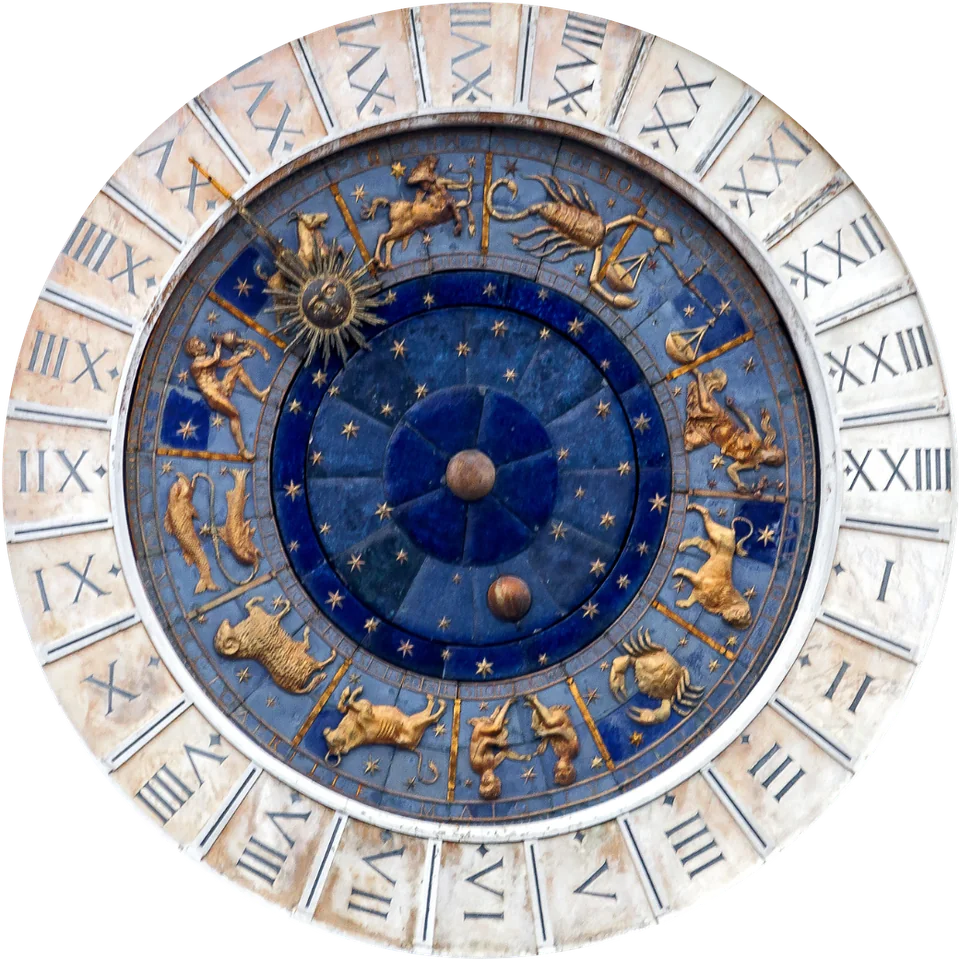
It is the central question of medieval astrology, the one that the Persians and the Arabs developed between the eighth and tenth centuries and that Latin Europe learned from them. In it, a planet works as a lord. It administers houses, receives other planets as guests, holds authority or is hindered, counts on allies or works alone. And the area of your life it rules works the way it is able to work.
In 762, the caliph al-Mansur decided to build a new capital on the banks of the Tigris. Before starting the work, he called in the court astrologers. Among them were Nawbakht, a Persian, and Māshā'allāh, a Jew of Persian origin who would become one of the most widely read authors of the tradition. Their task was to choose the moment to begin. The city born of that hour is Baghdad.
The scene says a great deal about the place astrology held. The court astrologer was a technical adviser, consulted before a war, a journey, an appointment. And the questions put to him were concrete: who will win, when to set off, whether the post will last.
In the following century, Abū Ma'shar, born in Balkh, in present-day Afghanistan, worked in Baghdad and wrote an enormous body of work on astrology. His books were translated into Latin in the twelfth century and read in Europe for centuries. His books are among those that brought to Europe the Firdaria, a Persian system of life periods.
From that practice came the medieval way of reading a birth chart: as one reads a kingdom. Every matter has someone in charge, and the question is always whether that person in charge has the means to carry out the role.
Each sign belongs to one of the seven visible planets. The house that falls in that sign is then ruled by it, and the planet carries the house with it wherever it stands in the chart.
An example, of the kind that comes up in a reading every week. Your house 2, the one of money and livelihood, is in Libra, and its ruler is Venus. But your Venus is in Aries, the sign opposite its own, where it has no resources of its own, and in house 8, the house of other people's assets. The translation into life is usually easy to recognise: money that always passes through someone else's hands, be it a partner, a spouse, a bank or an inheritance, and that requires negotiation before it becomes yours.
Notice that the reading spoke only of who administers the matter and the condition they work under, and nothing else. Many people feel relief on hearing this, because it swaps blame for a map of how the thing works.
Above the lords of each house, the tradition looked for the lord of the whole chart. The Almuten Figuris is the planet with the most authority over five vital points: the Sun, the Moon, the Ascendant, the Part of Fortune and the new or full moon that preceded the birth. It is often different from the ruler of the Ascendant, and when the two coincide the chart gains a very clear centre.
A lord can be at home or in exile. The tradition's own words already tell the story. Domicile is the planet's own house, where it has its resources at hand. Detriment is the opposite sign, where it has to borrow everything. Peregrine is the one just passing through, with no dignity at all where it stands.
These are the essential dignities, in five layers that run from domicile and exaltation, the strongest, down to terms and faces, the most discreet. They measure how much resource the planet has to act according to its own nature.
Then come the accidental dignities, which describe the circumstance. A planet on an angle of the chart has a stage; tucked in a hidden corner, it works behind the scenes. A planet very close to the Sun becomes combust, outshone by its light. Anyone with Mercury combust sometimes recognises the scene at once: the idea is yours, and the one who presents it in the meeting is the boss. Right next to the Sun's centre, within half a degree, that same planet is in cazimi, and the traditional image is of someone sitting beside the king.
Resource and circumstance are judged separately, and it is that separation that gives medieval judgement its precision. A planet can be rich and yet stuck, or poor and yet have every door open.
When a planet is in another planet's sign, it is that planet's guest. If the owner of the house can see it by aspect, it can help its guest, and the tradition calls this reception. If it cannot, the guest is on its own.
Reception is usually what explains the odd links between areas of life. The person who only found their footing in a career after marrying. The one who found their closest friends at work, and only there. When the lord of one house hosts the lord of another, the two matters start moving together, for better and for worse.
There is also mutual reception: two planets, each in the other's sign, like two neighbours who each hold the other's key. The tradition saw this as a form of help, always conditioned on the state of both. A neighbour who has gone bankrupt keeps no one's key well.
This chain of reasoning, in which one planet depends on another that depends on a third, is what gives the medieval reading its flavour of investigation. It follows the thread as far as the thread goes.
Medieval astrology inherited from ancient medicine an idea that still helps describe people today: temperament. Everything in nature was thought to be a mixture of four qualities, hot and cold, dry and moist, and each person's mixture would shape their rhythm.
The astrologer worked out this mixture from the chart, adding together the Ascendant sign, the planet that rules it, the Moon and its phase, the season the Sun was in, and other factors. The result was one of the four temperaments, or, more honestly, a combination of them.
In life, this shows up in small things. The choleric, hot and dry, decides fast and regrets it later. The melancholic, cold and dry, decides slowly and struggles to change their mind. The sanguine needs people around. The phlegmatic gets the day done without fuss.
As physiology, the theory of the humours has long been over. As a portrait of rhythm and reaction, it is still useful, and that is how it enters a reading today: with no pretence of a medical report.
Medieval astrology also wanted to know who is in charge right now. For that it used several techniques at once and cross-checked the answers.
The first is annual profection: with each birthday, the active house moves forward one sign, and the planet that rules that sign becomes the Lord of the Year. The second is the Firdaria, which divides life into large periods, each ruled by a planet, lasting from seven to thirteen years, with sub-periods within them. The third is the Solar return, the chart of the moment the Sun returns to its birth degree.
The medieval standard was a sensible one: a theme only carries weight once several techniques point to it. If the Lord of the Year, the ruler of the Firdaria and the Solar return all speak of the same planet, that planet has the final word. If each technique points a different way, the reading stays more cautious.
Someone in a period ruled by Saturn usually describes years of slow building, with plenty of work and little applause. Someone entering a period of Jupiter usually feels the opposite. No one needs to believe this beforehand: you can check it against your own past years.
Your chart has ten points and twelve houses, and the sun sign is one tenth of that. Date, time and place of birth are what separate a table from a chart.
Generate my chart for freeThe medieval tradition uses harsh words. House 6 was the house of illness and servitude; house 8, of death; house 12, of hidden enemies and imprisonment. There were fixed stars famous for ill omens, and rules that took for granted things no one would accept today.
A serious reading today translates that vocabulary and leaves the predictions out. It does not announce death, illness, accident, imprisonment, betrayal or bankruptcy, it does not set a date the calculation does not support, and it does not treat house 6 or temperament as a health assessment. The servitude of house 6 becomes the routine you carry out of obligation; the hidden enemies of house 12, what moves outside your view.
Nor does it reproduce the old rules by gender, in which the Sun stood for the husband and Venus for the wife. The same significators describe the partner of any person. And it does not choose a profession for you: it describes the kinds of activity the planets of the craft favour.
Finally, the reading works only with the seven traditional planets and needs your exact birth time. Without it, there is no Ascendant, and without an Ascendant there is no house, no house lord and no Almuten.
The Middle Ages had an image for the time no one controls: the Wheel of Fortune. It comes from Boethius, who in the sixth century wrote, imprisoned and awaiting execution, the Consolation of Philosophy. In it Fortune turns a wheel, and whoever is at the top comes down, and whoever is at the bottom rises. The image was drawn in manuscripts and carved into cathedrals for centuries.
Astrology had its own Fortune, a far more technical one: the Part of Fortune, a point calculated from the Sun, the Moon and the Ascendant, which speaks of the circumstances and the goods that come to a person. Someone with Fortune in house 2, for instance, has that point right in the house of money. The two ideas lived side by side, and medieval readers knew that one was poetry and the other was arithmetic.
This astrology's road into Europe passed through the translations from Arabic into Latin made in Spain in the twelfth and thirteenth centuries, told on the page about astrology in Spain. In the thirteenth century, in Forlì, Guido Bonatti gathered this inheritance into a treatise that circulated across Europe. He served lords at war, among them Guido da Montefeltro, and became famous enough for Dante to place him in Hell, among the diviners.
It is a good reminder that this astrology has always been taken seriously, including by those who feared it.
And the questions that come up most on this subject, with the short answer:
What is medieval astrology? It is the astrology developed by Persian and Arab astrologers between the eighth and tenth centuries, such as Māshā'allāh and Abū Ma'shar, later translated into Latin and practised in Europe, with names such as Guido Bonatti. It reads the chart by asking which planet rules each matter and what condition it is in.
What is the Almuten Figuris? It is the planet with the most authority over five vital points in the chart: the Sun, the Moon, the Ascendant, the Part of Fortune and the new or full moon before birth. It is chosen through a count of dignities, and it is often different from the ruler of the Ascendant.
What is the Firdaria? It is a system of Persian origin that divides life into large periods, each ruled by a planet, with sub-periods within them. The full cycle runs 75 years, and the order of the planets changes depending on whether the birth was by day or by night.
What does it mean for a planet to be in reception? It means that planet is in another planet's sign, as a guest, and the owner of that sign can help it when they see it by aspect. Reception links the areas of life ruled by the two planets.
What is the difference between medieval and modern astrology? Modern astrology mainly describes personality. Medieval astrology judges the condition of the planets that rule each area of life, uses only the seven traditional planets, and crosses several timing techniques, such as profection and the Firdaria, to find out who rules the present moment.
In short:
Keywords Almuten Figuris, dignities, reception, Firdaria, temperament
If what you want is to have this read in your own chart — who rules your money, your work and your relationships, with how much strength, and which planet rules the period you are living now —, it is what the Medieval astrological chart delivers. See the reading