Updated on 7 October 2026. Flávio Bolsonaro's chance has grown. After the first round, his birth time appeared on Astro-Databank with an AA rating, the rating given when the birth certificate is in hand, and the chart gained an Ascendant and houses. With the count redone, Flávio gets 68% of the signs in the sky in the runoff with horary astrology and 85% without it. The analysis below is the one from 4 October, without his birth time, and it stays published as it was, for anyone who wants to compare. The new count, point by point, is in Does Bolsonaro have a chance of winning the runoff according to astrology?
In the 4 October analysis, Flávio's chance was already real. In my main analysis, Who will win the 2026 election, the count gives a technical tie, and Lula only comes out ahead, narrowly, when horary astrology is included. I used the horary technique because both candidates' birth data may be wrong. But if we take the horary out of the count, the picture flips: Flávio then holds 57% of the signs in the sky, against 43% for Lula.
When I work with astrology clients, I always ask for an exact date, time and place of birth, taken from a birth certificate, because a birth chart is only as good as the time it was drawn from. And in this election, neither candidate has a documented birth time:
- Lula has two dates. His birth certificate says 6 October 1945; he celebrates on 27 October. For the time, at least six versions circulate, from 5:06am to 8:27am. The one I use, 6:10am, comes from an account, not a certificate. If the correct time is 8am, his Ascendant shifts from Scorpio to Sagittarius, and with it his contacts with the election chart and with Brazil's point of government fall away.
- Flávio Bolsonaro has no public birth time. Without it, his chart has no Ascendant and no houses. Everything said about him rests only on the position of the planets that day.
- Even Brazil's own birth time is disputed. The cry of Ipiranga happened "between 4pm and 5pm", and within that window the country's Ascendant shifts from Aquarius to Pisces.
- The time of the result is not known in advance. The Ascendant changes sign every two hours, and the chart for the result depends on the exact minute the count closes.
For those new to astrology: the birth chart is a snapshot of the sky at the exact minute a person is born. The planets move slowly, so the date alone is enough to know which sign the Sun, Venus or Mars were in. But the sky makes a full turn around the Earth every 24 hours, and it's the time that tells you which sign was rising on the horizon at that instant. That's the Ascendant. It moves one degree every four minutes, changes sign roughly every two hours, and it's from it that the twelve houses of the chart are drawn, showing which area of life each planet acts in: career, family, money, public image.
Without the time, you're left with half the chart: the planets, with no Ascendant and no houses. That already limits the reading, but it's an honest limit, because you know what's missing. The bigger problem is the wrong time. It doesn't leave any gap: it hands you a complete chart, with Ascendant and houses, that looks just as precise as a correct one. And every conclusion drawn from it carries the error along with it.
It's like a GPS with the wrong starting address. The route it draws is clean, the turns make sense, and still it takes you to the wrong place.
And there's a second risk, the one facing whoever is interpreting. When six different times circulate for Lula's birth, astrologers are led into error. That's why I've written down here which time I used, where it comes from, and what changes if it's wrong.
Horary astrology is the chart for the moment a question is asked. It does not depend on anyone's birth time: it depends only on who is asking, where, and when. With birth data this uncertain, it was the safest way to reach an answer. I asked the question on 3 October, at 11:44am, in Porto Ferreira, and the chart for that moment gave the win to Lula by a narrow margin, because Venus, which represents him, regains strength on the very day of the runoff.
But the horary chart has a limit too. It is the most personal method of all, and tradition says it loses strength once a matter has already been asked many times before, by the person asking or around them, and this election is the question the whole country is asking. That is why I reran the count without it, using only the methods that do not depend on who is asking: the event charts and the synastries. With those, Flávio comes out ahead.
I used five techniques, and each one answers a different question. Some depend on the candidates' birth time and others don't, and that's what decides how much each one can be trusted.
- Event chart. This is the chart for the moment something happens, as if the election were a person born at the hour of the result. I drew up the sky for 25 October, at 7pm, in Brasília, the most likely time the vote count settles the runoff. By the traditional rule, the candidate whose planets fall on this chart's Ascendant gets house 1, and the opponent gets house 7. You then compare the strength of the ruler of each side. It doesn't depend on the candidates' birth time, but it does depend on the time of the result.
- Horary astrology. This is the chart for the instant a question is asked in earnest. Each side of the question gets a house and a planet: here, Lula got house 10, the one of whoever holds power, and Flávio got house 4, the opposite one. What decides it is the relationship between the two planets and the Moon's path, which represents the people. It doesn't depend on anyone's birth time.
- Synastry with Brazil. This is the comparison between two charts, the same technique used for couples. I laid each candidate's chart over Brazil's chart, from 7 September 1822, and looked for where one's planets touch the other's. A strong contact shows affinity, or friction, between the person and the country. The candidates' planets depend only on the date; Brazil's Ascendant and houses depend on the time of the Ipiranga cry, which is also disputed.
- House overlay. This is the next step after synastry: instead of looking at planet against planet, I look at which house of Brazil's chart each candidate's planet falls into — in other words, which area of the country's life it acts on. Flávio's Moon in Brazil's house 1, the house of the people, is one example.
- Transits. These are the planets in today's sky moving over the charts. What carries weight in this count is Venus: she's retrograde, moves back into Libra on the day of the runoff, and turns direct again on 14 November, when the contesting of the result tends to come to an end.
Astrology does not produce statistical probability, and I will not pretend it does. What can be done honestly is to weigh each sign in the sky and see how the total splits. I gave a weight of 3 to a strong sign, 2 to a middling one, and 1 to a weak one. The weights are my own choice, as an astrologer, which is why they are all written out below, for anyone who wants to redo the count with their own criteria.
I only counted the signs for the runoff, because that is where it is decided who governs. In the first round, every method agrees: the Moon goes the whole voting day without touching a single planet, which points to the election not being settled on 4 October.
Four pieces of evidence give Flávio Bolsonaro a chance. The first is a strong Venus in the chart of the runoff result.
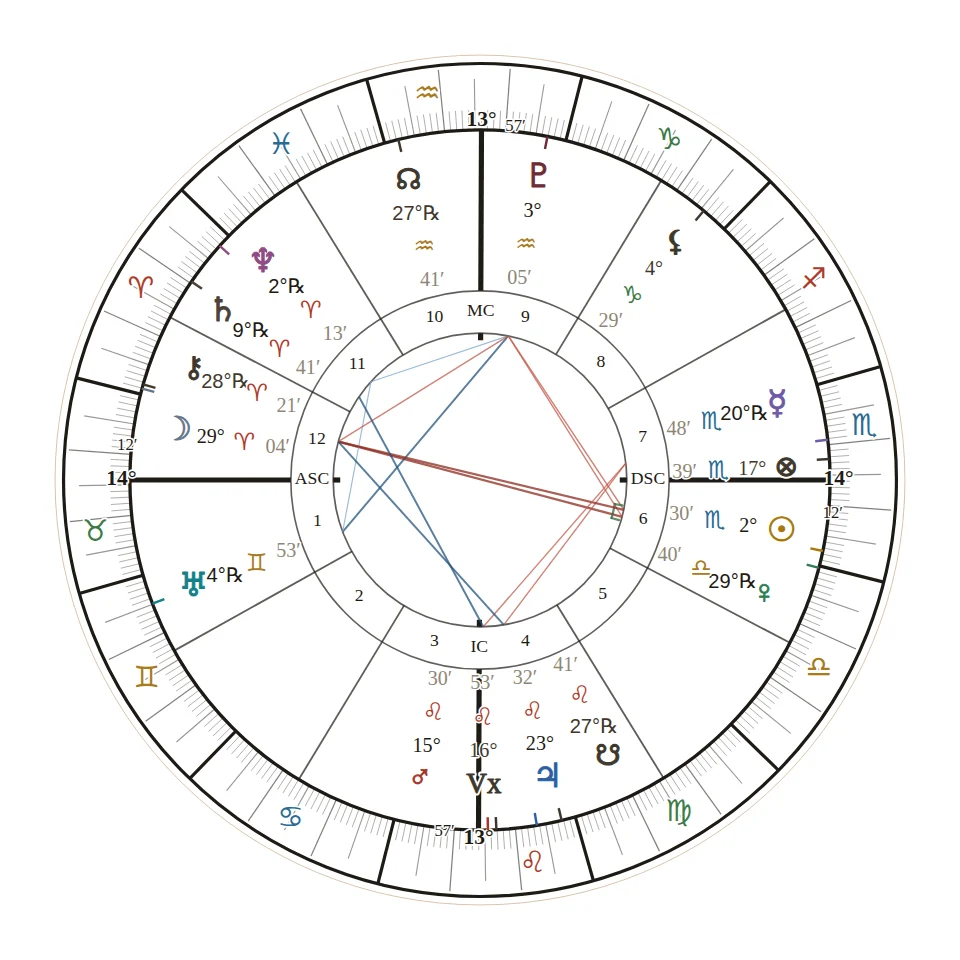
At 7pm on 25 October, the most likely time for the result, the Ascendant of the election is at 14° Taurus. It falls on Flávio's Mercury, at a 0.6° orb, and on his Venus, at 2°. By the traditional rule, that places him in house 1, the side the chart represents.
The ruler of house 1 is Venus, and Venus returned to Libra at 6am that same day. Libra is its domicile: it is the strongest planet in that entire chart. Medium weight (2). I don't give it strong weight because it is retrograde and in house 6, which is a weak house.
The second is Mars dominating Venus in the horary question.
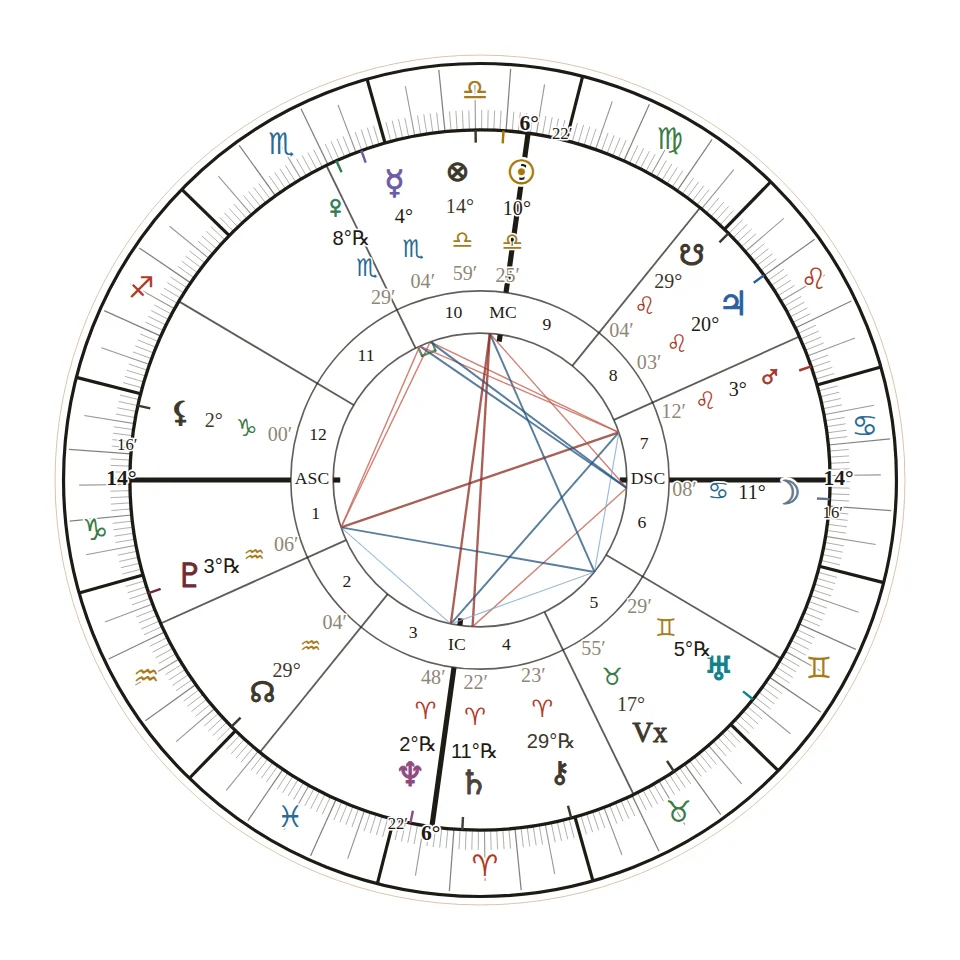
In the question I asked on 3 October, Lula is house 10, ruled by Venus, and Flávio is house 4, ruled by Mars. Venus is in Scorpio, which is Mars's house: Lula's planet sits under the power of Flávio's planet. The Moon, which represents the people, has just moved away from Venus, and the first planet it meets on changing sign is Mars.
Medium weight (2). This would be strong, but that domination ends once Venus leaves Scorpio, and it leaves on the very day of the runoff.
The third is the synastry with Brazil.
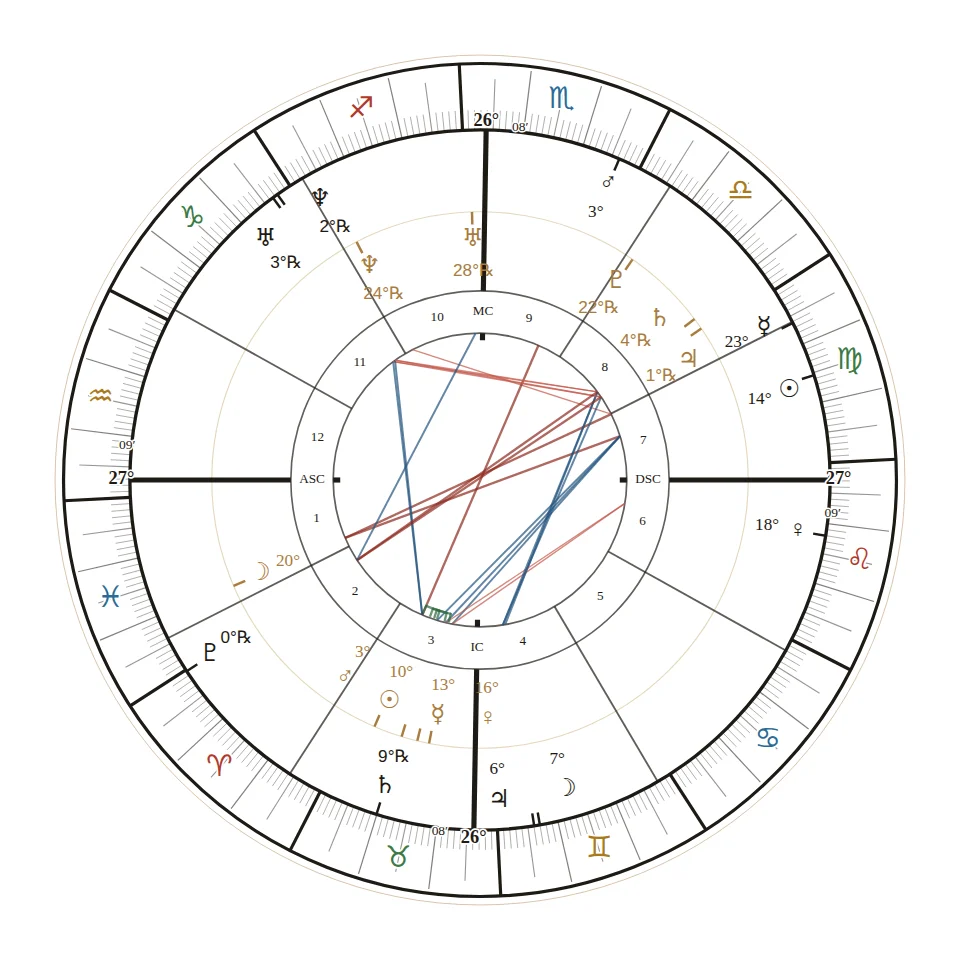
Flávio's Sun falls exactly on Brazil's Saturn, within two tenths of a degree. Saturn is a country's order, law and authority. His Mercury and Venus touch Brazil's Sun, which is the national identity, and his Uranus falls on the country's point of government. Weak weight (1).
The fourth is Brazil's houses.
Flávio's Moon falls in house 1 of Brazil's chart, the house of the people. The detail that counts: this data point does not depend on his birth time, because it only uses the Moon's position that day. Lula's contacts with Brazil's angles, by contrast, depend on two uncertain hours. Weak weight (1).
The pieces of evidence that favour Lula are five:
- Venus regains strength on election day: in the horary chart, Venus is Lula, and it returns to Libra on 25 October itself. Strong weight (3).
- Mars in a strong house in the result chart: it is the ruler of Lula's side, in house 4. Weak weight (1).
- The Moon forms an opposition to Venus in the late afternoon of 25 October, against Flávio's side. Weak weight (1).
- Venus turns direct again in Libra on 14 November and closes off the challenge. Weak weight (1), and only counts with the horary chart.
- The synastry with Brazil: Lula's Sun falls on Brazil's Mars, and his Neptune touches the country's Moon. Weak weight (1).
With the horary, the count gives 7 points to Lula, 54%, and 6 points to Flávio, 46%; without the horary, it gives 3 points to Lula, 43%, and 4 points to Flávio, 57%.
Both scenarios fall between 43% and 57%. It is a technical tie: the winner switches sides depending on the weight given to a single technique. That is why the honest answer to this piece's question is yes, and it is not a yes given out of courtesy.
The horary chart and the other methods point to opposite sides, and that is exactly why the uncertainty in the birth data matters so much. With Flávio's correct birth time, or confirmation of Lula's, this count could tip more clearly toward one of the two.
Three things could turn this count around again:
- Flávio Bolsonaro's birth time. It is not public. If it surfaces, he gains an Ascendant and houses, and his data points could grow or shrink.
- Lula's birth time. The version I use, 6:10am, comes from an account. If the correct time is 8am, he loses the link to the first round's Ascendant and the contact with Brazil's point of government.
- The official time of the result. By 8pm, the Ascendant has already moved to 27° Taurus, and Flávio's Uranus falls on the Descendant, the side of the opponent. That weakens the first point in his favour.
In short, Flávio Bolsonaro has a chance of winning the runoff, and it grew after the first round: with the time on his birth certificate, he gets 68% of the signs in the sky with horary astrology and 85% without it. In the 4 October analysis, still without that time, the count was a statistical tie, between 43% and 57%.
The data behind this text: Brazil, 7/9/1822, 4:30pm, Ipiranga (São Paulo). Lula, 27/10/1945, 6:10am, Caetés (PE). Flávio Bolsonaro, 30/4/1981, no known time, Resende (RJ). Horary question, 3/10/2026, 11:44am, Porto Ferreira (SP). Tropical zodiac, Placidus houses, Brasília time.
And the questions that come up most on this subject, with the short answer:
Is there a chance Bolsonaro could win the 2026 election, according to astrology? Yes. In the count redone on 7 October, with Flávio Bolsonaro's birth time taken from his birth certificate, he gets 68% of the signs in the sky in the runoff with horary astrology and 85% without it. In the 4 October analysis, without that time, the count was a statistical tie, between 43% and 57%.
What is the strongest astrological data point in favour of Flávio Bolsonaro? The chart for the runoff result. At 7pm on 25 October, the election's Ascendant falls on his Mercury and Venus, and the ruler of that side, Venus, has just returned to Libra, where it has strength. It is the most dignified planet in that chart.
What could change this count? Flávio Bolsonaro's birth time, which is not public; Lula's birth time, which comes from an account rather than a birth certificate; and the official time of the runoff result, because the Ascendant changes sign every two hours.