Yes, Flávio Bolsonaro has a chance of winning the runoff, and according to astrology his is the bigger of the two. In my research, redone after the first round with his birth time taken from the certificate, Flávio gets 68% of the signs in the sky for 25 October. If horary astrology is taken out of the count, he rises to 85%. Lula's chance exists, it is 32%, and it comes almost entirely from that same technique.

In this election, the Bolsonaro in the runoff is Senator Flávio Bolsonaro, son of Jair Bolsonaro, who is running for president against Lula. In the first round, on 4 October, he got 47.03% of the valid votes, and Lula 45.16%. The gap is small, and in the runoff the count starts over.
The astrological reading changed in three days, and the order of events matters. On the eve of the first round I published Is there a chance Bolsonaro could win the 2026 election?, with Flávio's chart without a birth time. There the result was a technical tie, and I wrote that his birth time was the piece of data capable of turning the count. After the first round, the time appeared on Astro-Databank, the largest birth database used by astrologers: 30 April 1981, at 20:10, in Resende, with the AA rating, which is given to those who have the certificate in hand. With it, the chart gained an Ascendant, a Midheaven and houses, and the tie was over.
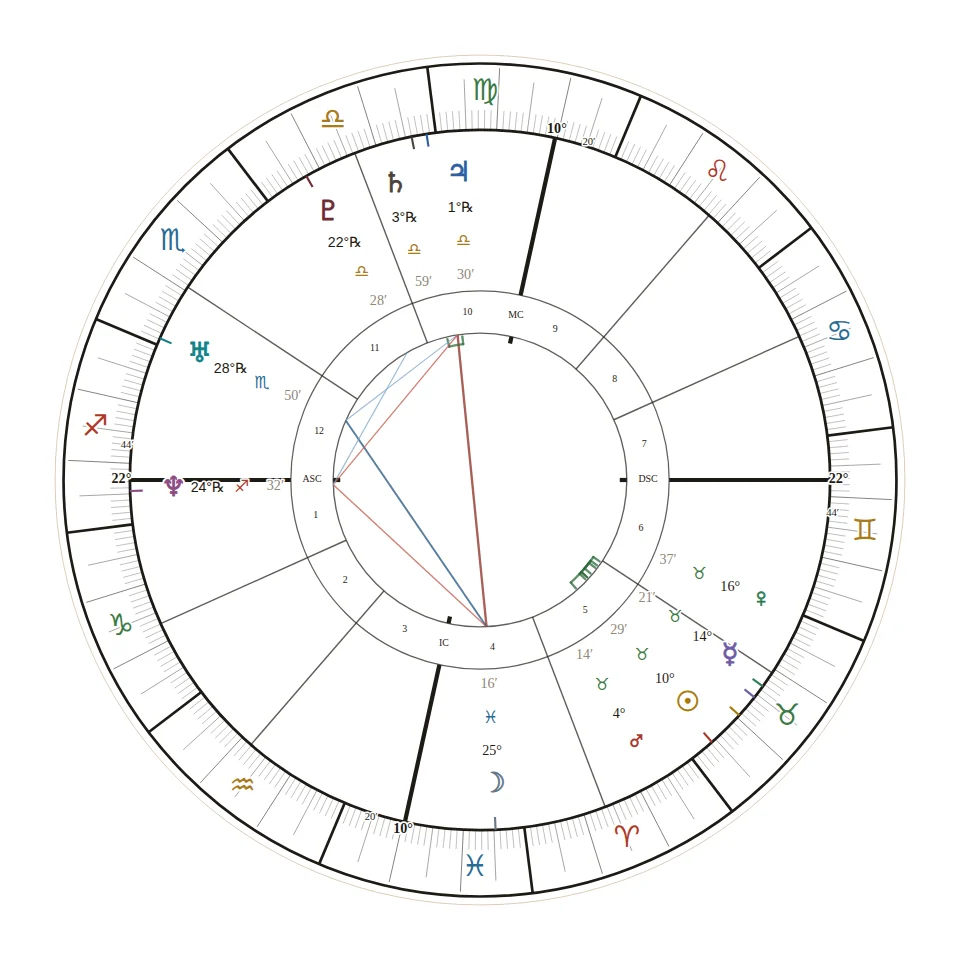
With the time, Flávio's Ascendant falls in Sagittarius 22°43′, and the chart ruler is Jupiter, which sits in Libra, in house 10, together with Saturn. House 10 is the house of office and public life, and when the planet that represents the person is there, a public career is the centre of life. The Moon, in Pisces, is in house 4, the house of family and origins: the surname and the bond with his father are the emotional base of his career.
The strongest sign in Flávio's favour falls on voting day itself. On 25 October, Jupiter passes through Leo 23°, in trine to his Ascendant, within one degree. Since Jupiter is the ruler of Flávio's chart, it is the planet that represents him moving in harmony over the point that also represents him. In election astrology, it is one of the transits most often cited when people talk about victory. I gave it strong weight.
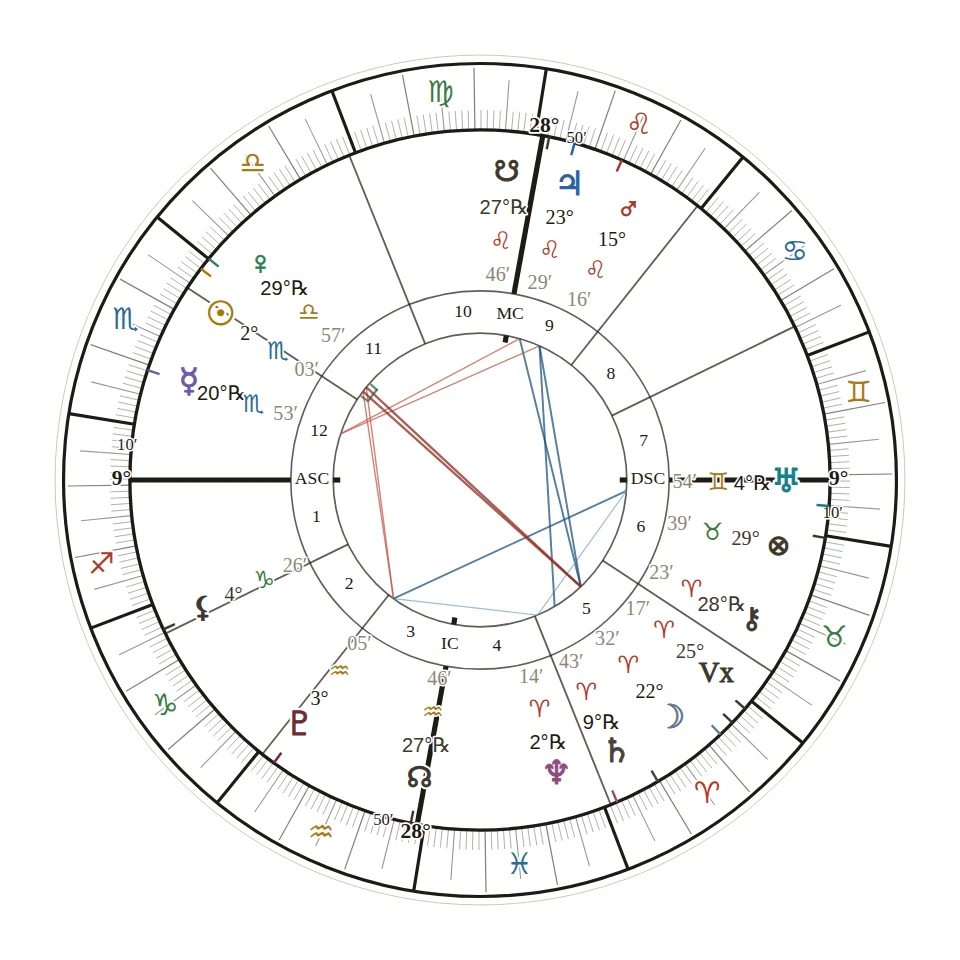
The morning of the vote also leans his way. At 08:00 on the 25th, when the polls open, the Moon is in Aries and makes a trine to Flávio's Ascendant, within two tenths of a degree. In an election, the Moon is the people, and the voters' mood that morning runs in his direction. The weight is weak, because the Moon moves fast and the effect lasts hours. On Lula's side, the Ascendant of the opening makes a sextile to his Venus, within one degree, and it is through that door that Lula's charisma can grow over the day.
The election quarter began with Flávio's voice setting the agenda. The Sun's ingress into Libra, on 22 September, at 21:05 Brasília time, is the chart that mundane astrology uses for a country's next three months. The Ascendant of that chart fell on Flávio's Mercury, and the Midheaven stood in opposition to Lula's Midheaven, with the point of his government placed at the bottom of the sky, which is where a cycle ends. Medium weight.
With Brazil, Flávio's link is one of order. His Sun falls on Saturn in the country's chart, of 7 September 1822, within two tenths of a degree, and Saturn is law and authority. His Moon makes a trine to Brazil's Midheaven, the place of government, within one degree. For part of the electorate, he is the figure who demands and lays down rules. Medium weight.
Lula reaches the 25th under a heavy sky. Pluto squares his Sun, which is personal authority, and Saturn opposes his Venus, the capacity to please and to be chosen, within half a degree. By solar arc, a technique that moves the birth chart forward in time, Pluto also reaches Lula's natal Sun. Together, these signs carry strong weight, and they all count in Flávio's favour. On the eve of the vote, Mercury stations and begins to go retrograde over Lula's Ascendant, which tends to bring appeals, challenges and revised speeches.
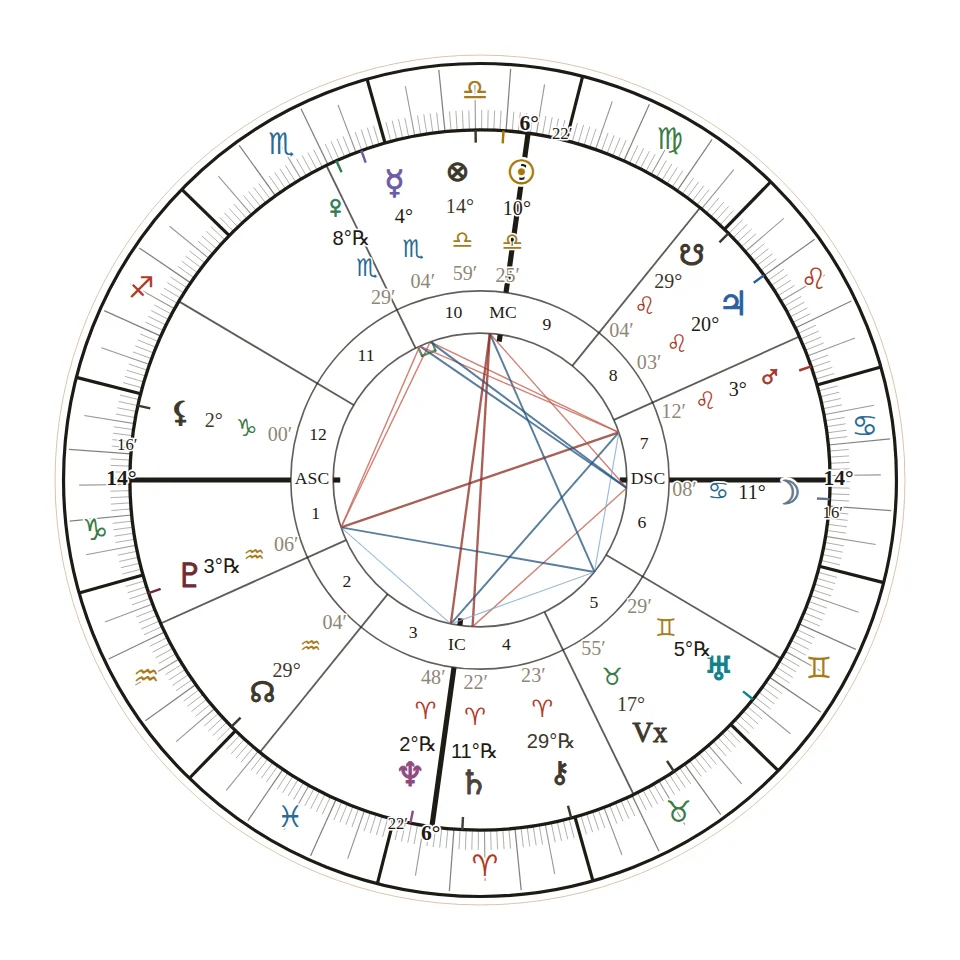
Lula's chance lies almost entirely in one technique. Horary astrology is the chart of the moment a question is asked, and it does not depend on anyone's birth time. In the one I cast on 3 October, at 11:44, in Porto Ferreira, Lula is Venus and Flávio is Mars. Until the 25th, Venus is in Scorpio, under Mars's power, and that was the picture the first round showed. But Venus returns to Libra, her own sign, on the very day of the runoff, and regains her strength. It is the strongest argument on Lula's side, with strong weight, and it is because of it that the count with the horary stops at 68%, while without it it reaches 85%.
The count works like this: each sign in the sky comes in with a weight, strong, medium or weak, and the result is the share of that weight pointing to each candidate. In Flávio's favour are the Jupiter transit (strong), the heavy transits and arcs over Lula (strong), the Sun's ingress into Libra (medium), the synastry with Brazil (medium), Mars dominating Venus in the horary (medium, and only with the horary) and the Moon at the opening of the polls (weak). In Lula's favour are Venus returning to Libra on the 25th (strong, and only with the horary), Venus turning direct again on 13 November (weak, and only with the horary), the Ascendant at the opening of the polls over his Venus (weak) and his Sun over Brazil's Mars (weak). With the horary, it comes to 68% for Flávio and 32% for Lula; without it, 85% and 15%.
This number measures which way the sky leans, and an election poll measures voting intention. The score comes from the ballot box. The polls, by the way, have also moved in Flávio's direction: at the end of September he moved ahead for the first time, still within the margin of error, with 47.7% to 47.6% in AtlasIntel with Bloomberg (SP Diário).
Two things could turn this reading around. The first is Flávio's birth time: the AA rating comes from a certificate sent to the database by a contributor, and I have not seen the document. If the time is wrong, the tie from the first study applies again. The second is the horary, which still gives Lula a strong Venus on the 25th and is the only argument that does not depend on anyone's birth time. This count stays published as it is until the 25th, and if it is wrong, the error will be studied here, in public.
After the vote, the sky indicates that the dispute does not end on the night of the 25th. Mercury is retrograde from 24 October to 13 November, starting over Lula's Ascendant, and the review comes from his side: appeals and requests for a recount. On 13 November, Venus turns direct in Libra 22°, in exact sextile to Flávio's Ascendant, and the matter gets unstuck. At the inauguration, on 5 January 2027, the Moon is over his Ascendant. The whole path, date by date, is in Who wins the 2026 election runoff.
In short, Flávio Bolsonaro has a chance of winning the runoff, and according to astrology it is the bigger one: 68% of the signs in the sky with horary astrology and 85% without it. The strongest sign is Jupiter, the ruler of his chart, in trine to his Ascendant on 25 October. Lula's chance, 32%, comes almost entirely from the horary, with Venus returning to Libra on voting day.
The data behind this text: Brazil, 7 September 1822, 16:30, Ipiranga (São Paulo). Lula, 27 October 1945, 06:10, Caetés (PE). Flávio Bolsonaro, 30 April 1981, 20:10, Resende (RJ), AA rating in Astro-Databank. Horary question, 3 October 2026, 11:44, Porto Ferreira (SP). Sun's ingress into Libra and opening of the polls for the runoff in Brasília. Tropical zodiac, Placidus houses, Brasília time.
And the questions that come up most on this subject, with the short answer:
Does Bolsonaro have a chance of winning the runoff by astrology? Yes. In astrologer Shelly Gonella's research, with Flávio Bolsonaro's birth time taken from his birth certificate, he gets 68% of the signs in the sky in the runoff with horary astrology and 85% without it. Lula gets 32% and 15%.
What is the strongest astrological sign in Flávio Bolsonaro's favour in the runoff? Jupiter, the ruler of his chart, in trine to Flávio's Ascendant, within one degree, on voting day, 25 October. In election astrology, it is one of the transits most often cited when people talk about victory.
Why did the astrological forecast change after the first round? Because Flávio Bolsonaro's birth time turned up: 30 April 1981, at 20:10, in Resende, with the AA rating on Astro-Databank. Without the time, the count came out as a technical tie; with it, the chart gained an Ascendant and houses, and the signs began to point to him.
What could make Lula win the runoff according to astrology? Horary astrology. In it, Lula is Venus, and Venus returns to Libra, her own sign, on 25 October itself. If Flávio's birth time is wrong, the tie from the first study applies again.