- Did the predictions of Lula in the first round fail? They failed. Flávio came out ahead, with 47.03% against 45.16%.
- Does this invalidate astrology and cartomancy? It does not. The oracle is excellent for a person's life, and it loses its calibration when the question is the vote count of an entire country.
- What does this error teach? It is research data: it showed the limit of horary astrology and the weight of a birth time, and that is how any body of knowledge moves forward.
On the eve of the first round, many published readings said the same thing: Lula comes out ahead in the first round and wins the runoff, by a small margin. On Sunday, Flávio Bolsonaro came out ahead, with 47.03% of the valid votes against Lula's 45.16%.
On social media, the disappointment arrived together with the result: if the oracle got the election wrong, why trust it with my life?
This research is the answer, and it stands on the side of those who consult the sky and the cards. The error happened, and that is exactly why it is worth understanding.
The most famous question of antiquity got a correct answer that was badly read. Croesus, king of Lydia, asked the oracle at Delphi whether he should attack Persia. The answer was that, if he attacked, a great empire would fall. He attacked, and the empire that fell was his own. The oracle was right, and the one who got it wrong was a king in a hurry to hear what he wanted.
A Greek philosopher of the same period summed it up in one sentence: the lord of the oracle at Delphi neither speaks nor hides, he gives signs. The sign needs an interpreter, and the interpreter is human.
And the sign, when read calmly, can be strikingly accurate. In 1651, the English astrologer William Lilly published a series of symbolic images about the future of London. One of them showed people digging graves; another, a city in flames. In 1665 came the Great Plague, and in 1666 the Great Fire of London. Lilly was called to testify before a parliamentary committee that wanted to know whether he had anything to do with the fire. He did not: he had read the sky.
Notice what these cases have in common. The oracle gets the image right, the climate, the nature of what is coming. It was never good at giving the exact date, the percentage and the score, which is precisely what an election asks for.
When a piece of astrological research today speaks in percentages, like the 68% of the signs for Flávio in this year's runoff, it is weighing signs: how many indicators in the sky point to each side, and how strongly. It is a modern way of showing how firm a reading is, and the score still belongs to the ballot box.
In a consultation, there is one person, one question and a conversation. The card reader sees who is in front of her, and the cards answer a concrete life. The astrologer works with the time on the birth certificate, which she asks for precisely so as not to get it wrong, as explained in the article on why astrologers ask for the birth certificate. And the consultation goes on: the client comes back, tells what happened, and the reading adjusts.
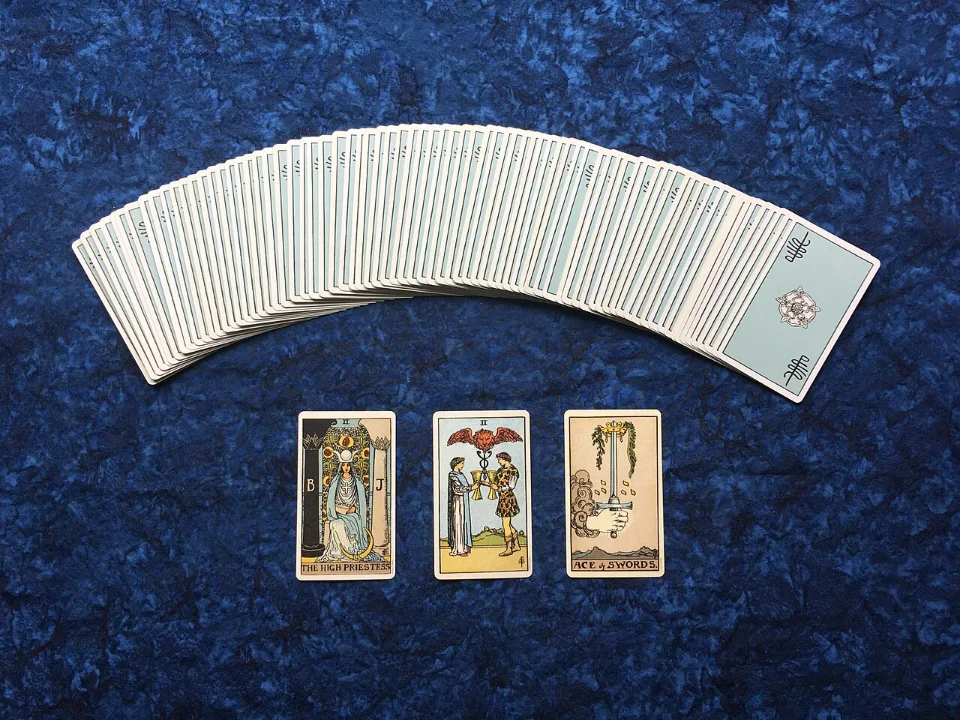
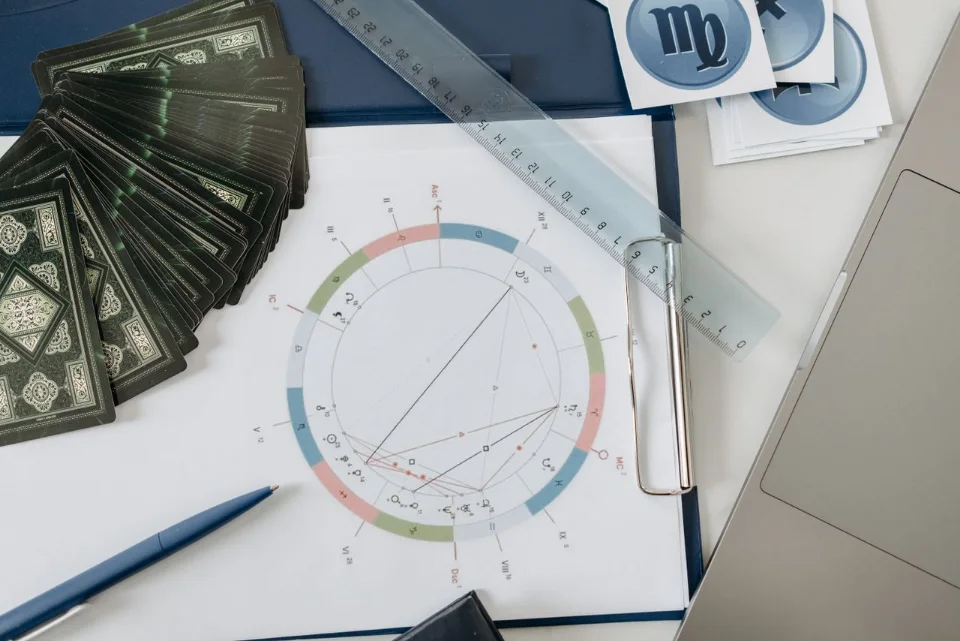
That is why so many people recognise their own lives in a spread or a chart. The question is the size of one person, and the oracle was made for that size.
An election is millions of choices. Each voter has their own sky, their own fears and their own wallet. The oracle answers the question of the one who asks, and a whole country does not fit into a single question.
The data are fragile. Brazil has more than one founding chart, and each astrologer chooses their own. Flávio Bolsonaro's birth time only turned up after the first round, and when it did, the astrological count switched sides, as set out in 2026 elections: what the sky showed in the first round and what comes until the inauguration.
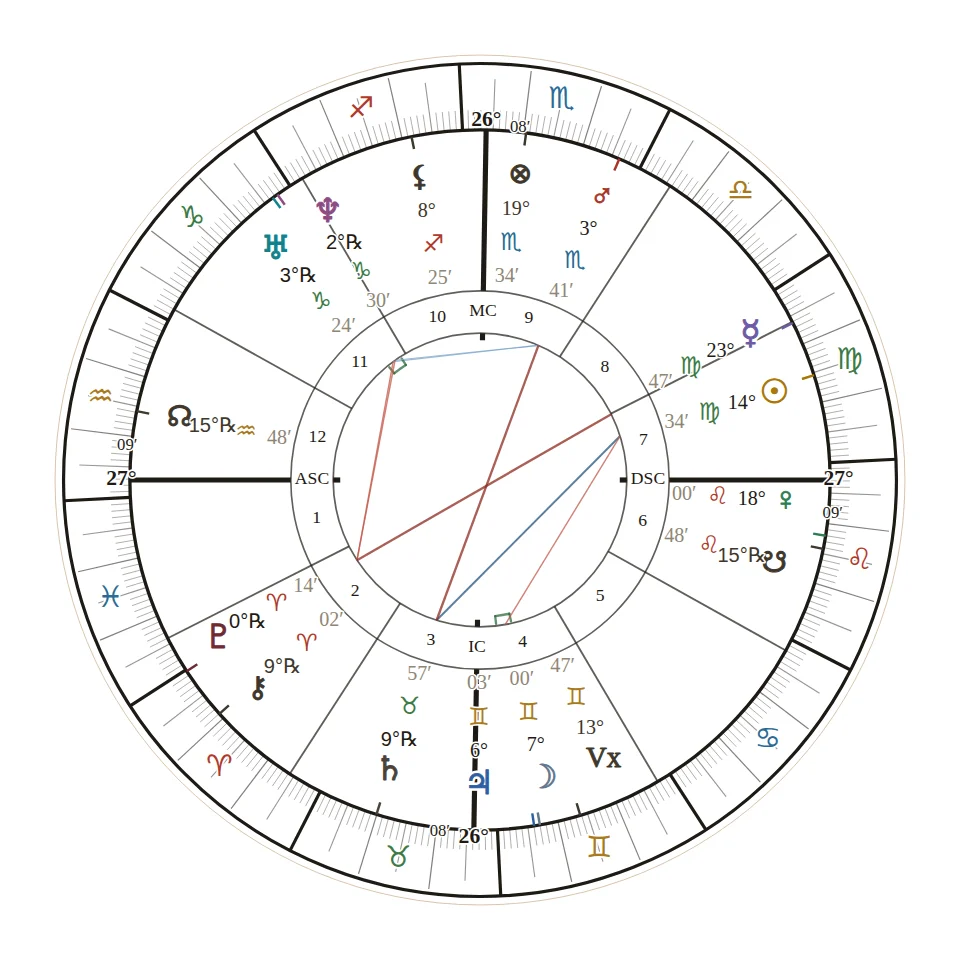
Those who read also vote. Every card reader and every astrologer is a citizen, and the wishes of the interpreter weigh on the interpretation. In a private consultation, the reader has nothing at stake; in an election, they do. It is the same risk Croesus ran: hearing what you want to hear.
And the question asks for a number. The oracle speaks in images, and an election is decided by a percentage point. Asking a symbolic technique for the precision of a vote count is asking it for something it never promised.
Astrology is not a single technique. Horary astrology reads the minute of a question; transits read the sky of the day over someone's chart; synastry compares a candidate's chart with the country's; event charts read the sky at the opening of the polls or at the inauguration; cycles and eclipses read the climate of a period. Cartomancy has its own paths, and each deck and each spread looks from its own angle.
The sky is one, and each lens shows a part of it. In many readings of this election, horary astrology leaned toward Lula, the event charts were split and Flávio's time was missing. When the time turned up, the lenses that depend on it began to point to Flávio. The sky stayed the same, and what could be read in it grew.
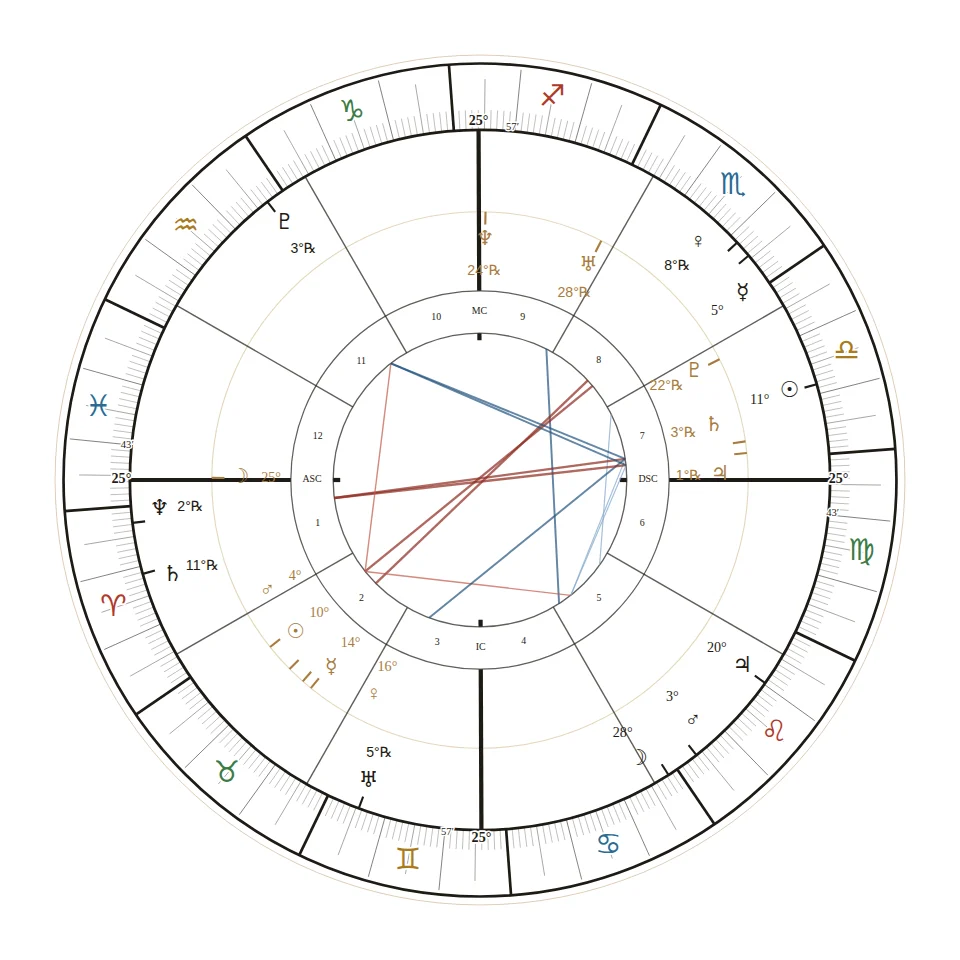
In astrology and in cartomancy, everything goes through the interpretation of a sign, and two competent people can read the same sky in different ways.
On the eve of the first round in 2022, the main polling institutes had Lula at about 50% of the valid votes and Bolsonaro at 36%. The result was 48% to 43%: a seven-point miss on the candidate who came second. In 2016, almost every poll gave the win to Hillary Clinton in the United States, and Donald Trump won. Weather forecasts speak of a percentage chance of rain precisely because they cannot promise tomorrow's sky.
In 2026, the other fields also read the election in different ways, and they also changed their reading over the year:
- The market: on the eve of the first round, Wall Street was already running the numbers on a Flávio victory. JPMorgan projected the dollar at R$ 4.90 with Flávio and at R$ 5.50 with Lula (Times Brasil, 3 October). After the result, analysts expected the stock exchange to rise close to 10% on Monday, "with investors anticipating a Flávio victory" (Seu Dinheiro, 4 October).
- The election polls: at the start of the year, Lula beat Flávio by 7 points in a runoff (Quaest, January). By March, there was already a technical tie, at 46% to 43% (Datafolha, March, via Reuters). At the end of September, Flávio moved ahead for the first time, still within the margin of error: 47.7% to 47.6% in AtlasIntel with Bloomberg (SP Diário) and 46% to 45% in Nexus with BTG (Gazeta do Povo).
Nobody proposed shutting down the polling institutes after 2022, or the banks after a wrong projection. They revised their samples, their weightings and their methods, and that is what is expected of any serious body of knowledge.
The place where a technique fails is the most valuable data for anyone who studies it. The first round of 2026 showed two things no correct call would have shown: that horary astrology, on its own, is fragile for predicting elections, and that a single birth time can turn an entire count around.
That is why this blog publishes research and redoes it in public. The count changed when the data changed, and each version was kept on record. An astrology that shows where it went wrong and what it learned contributes more to society than one that only shows up when it gets things right.
For those who read cards, the 2026 election left study material no course would give. The first lesson is in the question. A spread about who wins the election also answers to the person who shuffled: to her fear, her desire, the country she imagines. When the question becomes what changes in the client's life after 25 October, the cards go back to speaking at the size they were made for. Separating the intimate question from the collective one is a matter of method, the same care the astrologer takes when she separates a person's chart from a country's chart.
The second lesson is in keeping records. Whoever writes down the date, the question and the cards that came up, and goes back to them when the event happens, turns intuition into accumulated knowledge. The priests of Delphi kept the oracle's answers; the astrologers of the 17th century published almanacs and were held to account for them the following year. One reading that is published and revisited teaches more than ten forgotten ones.
The third is telling the public how certain you are. The cards can show a dispute, a reversal, a king who falls or who stays. Saying "I see a tight race, with a lead that could change hands" is as honest as the deck allows, and turning that image into a name and a score is a step taken by the reader.
And there is a fourth, more personal one. Being wrong in public takes courage, and whoever put themselves on the line with a prediction did what most commentators avoid doing. That deserves respect, including from those who were wrong alongside them.
Frustration reveals what was expected. Whoever sought a prediction of the election wanted, almost always, relief: to know in advance, so as to suffer less from the waiting. It is a human and ancient wish, the same one that made kings travel for days to Delphi, and the oracle never had a way of sparing anyone the wait.
It is worth remembering what private consultations have delivered over the years: the spread that helped decide a move, the chart that explained a difficult cycle, the conversation that put a name to an anxiety. Election Sunday disproved none of that. The election measured something the oracle measures poorly, and each person's life remains the subject on which it is most precise.
Here is a practical suggestion for the next consultation: bring the question about your own life in the face of the political scene. How to protect your work in a year of an unstable dollar, how to handle a divided family at Sunday lunch, where to put your energy if the result is the opposite of what you wanted. The sky and the cards answer these questions well, whoever wins.
Brazil consults the sacred for almost everything, and politics has joined the list. We are a country of mixed devotion: the same person goes to Mass, lights a candle for the orixá, draws cards on Friday and checks the horoscope in the morning. This mixture has a beauty of its own. In a country where politics is often lived as fate, as something that falls on us without asking permission, it makes sense to seek out the oracle to know what is coming.
This mixture exacts a price from card readers, tarot readers and astrologers. Because the oracle is associated with religion, many people imagine the answer comes from an entity or a spirit that reveals the future, and that the reader merely repeats what she heard. Under that expectation, an error becomes proof of a lack of spirituality: if the revelation failed, whoever passed it on must be a fraud.
The work of those who read cards and skies is done with symbols. The card reader and the tarot reader interpret the figures on the cards; the astrologer interprets the pattern of the sky in a chart. It is analysis and interpretation, done with method, study and experience, and every interpretation can be revised. The meteorologist and the economist do something similar with their numbers, which are also a form of symbol: a rainfall model or a projection of the dollar is a reading of signs. Each one, in their own field, seeks to understand what is coming and to contribute to society, and nobody says an economist has lost their science when inflation comes out different from the forecast.
It is the expectation that changed over time. Nobody asked Delphi for a percentage. It was the 20th century, with opinion polls, that taught the public to expect numbers from any forecast, and social media put card readers and astrologers in the same shop window as the polling institutes. The oracle came to be judged like a polling institute, in a language that was never its own.
And there is polarisation. In a country split down the middle, every prediction becomes cheering for a side, and every reading is received as taking sides: the card reader who saw Lula was called a PT supporter, the astrologer who saw Flávio, a Bolsonarista. The label shows how far our capacity to listen has fallen. Perhaps the greatest spiritual service the oracles can offer now is the one they have always offered: the pause before the answer, and the reminder that the future has parts still open, that each person decides what to do with their own.
Since Delphi, people have consulted oracles because the future is uncertain, and it still is. No technique, not astrology, not cartomancy, not statistics, takes away the part of life that is still to be decided. What the oracle offers is meaning: an image with which to face what is coming.
The card readers and astrologers who saw Lula ahead read real signs of a divided country, a government under pressure and an election that would not end on Sunday. The score came out different from what they saw, and the rest of the picture they described is there, in plain view.
In short, the answers of this study are these:
- Did the predictions of Lula in the first round fail? They failed. Flávio came out ahead, with 47.03% against 45.16%.
- Does this invalidate astrology and cartomancy? It does not. The oracle is excellent for a person's life, and it loses its calibration when the question is the vote count of an entire country.
- What does this error teach? It is research data: it showed the limit of horary astrology and the weight of a birth time, and that is how any body of knowledge moves forward.
And the questions that come up most on this subject, with the short answer:
Did astrologers get the first round of the 2026 election wrong? Many readings put Lula ahead, and Flávio Bolsonaro came out ahead, with 47.03% against 45.16%. The error is research data: it showed the limit of horary astrology and the weight of Flávio's birth time, which only turned up later.
Why do oracles get it right in private consultations and wrong in elections? In a consultation there is one person, one question, a checked birth time and a conversation. In an election there are millions of choices, uncertain birth data and a question that asks for a number, when the oracle has always spoken in images.
Can astrology be used to predict elections? It describes the climate of a period, the moments of tension and the figures in play, and it is very accurate at that. Pointing to the exact number of votes is the weakest spot of any method, including election polls, which also get things wrong.