The conclusion of this study comes first. Brazil's sky, from December 2026 to June 2027, shows six months in two halves. The first, from December to March, is one of adjustment: Saturn and Neptune are in the money house of the country's chart, the campaign promises are revised and the value of things becomes hard to measure, with the dollar and the stock exchange swinging more. The second, from April to June, is one of relief: Saturn and Jupiter make good aspects to Brazil's Venus, the planet of spending and wages, and Pluto favours the base of the economy, which is the countryside, the home and household budgets. In early June, Saturn leaves the money house, and the hardest weight on the country's accounts begins to ease.
This adjustment holds for any winner. It is in the chart of Brazil itself, and not in a candidate's, so it arrives with whoever is elected in the runoff, on 25 October. The charts of Lula and of Flávio Bolsonaro are in the other texts of the series 2026 Election.
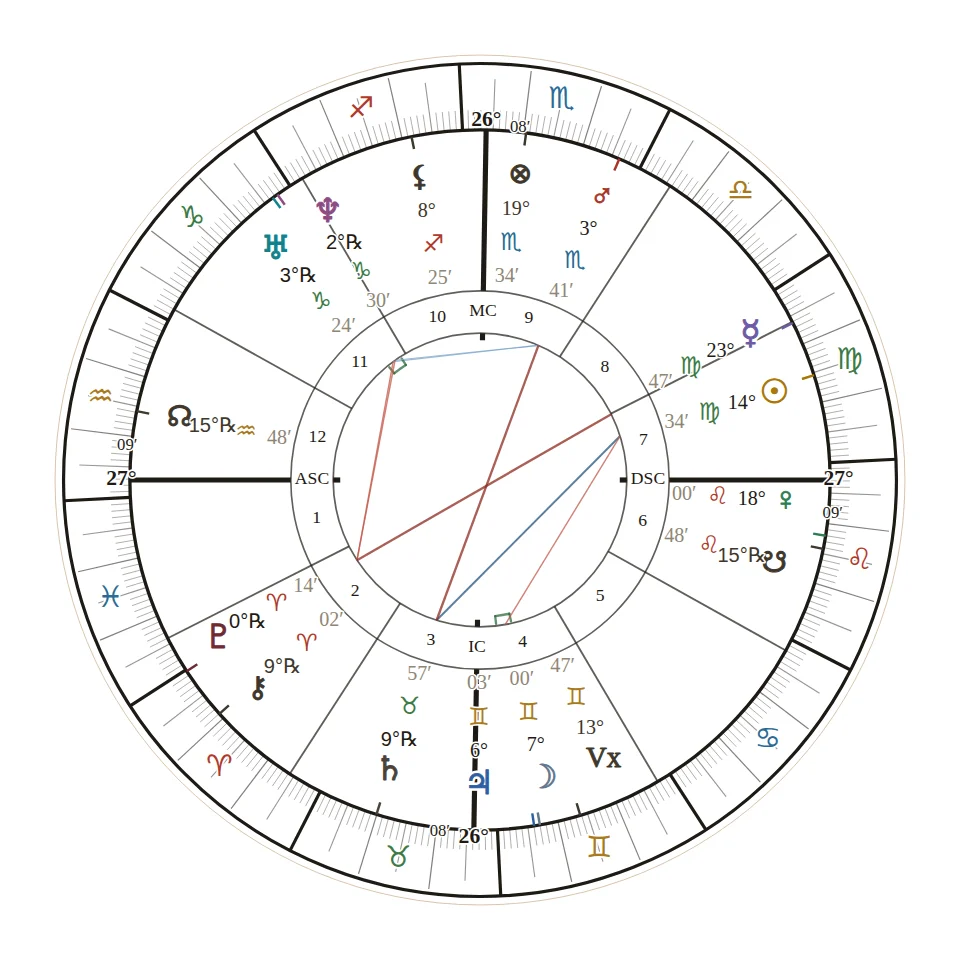
A country also has a birth chart, cast for the moment it is born as a nation. Brazil's is the Independence chart, on 7 September 1822, at 4:30pm, at Ipiranga. Each of the twelve houses of that chart speaks of one area of the country's life. House 2 is money, income and the value of the currency; house 6 is work and public service; house 4 is land, housing and families; house 7 is other countries and trading partners; house 12 is what happens out of sight.
To forecast, mundane astrology follows the slow planets of today's sky as they pass over the points of that chart. Each passage has an exact date, calculated here in Brasília time, and a meaning that comes from the planet and the house. It reads trends and moods. Estimating where inflation or the dollar will land is an economist's job, which is why the figures in this text are always the market's, with the source and the date.
Today's figures show a country cutting interest rates slowly and a euphoric market. On 16 September, the Central Bank lowered the Selic rate to 13.75% a year, the fifth cut in a row since March, when it stood at 15%. The Central Bank's Focus survey from early October expects inflation of 5.01% in 2026 and 4.30% in 2027, the Selic at 13.50% at the end of this year and 12% at the end of next year, and the dollar near R$ 5.20 and R$ 5.28. On the day after the first round, 5 October, the stock exchange rose 7.70% and closed above 200,000 points for the first time, at 206,911, and the dollar fell 4.12%, to R$ 5.00.
The backdrop of these six months was drawn on 20 February 2026. On that day, Saturn and Neptune met in the sky at Aries 0°45′, half a degree from Brazil's Pluto, which sits in house 2 of the country's chart. Saturn is the bill that arrives, the limit and the adjustment. Neptune is belief, expectation and what cannot be seen clearly, and money, at bottom, is a belief: a banknote is worth what everyone believes it is worth. Pluto, in the money house, is the country's deep wealth, the kind that comes from underground, and the power money has over everyone's life.
Saturn and Neptune meet every 36 years. The previous meeting was in 1989, and that year Brazil lived through inflation of almost 2,000% and, in March 1990, the plan that froze savings accounts. The comparison is frightening, and it need not be. In 1989 the meeting fell in another house of Brazil's chart, and today's country has an autonomous Central Bank, a floating exchange rate and an inflation target. What repeats is the question of how much money is worth; the dose depends on how it is answered. Saturn stays in Brazil's house 2 until 2 June 2027, and Neptune for several more years.
Until the end of November, the mood is euphoria with revisions underneath. Venus and Mercury move backwards in Scorpio until 13 November, in house 9 of Brazil's chart, the house of foreign trade and of distant contracts; it is a time when deals and figures already announced go back on the table, as explained in the texts on Venus retrograde and Mercury retrograde. On 30 October, Mars passes over Brazil's Venus, in the house of work: spending heats up and the price of services calls for attention. On 19 November, two contacts on the same day: Jupiter squares the country's Midheaven, the point of government, and Mars crosses the Descendant, the house of other countries. The elected government promises a lot, and pressure from abroad grows, as shown in the text on Trump and Brazil.
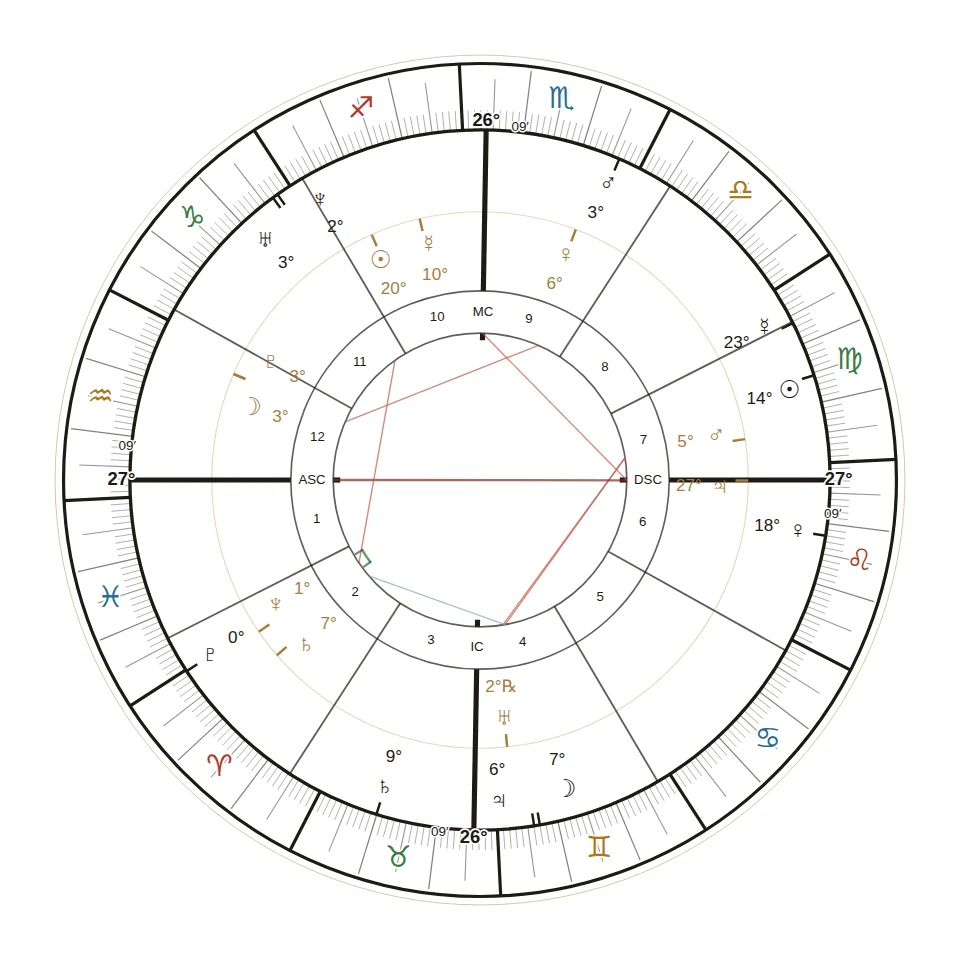
December is the month of the turn, and the sky marks the week precisely. The Copom, the Central Bank's rate committee, meets on 8 and 9 December. On 10 December, Saturn stands still in the sky and starts moving forward again, at Aries 7°55′, inside the money house. On 12 December, Neptune does the same, at Aries 1°36′, and on the same day Jupiter stands still and starts moving backwards at Leo 27°01′, exactly on Brazil's Descendant. Three slow planets standing still within three days is a turning point. Jupiter is confidence and promise; when it backs up over the house of foreign partners, expectations that were too big are revised, and agreements with other countries go back to negotiation until April. It is the month with the greatest risk of a correction on the stock exchange after the October rally. On 6 December, Pluto also squares Brazil's Mars, which is in the house of foreign trade: it is pressure from abroad on the economy, from tariffs and demands.
January begins with high expectations. On inauguration day, 5 January 2027, Jupiter again makes the exact square to Brazil's Midheaven: the new government takes office with great ambition and with an audience expecting quick results. Five days later, on 10 January, Mars starts moving backwards in Virgo, in Brazil's house 7, and stays that way until 1 April. Trade negotiations go back and forth, disputes with foreign partners drag on, and what is decided in a hurry in this period tends to be redone. The Copom meets on 26 and 27 January.
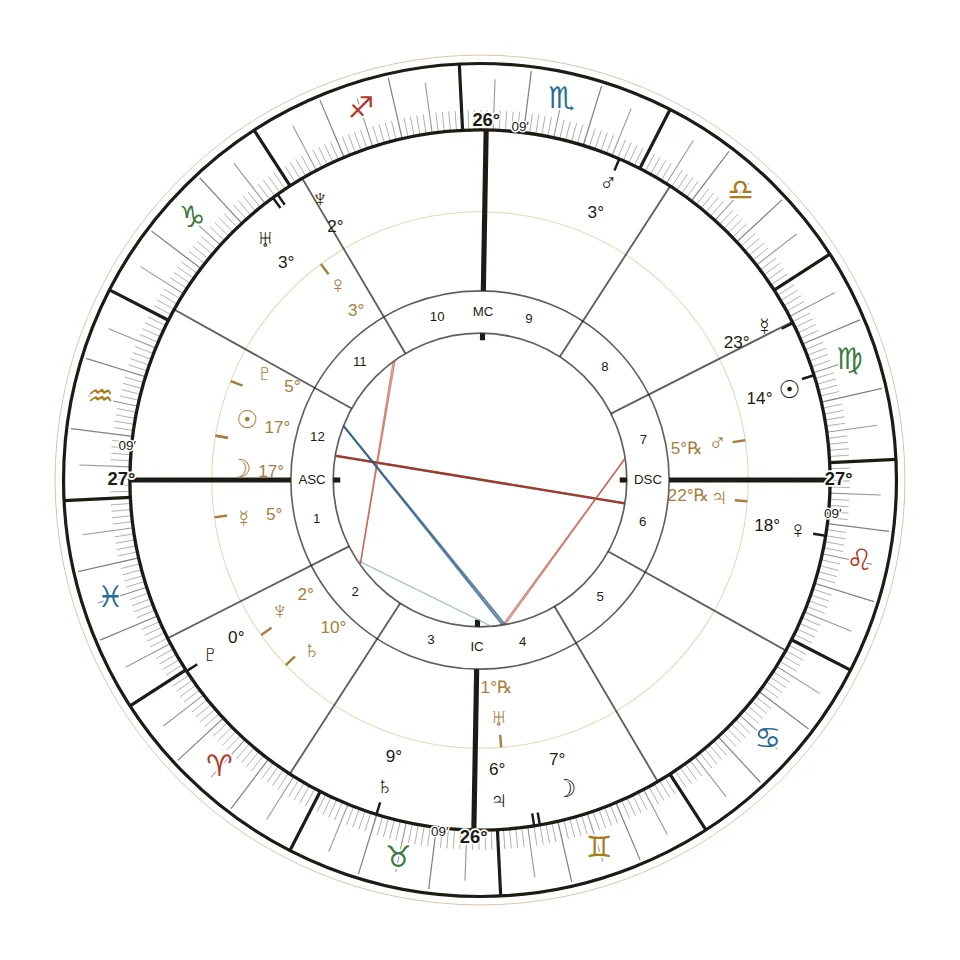
February is the most sensitive month of the six. On 6 February there is a solar eclipse at Aquarius 17°37′, in Brazil's house 12, exactly opposite the country's Venus. On the same day, Neptune makes an exact square to Brazil's Neptune. House 12 is what cannot be seen, and Venus is spending, wages and the money that circulates: it is the picture of a figure that surprises, a hidden bill that surfaces, inflation that does not ease as expected, an expense that was off the budget. From 9 February to 3 March, Mercury moves backwards, and data and announcements from this period call for a second reading. The dollar tends to swing more in these weeks. At the end of the month the first good news appears: on 25 February, Pluto trines Brazil's Jupiter, which sits in house 4, the house of land and housing. A deep renewal begins there in agriculture, in real estate and in credit for the home.
March still mixes the two. On 6 March, Neptune squares Brazil's Uranus, which sits in house 11, the house of the country's laws and plans: reforms and new rules arrive confused, change along the way and need patience to be understood. On 18 March, Jupiter passes over Brazil's Venus, in the house of work, and spending, trade and jobs get some breathing room. The Copom meets on 16 and 17 March.
April is the most constructive month of the six. Mars starts moving forward again on 1 April, and negotiations with other countries unblock. On 10 April, Saturn trines Brazil's Venus: the discipline of the money house starts to help spending and wages instead of weighing on them. On 11 April, Pluto trines Brazil's Moon, which speaks of the people and families, in house 4. On 12 April, Jupiter moves forward again. Four favourable movements in twelve days: it is the most open sky of the period for a decision that eases credit, and the Copom meets on 27 and 28 April.
May and June complete the improvement, with two brief scares. On 6 May, Mars crosses Brazil's Descendant for the last time, and tension with some foreign partner returns for a few days. On 8 May, Jupiter passes over the country's Venus again, and spending and trade gain strength. On 1 June, Uranus passes over Brazil's Jupiter and, on 17 June, over the Moon, both in house 4: these are sudden changes in agriculture, in food prices and in property prices, with novelty and technology, and with the ups and downs Uranus always brings. On 2 June, Saturn leaves Brazil's money house. The Copom meets on 15 and 16 June.
For those who invest, this is the picture. The stock exchange rides the euphoria until the runoff and runs the greatest risk of a correction in December, when Jupiter backs up; the firmest recovery appears from April onwards. The dollar swings most in December and in February, the two months when Neptune, the planet of uncertainty, is strongest over the money house. Inflation and interest rates follow the tone of Saturn in house 2: slow cuts, with the sky most favourable to relief in April. Astrology does not say how much. It says when the mood changes.
In short, the next six months of the Brazilian economy begin with adjustment and uncertainty and end with relief. From December to March, Saturn and Neptune in the money house, Jupiter backing up over the house of foreign partners and the February eclipse opposite the country's Venus call for caution: revised promises, figures that surprise, a less stable dollar and stock exchange. From April to June, Saturn and Jupiter favour spending, wages and jobs, Pluto renews the base of agriculture and housing, and Saturn leaves the money house on 2 June. This holds for any winner of the runoff. This forecast was published on 6 October 2026, and it will be redone here, in public, if the facts change the picture.
The data behind this study: Brazil, 7/9/1822, 4:30pm, Ipiranga (São Paulo), local mean time. Tropical zodiac, Placidus houses, apparent positions on the true ecliptic of date. The transit dates are in Brasília time. The economic figures come from the Central Bank (the Copom decision of 16/9/2026 and the Focus survey of early October 2026) and from the market close of 5/10/2026.