Astrology in the Netherlands
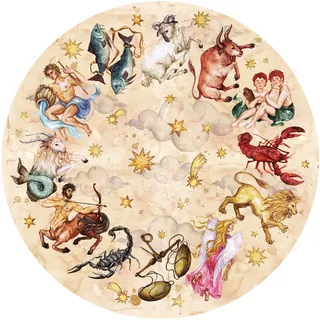
The Netherlands printed the astrology the rest of Europe could not print.
The Dutch contribution to astrology is less about doctrine and more about circulation. There is no Kepler or Lilly here, and inventing one would be easy and wrong. What there is, is what a list of names hides: without the Netherlands, much of what was written elsewhere would have reached far fewer people, and several instruments astrology depends on would not exist.
During the 17th century, the Dutch Republic was Europe's printing centre, with a tolerance for ideas that other places did not have. Books banned in other countries were printed in Amsterdam and Leiden and from there travelled everywhere, sometimes with a false place of origin on the title page.
And the almanacs were printed and sold in enormous quantity. An almanac of that era mixed calendar, phases of the Moon, weather forecast, planting advice, tide tables and astrology — all in the same cheap booklet, bought by people who might not have had another book at home.
It is an underrated piece in this history. It was through the almanac that astrology reached those who read no Latin and attended no court, and the format survived: the 20th-century newspaper column, which this blog tells on the England page, is its direct granddaughter. The same package of usefulness and curiosity, sold cheap and read by millions.
What the Netherlands gave to astrology
The Netherlands gave astrology the press. Without the circulation they secured, much of what was written elsewhere would have stayed on library shelves.
Five things about the sky of the Netherlands
The instrument that changed astronomy was invented here, and by a spectacle-maker. In 1608, in Middelburg, Hans Lipperhey applied for a patent on a device that brought distant things closer. The patent was denied because others claimed to have made the same, but the news travelled across Europe within months — and it was on hearing about it that Galileo built his own and pointed it at Jupiter. The telescope is Dutch; turning it to the sky was someone else's idea.
There is a direct link between Tycho Brahe's island and the presses of Amsterdam, and it has a name. Willem Blaeu spent months in Hven, at the end of the 16th century, learning to measure and build instruments with Tycho. He went back home, opened a workshop in Amsterdam and became the greatest maker of globes, maps and atlases of his time, official cartographer of the Dutch East India Company.
Notice what this means for this series: the precision that the Denmark page tells became, in a student's hands, the printed map that all of Europe bought. Measuring well is one thing; getting the result into thousands of hands is another, and it was the second that the Netherlands did better than anyone.
And there is a Dutch contribution that touches the birth chart closely, though it is almost never remembered for that. Christiaan Huygens built in 1656 the first pendulum clock that actually worked, and with it the daily error in measuring time dropped from minutes to seconds. A birth chart needs the time of birth, because the Ascendant moves, on average, one degree every four minutes. Before a reliable clock existed, that hour was a guess — and the one who made it recordable was a Dutchman chasing longitude at sea.
Huygens also discovered Titan and explained the strange shapes Galileo had seen around Saturn: a ring, with no contact with the planet. He published the conclusion as an anagram, to secure priority without giving away the result before he was certain — a custom of the time that would look like madness today.
Willebrord Snellius, of Leiden, left two useful things for anyone who measures the sky. He calculated the distance between two cities by triangulation, creating the method with which maps were surveyed for three centuries, and formulated the law of refraction — the one that explains why the Sun appears whole above the horizon when, by geometry, it is still below it. Anyone comparing "the Sun rising" with the degree that climbs the horizon needs this correction, and it is the reason sunrise does not match the plain calculation.
Before all of them, Gemma Frisius, born in Dokkum, proposed in 1530 to find longitude by comparing the time of a clock carried on board with local time — the right solution, a hundred years before a clock capable of surviving the voyage existed. He was a mathematician, a physician, and cast horoscopes, as expected of someone with that training. Mercator was his student.
And the story of the almanacs has an ending nobody expects: it did not end. The Enkhuizer Almanak, printed since the end of the 16th century, still comes out every year, with phases of the Moon, tide tables, calendar and planting advice, and it is the oldest periodical publication in the country. The format that carried astrology to those who read no Latin survived everything — the academies, the newspapers, the internet — and it is still on the shelves.
The oldest university observatory still in operation is Dutch: the one at Leiden, set up in 1633 on the roof of the university's main building to house one of Tycho Brahe's quadrants that had ended up there. Once again the same chain — the instruments from the Danish island, the students, the presses of Amsterdam.
And a detail that joins philosophy and glass: Spinoza, in Amsterdam and later in The Hague, made his living polishing lenses, and his were good enough for Huygens to remark on their quality. The philosopher who wrote against the idea that nature acts with a purpose — which is the underlying assumption of all astrology — made the glass through which people looked at the planets. He did not have to choose between the two things to pay the rent.
The Blaeu firm's globes, by the way, were sold in pairs: one of the Earth and one of the sky, the same size, to stand side by side in the room. An Amsterdam merchant with money had, at home, as a piece of furniture, the complete drawing of the constellations. It was the object that told a visitor this was the home of someone who understood the world — and the sky was part of that.
And the most reproduced astrological image in the history of printing came out of these almanacs: the zodiac man, the figure of a human body with the twelve signs spread across its parts — Aries on the head, Pisces on the feet —, used to choose where and when to bleed a patient. It was in almost every European almanac, and it was through it that millions of people who read no treatise learned the names of the twelve signs. It is the grandmother of the newspaper column.
And the sky of Amsterdam is different — this can be measured
The part of astrology that depends on PLACE, not just date, is the Ascendant: the degree of the zodiac rising on the horizon at the moment of birth. It changes every two hours and depends on the city's latitude.
And the twelve signs do not rise at the same speed. Some take more than two hours to cross the horizon and others less than one, and this difference grows the further you get from the equator. I sampled 200,000 random moments between 1950 and 2010 and calculated the Ascendant for Amsterdam, at 52° north:
| In Amsterdam, 52° north | Measured |
|---|---|
| The most common Ascendant | Scorpio, 12.0% |
| The least common | Aries, 3.5% |
| How many times more likely one is than the other | 3.4× |
| If the draw were fair | 8.3% for each |
Notice what this means: two people born at exactly the same time, one in Amsterdam and the other in a city at a different latitude, can have different Ascendants — and the frequency of each Ascendant changes with the place. The city of birth is not an administrative detail on a form: it enters into the count.
The pattern across this series is pure geometry, and it fits in one sentence: the further from the equator, the more uneven the draw. In Copenhagen, at 56 degrees north, the gap between the most common Ascendant and the least common one is 4.3 times; in São Paulo, at 23 degrees south, it drops to 1.5.
Your Ascendant depends on the time and city where you were born, and no sun sign table gets you there. These are two facts only the calculation can give you.
Generate my chart for freeFrequently asked questions
Does astrology in the Netherlands have a history of its own?
The Dutch contribution to astrology is less about doctrine and more about circulation. There is no Kepler or Lilly here, and inventing one would be easy and wrong. What there is, is what a list of names hides: without the Netherlands, much of what was written elsewhere would have reached far fewer people, and several instruments astrology depends on would not exist.
Why does latitude change the Ascendant?
Because the Ascendant is the degree of the zodiac rising on the horizon, and the signs do not all rise at the same speed. The farther from the equator, the bigger the difference: some signs take more than two hours to rise and others less than one. Near the equator the draw is nearly fair; near the pole, some signs barely show up.
Does this mean my rising sign is common or uncommon?
It means the count depends on where you were born, not just when. Two people born at the same hour in cities at different latitudes can have different Ascendants — and the frequency of each one changes with the place. It is one of the reasons a chart needs the city, not just the date.
Where can I see my Ascendant?
In your birth chart, which this site calculates for free from your date, time and city of birth. The Ascendant changes every two hours, so the time matters: an error of two hours can flip the whole sign.
Astrology in the Netherlands in summary
Keywords almanacs, the press, circulation
The numbers on this page hold for anyone born in Amsterdam or nearby, because they come from the latitude. What they do not give you is your Ascendant. It changes every two hours, and without the birth time there is no way to know which one is yours — the frequency of each one describes the population, not you.
