Astrology in Spain
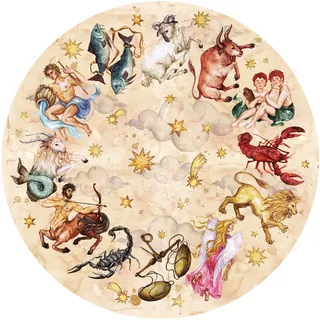
Astrology entered Europe through Spain, translated from Arabic.
This is the most important story in this series, and almost nobody tells it. During the Middle Ages, Greek astronomical and astrological knowledge had been preserved, commented on and expanded by the Islamic world. The road back into Latin Europe ran through the Iberian Peninsula.
The chain is long and worth following: what Ptolemy wrote in Greek in the 2nd century was translated into Arabic, studied and corrected by astronomers working from Baghdad to Córdoba, and only then passed into Latin. The astrology medieval Europe learned did not come straight from Greece: it came with centuries of Arabic work layered on top.
In Toledo, across the twelfth and thirteenth centuries, an ongoing translation effort carried these works into Latin. Christians, Muslims and Jews worked there, often in pairs — one reading the Arabic and rendering it aloud in Castilian, the other writing it down in Latin. It is one of the most productive intellectual collaborations in European history, and it happened around books of astronomy and astrology.
The mark of that stayed in the language. Almanac, azimuth, zenith, nadir and several star names — Aldebaran, Altair, Betelgeuse — are words of Arabic origin that every astrologer uses without a thought for where they came from.
Alfonso X of Castile, known as the Wise, sponsored in the 13th century the production of the Alfonsine Tables, used across Europe for centuries to calculate planetary positions, and of works such as the Lapidario, which links stones, planets and signs. A king put the State behind funding the calculation of the sky, and had it written in Castilian — which took that knowledge out of the circle of people who read Latin.
What Spain gave to astrology
Spain was the door through which Greek astrology, kept and improved in Arabic, made its way back into Latin. It is translation, not invention, that makes it a decisive place in this story.
Five things about Spain's sky
Spain had something almost no other country had: a chair of astrology at a university. Salamanca taught the subject with a paid professor and a set syllabus, and Abraham Zacuto passed through there, later carrying his tables to the Portuguese court. It was not an occult course: it was the training of people who would go on to calculate calendars, tides and dates for medical treatment.
The Alfonsine Tables had a long life, hard to picture today: they were the reference for calculating planetary positions in Europe from the 13th to the 17th century. It was Kepler who retired them, with the Rudolphine Tables of 1627, made from Tycho Brahe's measurements — a story told on the Denmark page. Three hundred and fifty years of use is longer than any astrology software will last.
Those tables also came in handy for a bit of theatre. In 1504, stranded in Jamaica and out of food, Christopher Columbus checked the ephemeris he carried on board, saw there would be a lunar eclipse and announced to the Taíno that he was going to take the Moon out of the sky. The Moon darkened right on schedule and he got what he wanted. It is a use of the ephemeris with nothing noble about it — and it shows what it meant, in that world, to be the one person on the island who knew what the sky was about to do.
There is one instrument that tells this story better than any text: the astrolabe. It reached Europe through Islamic Spain, and it does, on a piece of metal, exactly the calculation this page does by computer — given the place and the time, which degree of the zodiac is rising on the horizon. The Ascendant was already a mechanical number long before it was a digital one, and the astrolabe's plate has to be swapped out according to latitude, for the same reason the table further down this page changes from one city to another.
From the list of leftover words, it is worth adding the ones that describe the instrument itself and the sky itself: alidade, almucantar, azimuth, zenith, nadir — and, in everyday vocabulary, almanac, which was the calendar with the positions of the stars. A language keeps the trail knowledge travelled by, and Portuguese keeps this one.
And there is the part Spain later tried to erase. The 16th-century indexes of banned books targeted judicial astrology — the kind that predicts a person's life — and the Spanish Inquisition prosecuted those who practised it. The line that held in Portugal held here too: calculating the sky stayed permitted and necessary; saying what it meant for someone became dangerous business. It was that boundary, not any lack of mathematics, that pushed astrology out of the university.
An astronomer from Toledo solved, in the 11th century, exactly the astrolabe problem just described. Azarquiel — al-Zarqali — built a universal plate, called the safea, that works at any latitude, doing away with the set of interchangeable plates. He also compiled the Toledan Tables, which Europe used before the Alfonsine Tables existed, and today has a Moon crater named after him in its Latin form, Arzachel.
It is worth weighing the size of the coincidence: the obstacle that led a craftsman to invent a new plate in Toledo is the same one that makes the table at the bottom of this page give one result for São Paulo and another for Copenhagen. Latitude has always been the awkward part of working out the Ascendant, and a thousand years ago someone was already trying to get around it.
And the most influential book of Western astrological magic passed through Spain twice. The Picatrix — in Arabic, the Aim of the Sage — gathers recipes for planetary talismans and is attributed to the circle of Maslama al-Majriti, "the one from Madrid". It was translated into Castilian at the court of Alfonso X and from Castilian into Latin, and much of what is read today on the subject descends from it, including what this series tells on the page about astrological magic.
It is a good illustration of what Spain did in this story. The text was born in Arabic, took on a Castilian name, turned into Latin and reached Ficino's Italian — and the whole road runs through a court where three religions worked in the same room.
Alfonso X's workshop produced far more than tables. The Libros del saber de astronomía gather sixteen treatises on how to build and use instruments — astrolabes, quadrants, clocks — and among them is one of the first Western descriptions of a clock driven by mercury weight. It was an engineering programme written in Castilian, at a time when science was written in Latin.
From the same king comes a line he probably never said, and which history kept all the same: faced with the tangle of circles Ptolemy's system required, he is said to have remarked that if God had consulted him before creating the world, he would have suggested something simpler. It is the complaint of someone who footed the bill for the calculations, and the complaint stayed valid until Kepler swapped the circles for ellipses.
And the sky over Madrid is different — this can be measured
The part of astrology that depends on PLACE, not just date, is the Ascendant: the degree of the zodiac rising on the horizon at the moment of birth. It changes every two hours and depends on the city's latitude.
And the twelve signs do not rise at the same speed. Some take more than two hours to cross the horizon and others less than one, and that difference grows the farther you get from the equator. I drew 200,000 random moments between 1950 and 2010 and worked out the Ascendant for Madrid, at 40° north:
| In Madrid, 40° north | Measured |
|---|---|
| The most common Ascendant | Scorpio, 10.7% |
| The least common | Pisces, 5.0% |
| How many times more likely one is than the other | 2.1× |
| If the draw were fair | 8.3% for each |
Notice what this means: two people born at exactly the same time, one in Madrid and one in a city at another latitude, can have different Ascendants — and the frequency of each Ascendant changes with the place. The city of birth is not an administrative detail on a form: it enters into the count.
The pattern across this series is pure geometry, and it fits in one sentence: the further from the equator, the more uneven the draw. In Copenhagen, at 56 degrees north, the gap between the most common Ascendant and the least common one is 4.3 times; in São Paulo, at 23 degrees south, it drops to 1.5.
Your Ascendant depends on the time and city where you were born, and no sun sign table gets you there. These are two facts only the calculation can give you.
Generate my chart for freeFrequently asked questions
Does astrology in Spain have its own history?
This is the most important story in this series, and almost nobody tells it. During the Middle Ages, Greek astronomical and astrological knowledge had been preserved, commented on and expanded by the Islamic world. The road back into Latin Europe ran through the Iberian Peninsula.
Why does latitude change the Ascendant?
Because the Ascendant is the degree of the zodiac rising on the horizon, and the signs do not all rise at the same speed. The farther from the equator, the bigger the difference: some signs take more than two hours to rise and others less than one. Near the equator the draw is nearly fair; near the pole, some signs barely show up.
Does this mean my rising sign is common or uncommon?
It means the count depends on where you were born, not just when. Two people born at the same hour in cities at different latitudes can have different Ascendants — and the frequency of each one changes with the place. It is one of the reasons a chart needs the city, not just the date.
Where can I see my Ascendant?
In your birth chart, which this site calculates for free from your date, time and city of birth. The Ascendant changes every two hours, so the time matters: an error of two hours can flip the whole sign.
Astrology in Spain, in brief
Keywords Toledo, Alfonso X, the Alfonsine Tables
The numbers on this page hold for anyone born in or near Madrid, because they come from the latitude. What they do not give you is your Ascendant. It changes every two hours, and without the birth time there is no way to know which one is yours — the frequency of each one describes the population, not you.
