Astrology in Brazil
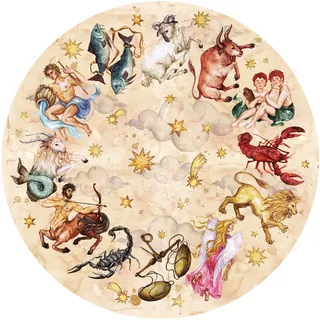
Astrology reached Brazil by ship, alongside seafaring.
It arrived in the same package as astronomy, and for a long time the two names described a single field. Whoever could predict a planet's position could interpret it, and the tables a Portuguese pilot used to find his way at sea were the same ones a doctor used to choose the day for a bloodletting. The split between the two is recent, and it happened well after Brazil existed.
During the colonial period, knowledge of the sky arrived through two channels. One was seafaring, which was a matter of State and required people trained in calculation. The other was the religious orders, and the Jesuits in particular, who brought the European university education of the day — and in that education astrology held a recognised place, tied to medicine and to the calendar.
What turned astrology into a topic of everyday conversation in the country, though, belongs to the 20th century: the daily horoscope column in the newspaper. It's where the question "what's your sign?" comes from as a way to start a conversation — a line almost every Brazilian has said at some point, and one that would not exist without the mass press. Omar Cardoso is the name most linked to that popularisation, between the printed column and television.
The side effect is large and worth naming: the newspaper column taught the whole country that astrology means Sun sign. Twelve boxes, one per birth month. It is the version that fits in a newspaper column, and it is a very thin slice of what a birth chart holds — the Sun is one point among ten, and the time of birth, which the column never asks for, changes the whole reading.
It is worth saying what is good in this, because it is not all loss. The newspaper column built, in Brazil, a public that knows its own sign and recognises all twelve names — a basic literacy that almost no other symbolic subject has. Whoever looks for a full birth chart today usually started there.
What Brazil gave astrology
Brazil is today one of the biggest audiences for astrology in the world, and that is not the legacy of a Brazilian school of thought: it is the legacy of a newspaper column that became popular culture.
Four things about the sky over Brazil
Before astrology arrived by ship, the sky was already being read here — and in a way the European tradition does not have. Several Indigenous peoples of Brazil see figures drawn in the dark patches of the Milky Way, rather than in the stars. The best known is the Rhea: its beak is the dark cloud astronomers call the Coalsack, right beside the Southern Cross. It is a constellation made of an absence of light, and there is nothing like it in the zodiac that came from overseas.
The calendar behind these readings was practical. The reappearance of the Pleiades in the pre-dawn sky, after weeks unseen, marked the turn of the season for many of these peoples — the same handful of stars that Greek astrology knows as the Pleiades, and that the Arabic tradition used to open the list of lunar mansions. Three traditions with no contact between them looked at the same cluster and decided it marked the start of something.
There is an astrological line drawn on the ground in Brazil, and its name was left behind two thousand years ago. The Tropic of Capricorn crosses the state of São Paulo, just above the capital, and it carries that name because at the December solstice the Sun stood in the constellation of Capricorn. Because of precession — the slow slide of the sky, one degree every 72 years — the Sun today stands in Sagittarius on that day.
And the precision matters here, because it marks the difference between two astrologies: the Sun still enters the sign of Capricorn on that day, because the tropical zodiac is defined by the solstice. What moved was the constellation, which is a pattern of stars. The line on the map of Brazil carries the constellation's name, and that is why it has aged.
The Brazilian flag is a map of the sky at one instant — and the man who designed it had no fondness for astrology at all. The stars in the blue circle reproduce the sky over Rio de Janeiro on the morning of 15 November 1889, the day the Republic was proclaimed, with the Southern Cross at the centre. The motto around it, "Order and Progress", comes from the positivism of Auguste Comte — a school of thought that treated astrology as the finished example of the kind of thinking science had come to replace.
There is a detail almost nobody notices: the stars are arranged as if seen from outside of the celestial sphere, flipped from what you see down here on the ground. It is the convention of the celestial globe, the instrument astrologers and sailors used to find their bearings. The symbol of positivist Brazil is a sky drawn according to the astrologers' own custom.
And there is a question only a southern-hemisphere country asks, one no newspaper column answers. The tropical zodiac opens with Aries at the March equinox, and the inherited symbolism says Aries is the beginning, the impulse, the shoot breaking through the soil. That describes spring — spring in the northern hemisphere. In Brazil, March is autumn.
Astrologers have argued the point for decades without reaching agreement. Some argue for flipping the signs below the equator, so the March equinox opens Libra here. Others answer that the tropical zodiac measures the relationship between Earth and Sun, which is the same in both hemispheres, and that the image of spring is a later illustration, not the definition. This site uses the tropical zodiac with no flip, which is the standard practice — and thinks it is worth knowing the question exists at all.
One last point, from the official side: the National Observatory was founded in 1827, still under the Empire, and spent decades delivering what was expected of a State observatory — the correct time, ephemerides, support for ships at sea and for marking borders. It is the same list of services that in Europe once fell to court astrologers. The profession split into two; the task of calculating where the stars are stayed the same, and it is from that task that the table this site consults to build a chart comes.
And a practical warning, worth more to a Brazilian reader than any other fact on this list: daylight saving time scrambled the birth hour of millions of people here. Brazil adopted, suspended and readopted the clock change several times over the twentieth century, with rules that shifted from state to state. A birth certificate that says "born at 3am" often does not say whether that clock was set forward — and one hour of error swaps the Ascendant in half of all cases. It is the most common data flaw in a Brazilian birth chart, and there is nothing esoteric about it: it is legislation.
And the sky of São Paulo is different — this can be measured
The part of astrology that depends on PLACE, not just date, is the Ascendant: the degree of the zodiac rising on the horizon at the moment of birth. It changes every two hours and depends on the city's latitude.
And the twelve signs do not rise at the same speed. Some take more than two hours to cross the horizon and others less than one, and that difference grows the farther you are from the equator. I drew 200,000 random instants between 1950 and 2010 and calculated the Ascendant for São Paulo, at 23° south:
| In São Paulo, 23° south | Measured |
|---|---|
| The most common Ascendant | Taurus, 9.5% |
| The least common | Libra, 6.4% |
| How many times more likely one is than the other | 1.5× |
| If the draw were fair | 8.3% for each |
Notice what this means: two people born at the exact same hour, one in São Paulo and one in a city at a different latitude, can have different Ascendants — and the frequency of each Ascendant changes with the place. The city of birth is not an administrative detail on a form: it enters into the count.
The pattern across this series is pure geometry, and it fits in one sentence: the further from the equator, the more uneven the draw. In Copenhagen, at 56 degrees north, the gap between the most common Ascendant and the least common one is 4.3 times; in São Paulo, at 23 degrees south, it drops to 1.5.
Your Ascendant depends on the time and city where you were born, and no sun sign table gets you there. These are two facts only the calculation can give you.
Generate my chart for freeFrequently asked questions
Does astrology in Brazil have a history of its own?
It arrived in the same package as astronomy, and for a long time the two names described a single field. Whoever could predict a planet's position could interpret it, and the tables a Portuguese pilot used to find his way at sea were the same ones a doctor used to choose the day for a bloodletting. The split between the two is recent, and it happened well after Brazil existed. During the colonial period, knowledge of the sky arrived through two channels.
Why does latitude change the Ascendant?
Because the Ascendant is the degree of the zodiac rising on the horizon, and the signs do not all rise at the same speed. The farther from the equator, the bigger the difference: some signs take more than two hours to rise and others less than one. Near the equator the draw is nearly fair; near the pole, some signs barely show up.
Does this mean my rising sign is common or uncommon?
It means the count depends on where you were born, not just when. Two people born at the same hour in cities at different latitudes can have different Ascendants — and the frequency of each one changes with the place. It is one of the reasons a chart needs the city, not just the date.
Where can I see my Ascendant?
In your birth chart, which this site calculates for free from your date, time and city of birth. The Ascendant changes every two hours, so the time matters: an error of two hours can flip the whole sign.
Astrology in Brazil, in short
Keywords seafaring, newspaper column, sun sign
The numbers on this page hold for anyone born in São Paulo or near it, because they come from the latitude. What they do not give you is your Ascendant. It changes every two hours, and without the birth time there is no way to know which one is yours — the frequency of each one describes the population, not you.
